
August 21, 2024
How Do I Know If I Have an FCA Whistleblower Case?
The False Claims Act (FCA) is a federal law that makes it illegal to, among other things, knowingly submit a false claim for payment to the federal government. For example, a hospital that submits falsified Medicare invoices for payment to the federal government or a military supplier that provides defective goods to the U.S. Navy would be in violation of the FCA. As the overseer of the largest economy in the world, our federal government is of course a ripe target for corruption, and many successful FCA actions against defendants in the pharmaceutical industry, healthcare industry, international commerce, and military defense procurement industry are brought every year.
While every taxpayer’s financial interests are served by the purposes of the FCA, the FCA provides specific financial rewards for those individuals who come forward with knowledge of fraud perpetrated against the federal government. An FCA plaintiff stands to be rewarded between 15-30% of the total financial penalties imposed on an FCA defendant. These financial penalties are substantial: currently, an offender faces penalties between $13,508 and $27,018 for each false claim submitted to the federal government as well as three times the damages (“treble damages”) incurred by the government due to the false claims.
Because many FCA lawsuits involve many thousands of individual false claims, the total financial penalties – and thus the rewards to whistleblowers – can exponentially rise. It is not uncommon for the total penalties imposed in a FCA lawsuit to amount to tens or hundreds of millions of dollars, and several multi-billion dollar penalties have been paid in FCA lawsuits.
With that potentially significant financial reward in mind, the question then becomes whether or not a would-be FCA plaintiff has the information, standing, and resources necessary to pursue a successful FCA lawsuit.
What Qualifies as a Violation of the FCA?
To bring a successful FCA claim, in most cases a whistleblower plaintiff will prove that a person or entity:
- Knowingly presented (or caused to be presented) a false or fraudulent claim for payment or approval; OR
- Knowingly made, used, or caused to be made or used, a false record a statement material to a false or fraudulent claim; OR
- Conspired with another to do one or both of the above (conspiracy means to make an agreement to commit a violation, even if the violation did not necessarily occur); OR
- Had possession, custody, or control of property or money used or to be used by the government but failed to deliver all of that money or property to the government; OR
- Provided documentation to the government of the receipt of property that is untrue with the intent to deceive the government; OR
- Knowingly bought or received a pledge of property from a government employee or official who was not authorized to sell or pledge property; OR
- Knowingly made a false record or statement relating to an obligation to transit money or property to the government, or knowingly concealed or improperly avoided or decreased an obligation to pay or transmit money to the government.
In practice, FCA claims are often brought against defendants in the pharmaceutical industry, healthcare industry, defense procurement industry, or export/import industry for actions such as:
- “Off label” marketing of drugs for uses other than their approved uses
- Billing for medical services that were either never provided or which were unnecessary
- Overbilling for medical services that were provided, e.g. “upcoding” of medical services
- Use of kickbacks to promote the selection of goods or services
- Overbilling for services or goods provided in the defense and military context
- Use of government resources for non-compliant financial products
- Failure to pay proper customs duties (i.e. through falsifying the country of origin, misclassifying the imported products, or otherwise falsely lowering the customs duties owed)
Do You Have Sufficient Evidence of FCA Violations?
To bring an FCA claim and survive a motion to dismiss, you are not expected to have 100% of the facts available to you that will prove the full extent of the lawsuit, including damages. For example, if you have information that a hospital routinely charged the government for medical procedures it did not perform, it may only be through discovery that the full extent of the number of procedures and the resulting fraudulent costs.
However, at the initial stage, it is necessary for a plaintiff to allege enough facts to draw a reasonable inference that the defendant is liable for the alleged misconduct. Mere suspicion and conclusions without facts to back them up will not be sufficient. Furthermore, as an FCA claim is based on allegedly fraudulent action, a plaintiff must be able to “identify the who, what, when, where, and how of the misconduct charged, as well as what is false or misleading about the purportedly fraudulent [conduct], and why it is false.”
These are of course legal standards, and any plaintiff is strongly encouraged to work with legal counsel in developing and collecting the evidence to support their FCA claim, but the takeaway is that while there is a baseline minimum amount of evidence necessary to support an FCA claim at the outset, a plaintiff is not required to have comprehensive evidence of all fraud upon which the lawsuit will be determined.
Is Your Information Regarding FCA Violations Already Public?
A person is not required to have worked at a company that committed FCA violations to bring a claim, but there is a requirement that the information at the core of an FCA lawsuit be non-public, or, if the information has already been made public, that the plaintiff have been the “original source” of the now-public information.
What this means is that a plaintiff can not open the LA Times and read a story about a doctor committing Medicaid fraud, and then draft up an FCA complaint based on what he read. Similarly, if the government releases a report about Medicaid fraud, a person cannot file an FCA complaint based on the report. The exception would be, however, if the plaintiff themselves had been the “original source” of the information in the article, for example.
Has Anyone Else Come Forward with the Same Information?
If another plaintiff has already filed an FCA complaint based upon the same general allegations that you intend to base your FCA complaint, you are likely out of luck as the courts generally honor a “first-to-file” rule which allows only the first plaintiff to come forward with a complaint based on FCA fraud to proceed with the lawsuit. For this reason, if you have information regarding FCA fraud that others are aware of too, then it is imperative to work quickly with experienced counsel to assemble the evidence necessary to proceed with your FCA claim. Note that, even where a plaintiff had some involvement in the fraud himself, he may still be able to proceed with an FCA claim.
Furthermore, a statute of limitations also applies to the FCA, such that an FCA lawsuit is required to be filed within six years of the illegal conduct, or within three years of when the government knew or should have known about the conduct, but in no case longer than 10 years after the conduct occurred.
Contact a California Whistleblower Attorney today
If you believe you have a knowledge of fraud that may form the basis of a successful FCA or CFCA claim, you are highly encouraged to work with experienced California whistleblower counsel to discuss and prepare your matter in a completely confidential environment.

August 20, 2024
Will I Lose My Job During a Title IX Investigation?
Academia is notoriously one of the most difficult – and some would say “brutal” – job markets in our economy, particularly for those in professorial roles. Many people who have spent decades obtaining their own education up to the PhD. level can find themselves sending out 100 job applications all over the country and count themselves lucky to get a single job offer.
Thus, when a university professor (or other administrator or employee) finds themselves caught up in a Title IX investigation, they have good reason to fear the possibility of losing the job they fought so hard to win. In a cultural climate where even arguably innocuous types of free speech on campus offhandedly interjected into a class lecture or expressions of romantic interest can result in a career-threatening Title IX investigation, professors and other university personnel need to take seriously the consequences that can occur due to Title IX.
The fact that a Title IX investigation has been commenced against you does not necessarily mean you will lose your job, but the possibility is very real. Whether that comes to pass will depend on the facts of your case, the procedures and personalities involved in your situation, and the robustness and strategy of your defense.
What Are Title IX Penalties?
The consequences of a Title IX violation for a professor or other staff member are significant. A professor might be immediately suspended based upon the complaint of a single student. If found to have violated Title IX, a professor can lose his or her job – even if tenured – and have an extremely difficult time finding a position in the competitive higher education job market with a Title IX violation on their record. Additionally, a professor or staff member could face fines and work restrictions, all in addition to the personal and professional reputational damage that can come as a result of even an unproven allegation.
Furthermore, the findings of a Title IX investigation and/or the evidence collected during the investigation may potentially be used in a civil or criminal case against the professor or other university employee.
What Does Title IX Apply To?
Title IX investigations and disciplinary proceedings largely center on accusations of sexual harassment, sexual assault, stalking, gender discrimination, and domestic violence. In more recent years, the concept of what qualifies as “harassment” has expanded to include what some might describe as otherwise protected speech asserting perspectives regarding sexuality and gender not targeted at any individuals, and this expansion of the concept of sanctionable “harassment” may continue pursuant to new rule changes proposed by the federal government in 2022.
Title IX applies to all schools, both private and public, receiving federal funding, and such schools are required to pursue disciplinary proceedings when allegations implicating Title IX rules are made. In addition to professors and administrators, students are also subject to Title IX and can face suspension, expulsion, and ongoing reputational damage from such an investigation. In addition to the federal requirements, universities often face intense pressure from those on campus, including student advocacy groups, to take swift and decisive disciplinary action, even where the facts are murky or disputed.
Defending Against a Title IX Accusation
Although a university cannot impose criminal consequences such as a jail term, the consequences in a Title IX proceeding might be far worse. Given the lost earnings, reputational cost, and general emotional damage that a Title IX proceeding can cause (e.g., many years of post-graduate schooling and the student loans that go with them, only to be unable to work in your field), it is important to take steps early in the process, including working with experienced Title IX defense counsel, to defend your interests.
It may seem that working with an attorney to address the challenge of a Title IX disciplinary investigation or other proceedings is unnecessary or even tantamount to an admission of guilt, but understanding the severe implications of an adverse outcome in such a proceeding makes clear that doing everything possible to address these potential consequences – including asserting your lawful right to independent legal counsel – often far outweighs the initial concerns involved with reaching out for legal assistance.
A Title IX defense attorney can help you in a number of ways, including the following:
- Assessing the robustness and accuracy of evidence presented against you, which can include private investigatory efforts regarding the allegations against you
- Providing a counter-narrative of the events in question, including collecting and presenting additional facts, questioning the evidence presented against you, and developing legal arguments regarding the application of the facts to the school’s powers under Title IX
- Formulating a legal strategy for achieving the best possible outcome in the proceeding, including determining whether and how to work with school officials towards mitigated consequences, or, alternatively presenting a comprehensive defense to the charges at a disciplinary proceeding and/or on appeal
- Defending and advocating for you in interviews with investigators and at hearings before school officials
- Protecting your due process rights throughout the investigation and/or disciplinary proceeding; and
- Exploration and execution of appeals efforts.
Contact one of our Experienced Title IX Attorneys
The attorneys of ZFZ Law understand the stress, anxiety, and fear that comes with a Title IX disciplinary proceeding – or even the threat of such a hearing – and we provide zealous counsel and representation to help our clients avoid negative outcomes and move on with their lives.
If you are a student, professor, administrator, or staff member who is facing or potentially facing the prospect of a Title IX disciplinary proceeding based on allegations of sexual misconduct, professional misconduct, academic misconduct, code of conduct violations, discrimination, or other violations, it is important to take decisive action to protect your interests. The approach of attempting to “go it alone” in the hope that the issue will be quietly resolved in a positive manner without the help of experienced counsel and guidance can result in irreversible negative consequences that can impact your professional life for decades to come.
Contact our office to speak with an experienced Title IX defense attorney regarding your situation today.

August 19, 2024
What to Do Before Whistleblowing in an FCA Case
A person who decides to become a “whistleblower” in an federal False Claims Act (FCA) or California False Claims Act (CFCA) lawsuit stands to earn a substantial financial reward if the lawsuit is successful. In FCA claims, the whistleblower plaintiff is eligible to receive between 15 and 30 percent of the total financial penalties imposed, and those in a CFCA case can receive between 15 and 50 percent of the financial penalties imposed. Many billions of dollars of financial penalties have been imposed in both FCA and CFCA cases, and many multi-million dollar financial rewards have been paid out to whistleblowers over the years.
However, the road from deciding to become a whistleblower to collecting a hefty financial reward is a long one – typically a matter of years – and a complex one at that. Done poorly and without experienced counsel and guidance, attempting to become an FCA whistleblower might leave you as a pariah in your industry with little if anything to show for your efforts. Thus, before moving forward with an FCA lawsuit, it is important to take the proper preliminary steps.
Do You Have Sufficient Evidence for an FCA Lawsuit?
Lawsuits of all kinds live and die on the question of whether the plaintiff has admissible (i.e. not speculation or inadmissible hearsay) evidence to support the claim that the defendant engaged in violative conduct. In a federal FCA lawsuit, the plaintiff must be able to meet a baseline level of evidence of wrongdoing and fraudulent intent to survive a motion to dismiss at the outset of the case at a time before the defendant is required to provide information in discovery.
Additionally, a key aspect of an FCA lawsuit is attempting to persuade the federal government to intervene in your case, which provides significant benefits in adding credibility to your case and harnessing the manpower and resources of federal prosecutors to your cause. Without sufficient evidence at the outset that yours is a winnable case, the federal government is unlikely to intervene.
By working with experienced FCA counsel at the beginning of your case (and certainly prior to filing a complaint or making your intention to file an FCA lawsuit known), you can better assess the sufficiency of the evidence in your possession and present it in the most persuasive manner.
Are You Able to Obtain Further Evidence to Support Your Case?
Following from the above, your counsel can work with you to collect and present additional evidence to bolster your case. This is a delicate and complex process, and your counsel will guide you on ways to collect the correct type of relevant, admissible evidence that supports your claims and do so in a way that does not violate the law, expose you to unhelpful scrutiny and retaliation, or otherwise impair your ability to move forward with a successful FCA lawsuit.
Has Another Plaintiff Filed an FCA Lawsuit Based on the Same Information (Or Are They About To)?
Without a doubt, the vast majority of conduct that violates the FCA (Medicaid and Medicare fraud, military procurement fraud, customs fraud, PPP fraud, etc.) goes unnoticed and does not result in an FCA lawsuit, thus there are many untaken opportunities for would-be whistleblowers out there to file a successful FCA lawsuit.
However, it is important to keep in mind that if multiple FCA lawsuits are filed based on the same conduct, then generally only the lawsuit that is filed first will be allowed to continue. For example, if a major pharmaceutical company is engaging in Medicare fraud by submitting false pricing information to the government (which is the type of FCA suit that might result in hundreds of millions of dollars of financial penalties) and dozens of people in the company are aware of this fraud, it is very likely the case that only the first person who moves forward with filing a federal complaint based on this information will be entitled to receive a financial reward.
Has the Statute of Limitations Run on Your Case?
Per the applicable statute of limitations, an FCA lawsuit is required to be filed within six years of the illegal conduct, or within three years of when the government knew or should have known about the conduct, but in no case longer than 10 years after the conduct occurred. Determining whether the government should have known about the conduct and what date that might have occurred is a complex analysis, and one done best with the assistance of experienced counsel.
Work with Experienced California FCA Counsel
Potential FCA whistleblowers are strongly encouraged to work with experienced legal counsel in pursuing their FCA claim in order to maximize their opportunity to obtain a significant financial reward and to properly protect themselves against retaliation.
If you have information that you believe may form the basis of an FCA action, contact our office today to schedule a confidential consultation with one of our experienced Whistleblower attorneys.

August 14, 2024
What Are the Rewards for a Whistleblower?
Corruption and other forms of financial wrongdoing take a significant toll on our society, while lining the pockets of a few, whether that come in the form of fraudulent uses of federal or state taxpayer money, and violations of our nation’s securities and commodity futures laws, just to name a few. Individuals who courageously come forward with insider knowledge relating to these violations provide an immense benefit to taxpayers and victims of financial fraud in the form of redressing and deterring such acts of unjust enrichment of wrongdoers at the expense of so many.
In addition to the societal benefit that whistleblowers provide, they also can greatly benefit themselves through receipt of a significant financial reward for their whistleblower claim and/or submission. For over 150 years, the federal False Claims Act has provided financial rewards for whistleblower claims related to fraud targeting the federal government (and the California False Claims Act provides such rewards relating to state-level fraud), while in more recent years the federal government has established the SEC Whistleblower Reward Program and CFTC Whistleblower Program to provide financial rewards to whistleblowers reporting fraud in the context of securities and commodities future trading, respectively.
Whistleblower Rewards Under the False Claims Act
The FCA makes it a criminal and civil violation for an individual or organization to defraud the federal government. The FCA was originally enacted during the Civil War to combat unscrupulous military suppliers, and, since that time, FCA litigation has become commonplace. Each year many whistleblowers with knowledge of such fraudulent activity – most often in the form of Medicare and Medicaid fraud, customs fraud, and military procurement fraud – successfully pursue FCA lawsuits, with many individual whistleblowers collecting multi-million dollar rewards for doing so in the process.
A successful FCA plaintiff can obtain between 15% and 30% of the financial penalties imposed on the FCA defendant. Given that over $72 billion in financial penalties have been levied against defendants since the institution of the FCA – and the fact that individual FCA lawsuits have resulted in hundreds of millions of dollars in penalties – such whistleblowers may be in a position to earn a very significant financial reward for pursuing an FCA lawsuit.
Whistleblower Rewards Under the California False Claims Act
California’s False Claims Act (CFCA) was enacted into law in 1987 as a way of combating fraud perpetrated against local and state entities. Initially, there was little litigation based on the CFCA, but numerous CFCA claims have been brought in recent years.
Like its federal counterpart, the CFCA provides significant financial incentives for whistleblowers with knowledge of fraud targeting the state government, and which are actually more generous by percentage than those provided by the FCA. Under the CFCA, a whistleblower who pursues a successful claim can receive as a financial reward anywhere between 15% to 33% of the financial penalties and fines levied against a defendant where the state government is a party to the litigation, and between 25% and 50% of such penalties and fines when the state government does not choose to join the litigation.
Since the enactment of the CFCA, over $2 billion has been levied against CFCA defendants, thus the financial rewards available to those who pursue a successful CFCA claim can be significant.
SEC Whistleblower Reward Program
Since 2011, the SEC Whistleblower Program has paid out over $1 billion in compensation to individuals who have acted as whistleblowers in providing information to the SEC that led to successful SEC enforcement actions. While oftentimes a whistleblower is an employee of an organization where financial wrongdoing has taken place, even an outsider with evidence of wrongdoing may be eligible for compensation under the program.
A whistleblower who provides information to the SEC leading to a successful enforcement action leading to monetary sanctions exceeding $1 million is eligible to receive an award of between 10 and 30 percent of the monetary sanctions imposed in such an action. Past SEC enforcement actions have led to whistleblower rewards in the amounts of $114 million, $110 million, and $50 million, respectively.
Whistleblower Rewards Under the CFTC Whistleblower Reward Program
The Commodity Futures Trading Commission (CFTC) provides monetary rewards to whistleblowers who come forward with information related to violations of the Commodity Exchange Act (CEA) where the end result is a successful enforcement action resulting in monetary penalties in excess of $1,000,000. Similar to the SEC Whistleblower Program, whistleblowers who provide the CFTC with substantial information leading to an enforcement action are eligible to receive between 10 and 30 percent of the monetary sanctions collected.
According to the federal government, the Whistleblower Program has awarded approximately $380 million to whistleblowers in the first ten years since the program issued its first award in 2014, based on various enforcement actions that have resulted in sanctions totalling more than $3.2 billion. In one recent example in July 2024, the CFTC awarded over $8 million to a single whistleblower who helped the CFTC establish that one or more derivatives market participants deceived clients about key aspects of trades.
Contact a California Whistleblower Attorney today
If you believe you have a knowledge of fraud that may form the basis of a successful FCA claim, CFCA claim, or SEC or CFTC whistleblower submission, you are highly encouraged to work with experienced California whistleblower counsel to discuss and prepare your matter in a completely confidential environment.

August 13, 2024
Do I Need My Own Lawyer in an Internal Investigation?
Few things in a person’s career can come as more of a shock to the system than an internal investigation in the workplace. Years of schooling and even decades of experience on the job can provide a person with the skills to do their job effectively but often do nothing to prepare them to meet the typically sudden and confusing dynamics of an internal investigation.
There are many purposes of an internal investigation, but commonly a primary goal of such an investigation is for a company or other organization (including government, charitable, and religious organizations) to quickly gather as much information as possible regarding potential wrongdoing within its ranks in order to effectively move forward in either taking corrective action and/or helping to avoid further negative consequences in the form of a government enforcement action and/or loss of public and shareholder trust. By doing so, the company can, among other things, take preemptive action by bringing their findings to the attention of government regulators and/or shareholders and/or be in a better position to respond to government intervention if and when it does occur.
Typically, internal investigations are conducted or at least overseen by attorneys (whether inside or outside counsel to the company), as internal investigation attorneys are skilled at conducting such investigations, and their communications with employees and management are protected by attorney-client privilege.
This is, of course, all well and good for the organization conducting the internal investigation, but what does this mean for an employee or executive whose actions are being scrutinized as part of the investigation? Does such a person need their own attorney during an internal investigation? There is not a clear “one size fits all” answer to that question, but it is worth at least exploring the option to best protect one’s interests.
The Company’s Interests v. an Individual’s Interests
One of the key principles to always keep in mind in the context of an internal investigation is that the investigation is being done to protect the interests of the organization conducting the investigation, and not those of the individuals within the organization under scrutiny. In a typical investigation, the purpose of the investigation is to identify whether or not wrongdoing occurred, and, if so, who is responsible, whether as a primary violator, an enabler of violations, or someone who had oversight of the violator and did not effectively address or prevent such violations.
As one example, if the Securities and Exchange Commission (SEC) notices unusual trading in Company A’s stock before the announcement of a major event by Company A increasing the value of the stock (e.g. an acquisition) or decreasing the value (a missed earnings report), Company A might conduct an internal investigation into insider trading among its employees. The investigation attorneys for Company A are there to protect Company A’s interests, not those of any employees engaged in insider trading. Should the investigation result in findings of insider trading by an employee, Company A’s attorneys might well advise Company A to fire the employee and report the findings regarding the employee’s illegal insider trading to the SEC. By doing so, Company A can show the government (and shareholders and perhaps the public) that it does not tolerate illegal conduct and takes effective action to deter it. Although this is damaging to the employee’s interests, remember the company’s attorneys are there to represent the company’s interests, not the employees.
This can be confusing and even jarring to an employee meeting with their company’s internal investigators, as there can be a false assumption that a lawyer representing the company (as compared to a government investigator) is somehow aligned with the employee themselves and represents their interests. This is particularly true when an effective internal investigator (as they often do) has a friendly, non-adversarial demeanor with the employee, which can often cause an employee to let down their guard. Even where such investigators clearly explain that they represent the company’s interests and not those of the employee, an employee might hurt their own legal interests in their attempts to appear helpful, forthcoming, and cooperative.
The Unexpected Consequences of an Internal Investigation
The aforementioned characteristics of being helpful, forthcoming, and cooperative are typically associated with performing well on the job, and so an employee subject to an internal investigation may want to go out of their way to show those qualities, especially if they feel like they need to compensate for some perhaps questionable behavior or simply to save their job.
Keeping one’s employment is certainly an outcome to be mindful of in an internal investigation, but it is important to be aware of other, perhaps unexpected, outcomes as well. Providing information to an internal investigator that leads to the discovery of a criminal act (e.g., paying bribes to government officials in order to do business in a foreign country) could lead to that information being provided to civil and criminal authorities by the company if the company feels it is in best interests to do so (remembering that the company’s investigators and attorneys are working on behalf of the company’s interests and not yours). Damaging information you provide to investigators might also be shared with shareholders and/or the public in a manner that impairs your career and other aspects of your life.
Thus, while your continued employment might well depend on whether and how you cooperate with an internal investigation, your career and freedom might also be impacted by whether you choose to cooperate with investigators, and exactly how you do that.
Working With Your Own Attorney in an Internal Investigation
For the reasons set forth above, if you have reason to be cautious of a pending or current internal investigation, it is wise to at least consult with an experienced internal investigations attorney to discuss your situation and how best to approach it. Your own attorney will represent your interests and yours alone, and can advise you on best approaches to dealing with the investigation – including whether to agree to an interview with the investigators, whether your lawyer should be present, how best to prepare for interviews and other investigative steps (i.e. examination of laptops, phones, etc.), and other issues pertinent to your interests.
In some cases, it may be better for your attorney to advise you without being present or even known in the investigation process, whereas, in others, it might be better for your attorney to be present and advocating on your behalf throughout the investigation. By speaking with an experienced internal investigation attorney committed to working on behalf of your interests alone, you can navigate the complex process of an internal investigation without having to do it alone.
Contact a Seasoned Internal Investigations Attorney
To schedule a completely confidential consultation with a seasoned internal investigations attorney, contact our office today.
July 15, 2024
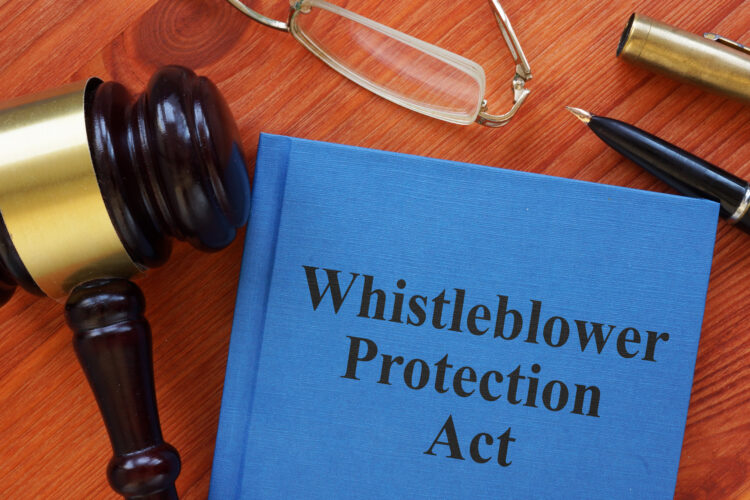
What Is the Whistleblower Protection Act?
There are nearly a quarter of a million active California state employees, which includes employees of state agencies and state universities, among other state employers. California’s state budget for the financial year 2023-2024 was $454.7 billion, the largest in the country by far.
With that scope of employees and vast funds, it is not surprising that corruption and other illegal behavior occurs within the ranks of state employees, far from the view of the taxpayers who fund the state government, and it is often only fellow state employees who are in a position to see and report such fraud and waste.
Acting as a whistleblower is not an easy task, and many would-be whistleblowers may feel concerned about retribution and retaliation by those engaged in wrongdoing. However, the California Whistleblower Protection Act offers increased protections for such whistleblowers, in addition to other state protective laws. Furthermore, the California False Claims Act provides a financial reward for whistleblowers who come forward with evidence in a successful lawsuit alleging fraud against the California state government.
What Is the Purpose of the Whistleblower Protection Act?
The purpose of the Whistleblower Protection Act is to provide state employees with the freedom to report waste, fraud, abuse of authority, violation of law, or threat to public health without fear of retribution, as the state legislature has found that “public servants best serve the citizenry when they can be candid and honest without reservation in conducting the people’s business.”
Specifically, the type of “improper governmental activity” that the Whistleblower Protection Act is designed to encourage reportage thereof includes any activity by a state agency or by a state employee that (1) is in violation of any state or federal law or regulation, including, but not limited to, corruption, malfeasance, bribery, theft of government property, fraudulent claims, fraud coercion, conversion, malicious prosecution, misuse of government property, or willful omission to perform a duty, or (2) is economically wasteful, or involves gross misconduct, incompetency, or inefficiency. This includes any such activity by any University of California school or an employee of such a school.
Who and What Is Protected Under the Whistleblower Protection Act?
All state employees (again, including any employee of a state university) are protected by the WPA from retaliation for reporting the types of “improper governmental activity” described above based on the WPA’s rule that no employee may “directly or indirectly use or attempt to use the official authority or influence” of their position “for the purpose of intimidating, threatening, coercing, commanding or attempting to intimidate, threaten, coerce, or command any person for the purpose of interfering” with another employee’s right to report improper governmental activity.”
The types of retaliatory behavior against a whistleblowing employee that are prohibited by the WPA include failure to promote an employee, termination or suspension of an employee, transferring an employee, or providing a faulty performance evaluation or disciplinary action. This also includes threatening to take such action or directing another to take or threaten such action.
Any employee who is wrongly retaliated against by another employee may pursue an action for compensatory damages, as well as potential punitive damages and attorney’s fees.
Can I Receive a Financial Reward for Reporting Fraud Affecting the California State Government?
Separate from the WPA, a person with knowledge of fraud carried out against the California state government may be eligible to earn a significant financial reward for pursuing a case against the offenders under the California False Claims Act (CFCA). Under the CFCA, a whistleblower who pursues a successful claim can receive as a financial reward anywhere between 15% to 33% of the financial penalties and fines levied against a defendant where the state government is a party to the litigation, and between 25% and 50% of such penalties and fines when the state government does not choose to join the litigation.
Since the enactment of the CFCA, over $2 billion has been levied against CFCA defendants, thus the financial rewards available to those who pursue a successful CFCA claim can be significant.
Any number of situations might qualify as grounds for a successful CFCA claim, but often such a situation involves an individual or entity receiving state government funds or reimbursements for goods or services that were not provided, not necessary, not what they purport to be, or of inferior quality. Examples of such fraud that might form the basis of a CFCA claim include, but are not limited to: filing false Medicaid reimbursement claims, selling defective products to the state, falsifying reports made to the state government to avoid paying funds to the state and/or to avoid regulatory scrutiny, or charging for services to the state that were not provided.
Contact a California Whistleblower Attorney Today
If you believe you have a knowledge of fraud that may form the basis of a successful CFCA claim, you are highly encouraged to work with experienced CFCA counsel to discuss and prepare your claim in a completely confidential environment.

July 15, 2024
California Whistleblower Damages
You may have heard that a whistleblower who comes forward with knowledge of fraud perpetrated against the federal government or California state government is eligible for a significant financial reward. This is absolutely the case. Under the federal False Claims Act (FCA), a successful plaintiff in an FCA lawsuit who comes forward with information relating to fraud on the federal government can obtain between 15% and 30% of the total financial penalties imposed on the defendant. Pursuant to the California False Claims Act (CFCA), a successful plaintiff who pursues fraud on the state government can recover between 15% and 50% of the fines and levies imposed on the defendant. As many such cases result in penalties in the tens of millions of dollars, these whistleblower rewards can be hugely substantial.
Despite these rewards, many would-be whistleblowers are hesitant to come forward due to fear of retaliation from coworkers, employers and others, as it is often through a person’s job that they become aware of illegal behavior. However both California and federal law provides a number of protections for whistleblowers (whether related to the FCA/CFCA statutes or other statutes), which can also include damages for the retaliation itself, in addition to the financial rewards of a CFCA or FCA claim.
The California Whistleblower Protection Act
The California Whistleblower Protection Act (WPA) specifically protects the nearly quarter million California state employees (including employees of all University of California schools). Pursuant to the WPA, every state employee is protected from retaliation for reporting activity by a state agency or by a state employee that (1) is in violation of any state or federal law or regulation, including, but not limited to, corruption, malfeasance, bribery, theft of government property, fraudulent claims, fraud coercion, conversion, malicious prosecution, misuse of government property, or willful omission to perform a duty, or (2) is economically wasteful, or involves gross misconduct, incompetency, or inefficiency.
If another state employee retaliates against the whistleblowing employee by taking action such as terminating, suspending, disciplining or failing to promote that employee (or providing a poor performance review), the employee who was retaliated against can bring a civil action for compensatory damages, such as lost wages. The employee can also pursue punitive damages and attorney’s fees against the offending employee.
Compensatory Damages Pursuant to California Labor Code Section 1102.5
California Labor Code section 1102.5 makes it illegal for an employer or any person acting on behalf of that employer to adopt or enforce any policy preventing an employee from disclosing information to the government or to internal authorities regarding violations of federal, state, or local law. In addition to providing for a civil fine of up to $10,000 against the offending retaliator, this law also provides for damages to be payable to the whistleblower.
Although the law itself does not make specific mention of damages payable to a plaintiff, California state courts interpreting the law have indeed found that an employee-plaintiff who has experienced retaliation is entitled to compensatory damages (such as the loss of wages) as well as punitive damages, which are damages beyond what a plaintiff has suffered but are intended to be a punitive measure to deter future conduct. In one recent case, an employee who pursued a whistleblower claim against their employer was awarded $500,000 in punitive damages in addition to $275,000 in non-economic damages, $120,550 in economic damages, and approximately $1,000,000 in attorneys fees for pursuing a whistleblower action against a church after the whistleblower was retaliated against for coming forward with information relating to sexual harassment. (Mathews v. Happy Valley Conf. Ctr., Inc. (2019) 43 Cal.App.5th 236.)
Anti-Retaliation Provisions in the Federal FCA
Federal law also provides anti-retaliation protections for whistleblowers. Under the FCA, an employer (or employee acting on the employer’s behalf) cannot fire, demote, harass, threaten, suspend or otherwise discriminate against an employee in the workplace who has come forward with information relating to an FCA claim. .
Pursuant to the FCA, if an employee is subjected to such retaliatory behavior as a result of pursuing a whistleblower claim, then the employee can pursue legal action against the employer for reinstatement in the same position, twice the amount of back pay they were denied plus interest, compensation for any special damages they suffered as a result of the discrimination, and attorney’s fees.
Anti-Retaliation Provisions in the CFCA
Like its federal counterpart, the California False Claims Act (CFCA) also provides employees with retaliation for coming forward with evidence of fraud perpetrated against the California state government. Pursuant to the CFCA, any employer, contractor, or agent shall be entitled to “all relief necessary to make that employee, contractor, or agent whole, if that [person] is discharged, demoted, suspended, threatened, harassed on in any other manner discriminated against” because of lawful actions on that person’s part to prevent, deter, or punish violations of the CFCA.
Relief that is available to such an employee includes reinstatement with the same seniority status, two times the amount of back pay (and interest thereon) that was lost, compensation for any special damages sustained as a result of the discrimination and, where appropriate, punitive damages and attorney’s fees.
Contact a California Whistleblower Attorney Today
If you believe you have a knowledge of fraud that may form the basis of a successful FCA or CFCA claim, you are highly encouraged to work with experienced California whistleblower counsel to discuss and prepare your claim in a completely confidential environment.

March 28, 2024
How to Prepare for a Title IX Investigation and Disciplinary Proceeding
The first thing to understand about preparing for a Title IX investigation and/or disciplinary proceeding for which you are the respondent (in other words, the person accused of misconduct under Title IX) is that you should absolutely prepare for such an investigation and hearing and that you should not do it alone for reasons that will become clear in this article.
The second thing to understand is that if you are searching online for a definitive guide to the specifics of how Title IX investigations and disciplinary hearings work across the country, you are likely to be disappointed. Although one might expect there to be uniform rules and procedures for Title IX investigations and hearings given that Title IX is a federal law applicable to all schools across the country receiving federal funding, the fact is that such Title IX proceedings – as well as the underlying codes of conduct on which such proceedings are based – vary widely by individual educational institutions.
Further complicating matters, while such rules and procedures at individual institutions must adhere to federal guidelines which both provide for specific mandates in some areas and latitude for schools to come up with their own rules and procedures in other areas, these federal guidelines continue to change with each of the last three presidential administrations proposing significantly different Title IX procedural regulations than had existed before (both the Obama and Trump administrations implemented such changed procedures, while as of the writing of this article in early 2024 the Biden administration proposed regulations have yet to be implemented).
Explanation of the Investigation Process
Pursuant to Title IX, educational institutions are required to investigate and take appropriate disciplinary measures relating to sexual misconduct, including sexual violence, sexual assault, sexual harassment, sexual discrimination, and stalking. However, Title IX leaves it to the individual schools to define the exact parameters of what such misconduct is. For example, many Title IX proceedings relate to accusations of non-consensual sex between students. However what is and is not non-consensual sex may vary among schools, as different institutions might have different definitions of what is considered “consent.” Schools should provide handbooks that specifically define the types of misconduct for which students (in addition to faculty, administrators, and employees) can be disciplined.
Just as the rules for what constitutes misconduct will vary among schools, investigative processes will also vary widely among educational institutions. Under current federal guidance, a Respondent in a Title IX investigation is required to be provided with notice prior to the interview with an investigator, and this notice is required to indicate the specific sections of the code of conduct that the Respondent is alleged to have violated, the time and location of the alleged violations, and the identity of the complainant. The Respondent is also supposed to be provided with sufficient time to prepare before meeting with an investigator.
Upon receipt of this notice, a Respondent might believe that the best approach is to simply show up to the interview and just tell the truth. This is not a good plan for many reasons. Whether the Respondent believes that the “truth” is an exonerating story that will set the record straight, or plans to admit to any wrongdoing and apologize for it, it is far better for a Respondent to work with experienced Title IX defense counsel in preparing for this interview (or series of interviews). It is important for a Respondent to work with a knowledgeable advisor who can help them understand the specific allegations that are being made, go over the facts of the incident (which might have occurred long before the complaint and/or might have occurred while the Respondent was inebriated) along with any related evidence to present a coherent and compelling story from the outset (rather than remembering important details later which could be suspect), and then formulate a general strategy for how to approach the investigation.
It is also important during this investigation period to be cognizant of other concerns, such as avoiding contact with the complainant that could be perceived as retaliation and making statements to others that could be used as evidence against the Respondent.
Understanding the Title IX Disciplinary Hearing Process
Similar to the investigative process, the disciplinary hearing process can vary significantly across schools. The investigation may lead to a disciplinary hearing, similar to a courtroom trial in the general sense that others will act as a judge of the veracity of the allegations and any disciplinary measures that may be handed down.
At the same time, a Title IX hearing differs in many important ways from a criminal trial. Rather than being judged by a jury of neutral peers that attorneys play a role in selecting as would be the case in court, a Title IX hearing board might consist of administrators, professors, and even students who might have far more interest in taking swift action against those accused of sexual misconduct rather than providing due process protections to the accused (and “due process” as a legal term of art may not even be applicable to proceedings in private schools). Respondents should not expect the same evidentiary protections in Title IX proceedings as in court, such as the ability to prevent hearsay statements from being admitted and the right to cross-examine witnesses testifying against the Respondent. Additionally, unlike a criminal case where guilt must be proven beyond a reasonable doubt, some schools may adopt procedures to discipline students, administrators, and professors on a simple “preponderance of the evidence” standard.
It can be tempting for a Respondent accused of a Title IX violation to not take it at seriously as one would a criminal trial, but the consequences can in some cases be far worse in a Title IX proceeding, which can result in an expulsion from school and a disciplinary record that makes it extremely difficult to be accepted at another school. For these reasons, it is important for those accused of Title IX violations to work with experienced counsel who, in addition to guiding them through the investigative process, can advocate for them effectively in disciplinary proceedings, including presenting exculpatory evidence, challenging the sufficiency and credibility of evidence presented, and executing strategies that mitigate consequences while promoting the Respondent’s rights.
Contact one of our Experienced Title IX Attorneys
The attorneys of ZFZ Law understand the stress, anxiety, and fear that comes with a Title IX disciplinary proceeding – or even the threat of such a hearing – and we provide zealous counsel and representation to help our clients avoid negative outcomes and move on with their lives.
If you are a student, professor, administrator, or staff member who is facing or potentially facing the prospect of a Title IX disciplinary proceeding based on allegations of sexual misconduct, professional misconduct, academic misconduct, code of conduct violations, discrimination, or other violations, it is important to take decisive action to protect your interests. The approach of attempting to “go it alone” in the hope that the issue will be quietly resolved in a positive manner without the help of experienced counsel and guidance can result in irreversible negative consequences that can impact your professional life for decades to come.
Contact our office to speak with an experienced Title IX defense attorney regarding your situation today.

March 16, 2024
What Are the Consequences of a Title IX Violation?
Many people are aware of Title IX for two main reasons: 1) it is a federal law that has revolutionized women’s sports by mandating equity in college sports such that, over the last half-century, young women have been provided with exponentially more opportunities to compete in athletics at the college level; and 2) it is part of a politically charged national conversation about how accusations of sexual misconduct (including assault, harassment, and discrimination) are investigated and dealt with on college campuses. This article focuses on the latter.
Unless you are keenly focused on sociopolitical debates as they relate to current affairs, you may well not be up to speed on the ongoing political controversy over at least the last several decades regarding how Title IX should be used to police sexual misconduct on campus, with the Obama, Trump, and Biden administrations all proposing and/or implementing significant changes to how Title IX is implemented.
But make no mistake, whether you are aware of the details of Title IX or not, if you are a student, professor, or employee at a college or university, a Title IX investigation and disciplinary proceeding instituted against you can have an enormous impact on your life.
What Is Title IX?
Title IX of the Educational Amendments of 1972 (or “Title IX” as it is more commonly known) provides certain protections to students, faculty, and staff of all public colleges and universities (and nearly all such private schools) in the areas of sexual discrimination, sexual harassment, and other sexually misconduct.
In providing said protections, Title IX mandates that colleges and universities police students, professors and staff in a manner that can resemble a law enforcement investigation and proceeding, yet without the same clear rights afforded to the accused as they would expect to find at the hands of police officers and prosecutors.
Thus, while the goal of Title IX is to protect students and others from the harm of sexual misconduct and discrimination, many argue that the manner in which schools and universities are mandated and/or permitted to investigate and prosecute such alleged misconduct – particularly when it comes to “he-said-she-said” allegations of nonconsensual sex and other alleged misconduct – has actually victimized many individuals by depriving them of their education, careers, and livelihoods over unsubstantiated allegations in proceedings that lack sufficient procedural and evidentiary safeguards for the accused.
Consequences of a Title IX Violation for Students
A student accused of a Title IX violation may be suspended or expelled for having been found to have engaged in misconduct. This of course presents a huge disruption to a student’s life, and that student might not be able to recover tuition and costs already paid to the school. Worse still, with the disciplinary record, a student may not be able to be accepted to another school of similar value, and may face further career struggles in hiring and promotion with the black mark of a Title IX violation on their record. Furthermore, civil and criminal charges might be brought against a student based on the Title IX proceeding.
In one prominent example, a 33-year old former Marine Corps journalism graduate student at Columbia University was expelled and denied his diploma after a fellow student accused him of sexual misconduct. The case attracted attention because, according to him, the accused student did not have sex with the accuser, and instead provided a recording of the accuser asking him 29 times for sex which he refused to do, yet he was unable to cross-examine the accuser and the disciplinary panel was uninterested in hearing his side of the story. And despite him having made a complaint against the accuser as well, he was expelled and denied his diploma while she received his. The accused student then reported that his fledgling journalism career was ruined as a result of the Title IX process. However, the accused student then filed a $25 million civil suit against Columbia for mishandling the process which he reported was settled for a considerable sum.
Consequences of a Title IX Violation for Professors and Staff
The consequences of a Title IX violation for a professor or other staff member are similarly significant. A professor might be immediately suspended based upon the complaint of a single student. If found to have violated Title IX, a professor can lose his or her job – even if tenured – and have an extremely difficult time finding a position in the competitive higher education job market with a Title IX violation on their record. In addition to also facing potential civil or criminal charges, a professor or staff member could face fines and work restrictions, all in addition to the personal and professional reputational damage that can come as a result of even an unproven allegation.
Contact one of our Experienced Title IX Attorneys
The attorneys of ZFZ Law understand the stress, anxiety, and fear that comes with a Title IX disciplinary proceeding – or even the threat of such a hearing – and we provide zealous counsel and representation to help our clients avoid negative outcomes and move on with their lives.
If you are a student, professor, administrator, or staff member who is facing or potentially facing the prospect of a Title IX disciplinary proceeding based on allegations of sexual misconduct, professional misconduct, academic misconduct, code of conduct violations, discrimination, or other violations, it is important to take decisive action to protect your interests. The approach of attempting to “go it alone” in the hope that the issue will be quietly resolved in a positive manner without the help of experienced counsel and guidance can result in irreversible negative consequences that can impact your professional life for decades to come.
Contact our office to speak with an experienced Title IX defense attorney regarding your situation today.

March 6, 2024
How to Defend Against Title IX Charges
A Title IX investigation and/or disciplinary proceeding can have severe and irreversible consequences for the life and livelihood of a student, professor and administrator at a college or university. Many such people facing Title IX proceedings may have little understanding of the procedures involved and the potential lasting impact of a negative outcome in such a proceeding. As a result, many of these same people fail to take important steps to properly defend themselves against Title IX charges, including working with an experienced Title IX defense attorney.
What Is Title IX?
Title IX is a federal civil rights law originally enacted in the early 1970s that people commonly associate with the obligation of educational institutions to provide equity in sporting activities on the basis of sex. Although that is a well-known aspect of the law, Title IX additionally has, over the years, applied to the actions of private individuals attending educational institutions, creating massive legal and reputational risks for accused students, faculty, and administrators accused of misconduct in disciplinary proceedings.
Indeed, academic institutions are required to pursue disciplinary proceedings when certain allegations are made, such as those relating to sexual harassment, sexual assault, stalking, gender discrimination, and domestic violence. In more recent years, the concept of what qualifies as “harassment” has expanded to include what some might describe as otherwise protected speech asserting perspectives regarding sexuality and gender not targeted at any individuals, and this expansion of the concept of sanctionable “harassment” may continue pursuant to new rule changes proposed by the federal government in 2022.
Thus, it is possible that a student, professor, or administrator can face Title IX disciplinary proceedings not only for alleged actions such as domestic violence and sexual encounters with others on campus, but also for stating viewpoints on gender and sexuality that offend another person on campus.
The Importance of Defending Against a Title IX Accusation
Unlike typical criminal investigations, Title IX proceedings often are pursued by academic institution employees rather than law enforcement, and those facing discipline may not necessarily be provided the same due process and other civil rights protections required in criminal investigations. For example, a student or administrator may not be provided with a defense attorney or advised to seek out legal counsel to assist in responding to the proceedings.
However, the negative consequences of a Title IX proceeding on an individual’s life might be even greater than those found in a criminal or civil matter in a government courtroom. Where a misdemeanor criminal conviction might result in a fine or even a very limited jail sentence, a Title IX proceeding can result in expulsion from the school as a student, which can in turn lead to a loss of expensive fees and tuition, inability to enroll at another institution, and a disciplinary record that can affect future schooling or employment. For a professor, a disciplinary proceeding might mean a loss of tenure and/or employment and inability to ever work again in a field that the person might have spent well over a decade working towards. A finding of misconduct in a Title IX proceeding can also provide a basis for a civil lawsuit by alleged victims or even a criminal prosecution.
Although it is the case that a college or university cannot sentence a person to jail in the same way a criminal court can, again the consequences in a Title IX proceeding might be far worse than a limited jail term. It can be difficult to quantify the lost earnings, reputational cost, and general emotional damage of a Title IX proceeding where an accused loses his or her standing and/or career in an educational institution and/or field.
What Steps Should I Take To Defend Against Title IX Charges?
Based on the significant consequences that can happen as a result of a Title IX proceeding, it is highly recommended that any person facing a Title IX investigation or disciplinary proceeding take all reasonable steps to defend themselves in said proceeding, including working with experienced Title IX defense counsel. While engaging with an attorney to address the challenge of a Title IX disciplinary investigation or other proceedings may initially feel unnecessary or even an admission of guilt, understanding the severe implications of an adverse outcome in such a proceeding makes clear that doing everything possible to address these potential consequences – including asserting your lawful right to independent legal counsel – often far outweighs the initial concerns involved with reaching out for legal assistance.
A Title IX defense attorney can help in the following ways, among others:
- Helping to understand the breadth and strength of evidence presented against you, which can include private investigatory efforts regarding the allegations against you
- Working with you to provide a counter-narrative of the events in question, including collecting and presenting additional facts, questioning the sufficiency and accuracy of evidence presented against you, and developing legal arguments regarding the application of the facts to the school’s powers under Title IX
- Formulating a legal strategy for achieving the best possible outcome in the proceeding, including determining whether and how to work with school officials towards mitigated consequences, or, alternatively presenting a comprehensive defense to the charges at a disciplinary proceeding and/or on appeal
- Advocating for you in interviews with investigators and at hearings before school officials
- Protecting your due process rights throughout the investigation and/or disciplinary proceeding
- Assisting and representation in appeals efforts.
Contact a Title IX Defense Attorney Today
If you are a professor or staff member who is facing or potentially facing the prospect of a Title IX disciplinary proceeding based on allegations of misconduct, it is important to take decisive action to protect your interests.
The attorneys of ZFZ Law understand the stress, anxiety, and fear that comes with a Title IX disciplinary proceeding – or even the threat of such a hearing – and we provide zealous counsel and representation to help our clients avoid negative outcomes and move on with their lives. Contact our office to speak with an experienced Title IX defense attorney regarding your situation today.

March 1, 2024
Title IX and Campus Speech
There has been much debate about “cancel culture” in recent years, particularly in our increasingly divisive society where discussions of topics of gender, sexuality, race, class and other identity-related matters can often be fraught, heated, and even downright dangerous to a person’s reputation and livelihood.
Those on one end of the political spectrum may be overestimating the widespread impact of “cancel culture” and confuse the natural and normal consequences of a person’s actions with a political vendetta. Those on the other end may be ignoring what is a serious and widespread change in our society that is worthy of scrutiny with respect to fairness, due process, and general concerns about penalizing a person permanently without any chance for redemption.
Whatever a person’s stance might be, the reality on the ground at many college campuses in recent years is that professors and even students often feel like they must sacrifice the freedom of speech and originality of thought that has been a hallmark of our nation’s higher educational system for centuries due to fear of having their careers ruined or at least permanently damaged.
This concern is not imagined, as Title IX – a federal law long used to promote equity in sports and other aspects of life – has in recent years been used to penalize those who engage in unpopular speech, and this may expand in the near future.
Title IX and Classroom Speech
The dangerous intersection between campus speech and Title IX disciplinary proceedings was exemplified by the case of Richard Paxton, a tenured professor at Pacific University in Washington. In October 2020, Mr. Paxton was suspended by the university pending a sexual misconduct allegation relating to comments he had made in class. To be clear, sexual misconduct such as harassment and assault can be prosecuted under Title IX, but historically statements made during class have not been a common subject of Title IX proceedings.
The statements in question, as relayed by Paxton’s attorney, involved his retelling of an experience that he had had at New Orleans drag bar 20 years prior and which he had retold many times as part of presenting an academic lecture in class. According to his attorney, Paxton was making a point about schema theory and specifically disequilibrium of one’s schema by seeing what appeared to be women outside the bar and then understanding that they were in fact “female impersonators.” In a separate point, Paxton made the assertion that “every person has a gender.”
After several students complained, the university accused him of making “transphobic” statements in class, and suspended him immediately pending the Title IX investigation. According to his attorney, Paxton was then told he must resign or face a lengthy suspension without pay. In commenting on the Title IX disciplinary proceeding, the university commented that it would not “tolerate harassment, discrimination or retaliation of any kind.” The case has proceeded for years without apparent resolution, and Mr. Paxton has since passed away.
New Proposed Changes to Title IX Could Increase Speech-Related Disciplinary Proceedings
Proposed changes to Title IX – presented by the Biden Administration in 2022 for public comment (of which hundreds of thousands of such comments have been received) and still not final as of early March 2024 – would actually provide university officials with more bases by which to discipline professors and students based on speech alone via Title IX than previously available.
According to a report by The Hill in 2022, one proposed rule change to Title IX would “pose a severe threat to free speech” by “lower(ing) the threshold for what constitutes ‘harassment’ to the point where it reaches even stray remarks that someone deems offensive.” The report further concludes that “the rule would reach speech far outside the school environment, such that school officials could police comments on personal social media or other contexts far from the learning environment” and “would allow anyone to report speech and spark an investigation, enabling the most thin-skinned on campus to launch an inquisition.”
Regardless of what one may think about the social and political wisdom of enacting such a rule, the end result of the rule being enacted may well be a significant increase in Title IX disciplinary proceedings being pursued against students, professors and administrators based on what had previously been protected speech.
Consequences of a Title IX Speech-Related Violation
The consequences of a Title IX violation are significant. These might include loss of tenure, loss of employment, loss of tuition, suspension or expulsion from a school, fines, and work restrictions, all in addition to the personal and professional reputational damage that can come as a result of even an unproven allegation.
Because schools themselves can face external pressure in the form of federal intervention for not prosecuting Title IX violations, and internal pressure from students and others to vigorously pursue and discipline perceived violators, they are often motivated to take swift and aggressive action in pursuing Title IX disciplinary proceedings against students and staff.
Contact a Title IX Defense Attorney Today
If you are a professor or staff member who is facing or potentially facing the prospect of a Title IX disciplinary proceeding based on allegations of misconduct, it is important to take decisive action to protect your interests. The approach of attempting to “go it alone” in the hope that the issue will be quietly resolved in a positive manner without the help of experienced counsel and guidance can result in irreversible negative consequences that can impact your professional life for decades to come.
The attorneys of ZFZ Law understand the stress, anxiety, and fear that comes with a Title IX disciplinary proceeding – or even the threat of such a hearing – and we provide zealous counsel and representation to help our clients avoid negative outcomes and move on with their lives. Contact our office to speak with an experienced Title IX defense attorney regarding your situation today.

January 25, 2024
What Qualifies as Insider Trading?
“Insider trading” is one of those commonplace legal terms that every adult has heard numerous times in their lives and probably has a vaguely accurate sense of what it means, but few (even among lawyers) can define it under the law. Most people understand that insider trading involves using non-public information to buy or sell securities in the market at an advantage over others, but that definition does not get us to what can be a very fine line between legal activity that can earn profits and illegal activity that can earn a lengthy prison sentence (up to 35 years in some cases).
A considerable reason for this confusion about the definition of illegal insider trading is that there is not actually one specific law prohibiting insider trading, nor is the term “insider trading” even used in the primary statutes that prosecutors use to enforce federal restrictions against insider trading (another reason is that federal courts have spent decades continuing to define insider trading, and continue to do so to this day).
Instead, insider trading might be better understood as a general legal theory to describe a number of statutes and case law approaches used to prosecute insider trading, several of which are described below.
Rule 10b-5 and the “Classical Theory” of Insider Trading
Although trading in securities has been the subject of regulation throughout our nation’s history, much of our modern securities laws and regulations emanate from the Securities Act of 1933 and Securities Exchange Act of 1934, passed in the years following the great stock market crash of 1929. Pursuant to the authority granted by the Securities Exchange Act of 1934, the Securities and Exchange Commission (SEC) issued SEC Rule 10b-5, which prohibits, among other things, engaging in “any act, practice, or course of business which operates or would operate as a fraud or deceit upon any person in connection with the purchase or sale of any security.” While SEC Rule 10b-5 does not, on its face, explicitly prohibit insider trading, subsequent court decisions have made clear that insider trading is indeed prohibited by the rule.
Under the so-called “classical theory” of insider trading, a corporate insider (e.g. a company president, officer, manager, or director) violates the law when they trade securities in their own company based on material information not available to the public (e.g., the announcement of an acquisition of the company which will likely raise the price of shares, or government approval of a product of the company), as doing so is a breach of a duty owed to both the company and its shareholders, who are presumably when they sell prices at an artificially low price (or buy shares at an artificially high price if the non-public information portends badly for the share price) to their own disadvantage and the advantage of the insider.
The “Tipping Theory” of Insider Trading
This type of insider trading liability extends beyond corporate insiders to those who receive “tips” in the form of this private information from insiders. For example, if a company president tells his best friend that the company is going to be acquired, and the best friend buys shares in the company based on this information, there may be insider trading liability for both the “tipper” and the “tippee” depending on whether the tipper received any benefit for providing the tip, and/or intended to provide a benefit to the tippee. If there was no benefit to the tipper or no intent to provide a benefit to the tippee, then that person may avoid insider trading liability, but what does and does not qualify as such a benefit has been the subject of decades of case law before the Supreme Court and Courts of Appeal, and the law continues to evolve on this topic.
The “Misappropriation Theory” of Insider Trading
While the tipping theory of insider trading can be considered an extension of the classical theory of insider trading in that both are based on the concept of a corporate insider using non-public information for their own benefit at the expense of the company’s shareholders (with the tippee basically standing in the shoes of the corporate insider), the “misappropriation theory” of insider trading applies to corporate “outsiders” who nonetheless gain access to inside, non-public information about a corporation and use it to their own benefit.
The genesis of the misappropriation theory is the 1997 U.S. Supreme Court case U.S. v. O’Hagan, in which federal prosecutors charged a law firm partner who was hired by an acquiring company to represent the company in the purchase of a target company. The partner purchased stock in the target company prior to the announcement of the merger. Unlike in the classical theory scenario, where the inside information is provided by an insider at the company whose shares are at issue, in this situation the shares at issue are of a company to which the defendant owed no duty to the company or its shareholders. However, the court ruled that the partner could nonetheless be charged with insider trading as he misappropriated inside information entrusted to him to the detriment of the target company’s shareholders.
As with tipper liability cases, how far the misappropriation theory of insider trading extends continues to evolve as courts are presented with new scenarios.
Insider Trading Enforced Pursuant to 18 U.S. Code § 1348
In recent years, federal prosecutors have increasingly relied on 18 U.S. Code § 1348 (in addition to SEC Rule 10b-5) in prosecuting insider trading cases, whether based on the classical theory, tipper theory, or misappropriation theory. Section 1348 was enacted as part of the Sarbanes-Oxley Act of 2002 (passed in the wake of numerous high-level corporate scandals, including Enron), and mirrors prior insider trading enforcement law, while at the same time providing prosecutors with an arguably more straightforward and stringent approach to insider trading than the prior approach based on decades of complex case law.
Some commenters have asserted that Section 1348 insider trading charges are easier to prosecute than those pursued under SEC Rule 10b-5, as the elements provide a lower standard. It should also be noted that SEC Rule 10b-5 imposes a maximum sentence of 25 years in prison, while Section 1348 provides a maximum sentence of 35 years in prison.
Speak with an Experienced White Collar Crimes Lawyer
The time to seek experienced counsel from a skilled white collar defense attorney is at the first signs of a potential government investigation, enforcement action or prosecution. Often, the first steps in responding to a potential government proceeding are the most critical in setting the course for an ultimate outcome that defends one’s interests, reputation, and, in some cases, freedom. Contact our office to speak with an experienced white collar defense attorney regarding your situation today.

January 24, 2024
Title IX Lawyers for Professors and Staff
Title IX of the Educational Amendments of 1972 (or “Title IX” as it is more commonly known) provides certain protections to students, faculty, and staff of all public colleges and universities (and nearly all such private schools) in the areas of sexual discrimination, sexual harassment, and other sexually misconduct. But Title IX also creates significant consequences and risks for professors and staff of such educational institutions, as Title IX imposes strict investigative and disciplinary procedures for college and university employees that often have little parallel in non-academic workplaces.
Although most employees are subject to a variety of federal, state, and local workplace laws and regulations, and may be overseen by a Human Resources department, Title IX mandates that colleges and universities police professors and staff in a manner that can resemble a law enforcement investigation and proceeding, yet without the same clear rights afforded to the accused as they would expect to find at the hands of police officers and prosecutors.
As a result, many college and university employees can underestimate the significance of the consequences of a Title IX investigation or other proceeding, and forgo working with legal counsel, either out of a sense that doing so is unnecessary, unhelpful, or perhaps even an admission of guilt. However, a faculty or staff member who “goes it alone” in responding to a Title IX complaint can create unnecessary risk for themselves in light of the complexity of such proceedings and the severe consequences that can follow.
How Title IX Applies to Faculty and Staff
The plain text of Title IX indicates that, “No person in the United States shall, on the basis of sex, be excluded from participation in, be denied the benefits of, or be subjected to discrimination under any education program or activity receiving Federal financial assistance.” While often understood as a law primarily about gender equity in sports, court decisions and successive federal regulations have indicated that, as part of Title IX’s prohibition on sexual discrimination, schools are required to take sufficient steps to address and prevent sexual harassment and sexual violence.
Because colleges and universities face strict legal consequences for failing to implement the requirements of Title IX (including loss of federal funding), they are required to implement and execute certain responses to allegations of sexual discrimination, harassment, and violence, which can include allegations made against faculty and staff members. Exacerbating this for those faculty and staff members under investigation, schools often face immense pressure from students, faculty, and the media to respond forcefully and quickly to Title IX complaints, creating an environment that creates due process concerns for those being accused and investigated.
What Are the Consequences of a Title IX Accusation?
Title IX requires colleges and universities to adopt and publish grievance procedures for students, faculty members and staff who feel they have been subject to sexual discrimination or sexual misconduct, and these procedures require “prompt” and “equitable” resolution of such complaints.
For a faculty or staff member accused of a Title IX violation such as discrimination, harassment or stalking – whether the complaint is made by a student or employee – this process can result in a number of negative consequences. These might include loss of tenure, loss of employment, suspension, fines, and work restrictions, all in addition to the personal and professional reputational damage that can come as a result of even an unproven allegation. Furthermore, the investigative findings of a Title IX proceeding may even be used later in a civil lawsuit or criminal prosecution against the employee.
Defending Against Title IX Allegations
As referenced above, the target of a Title IX investigation or proceeding should not expect to be afforded the same due process rights or evidentiary protections that would be expected in a civil lawsuit or criminal investigation or prosecution. Not only is it unlikely that you will be provided with an attorney, but it may also be unlikely that anyone with the educational institution would inform you of your right to have an attorney counsel you during the process (and no employee should make the mistake of thinking that a lawyer for the university represents the employee’s interests, as the attorney is solely there to represent the university’s interests, which may conflict with those of the employee).
Furthermore, a finding that a faculty or staff member committed a Title IX violation might be based on a simple “preponderance of the evidence” standard – meaning that the finder of fact only needs to determine that is simply more likely the case than not that the allegations are true – which is a far lower standard than the “beyond a reasonable doubt” standard in a criminal case. And unlike a criminal trial where an impartial jury of one’s peers are selected, a Title IX hearing panel is generally made up of school administrators and other staff members who may feel pressure to make certain decisions and findings that a private citizen juror would not. Additionally, the same constitutional protections and legal statutes regarding admissibility of evidence may not apply in a Title IX hearing.
For these reasons, faculty and staff members under investigation or facing a Title IX proceeding are strongly encouraged to work with experienced Title IX defense counsel, not just in appearing at a hearing, but through all stages of the process, including speaking with investigators and other administration officials regarding the hearing.
Contact one of our Experienced Title IX Attorneys
If you are a professor or staff member who is facing or potentially facing the prospect of a Title IX disciplinary proceeding based on allegations of sexual misconduct, professional misconduct, academic misconduct, code of conduct violations, discrimination, or other violations, it is important to take decisive action to protect your interests. The approach of attempting to “go it alone” in the hope that the issue will be quietly resolved in a positive manner without the help of experienced counsel and guidance can result in irreversible negative consequences that can impact your professional life for decades to come.
The attorneys of ZFZ Law understand the stress, anxiety, and fear that comes with a Title IX disciplinary proceeding – or even the threat of such a hearing – and we provide zealous counsel and representation to help our clients avoid negative outcomes and move on with their lives. Contact our office to speak with an experienced Title IX defense attorney regarding your situation today.

January 23, 2024
California Nursing Facilities Settle Whistleblower Claim of Kickbacks to Referring Physicians for $45.6 Million
Providing compensation to physicians to make referrals for health care may seem like business as usual for some in the medical community, but doing so for items or services covered by Medicare, Medicaid and other federally funded health care programs can result in severe consequences for businesses and individuals that engage in such referral schemes.
This was exemplified by a recent November 2023 settlement between the Department of Justice, the owner of six skilled nursing facilities (SNF) in California, the management company operating the SNFs, and the SNFs themselves for the payment of $45.6 million relating to kickbacks to doctors for referring patients to the SNFs.
The referral scheme was investigated by the Department of Health and Human Services and prosecuted by the Department of Justice based on alleged violations of the federal Anti-Kickback Statute. The case was set into motion by the management company’s former Chief Operating Officer via a False Claims Act (FCA) complaint, also known as a whistleblower claim or qui tam action. Whistleblowers in FCA complaints where the federal government intervenes, as it did here, generally stand to receive between 15% and 25% of the total financial penalties imposed on the defendants.
Why the Referral Scheme Was Investigated for Violating the Anti-Kickback Statute
According to the Department of Justice press release announcing the settlement, Prema Thekkek, her management company Paskn Inc., and the six SNFs owned by Thekkek and/or operated by Paksn (including those doing business as Bay Point Healthcare Center, Gateway Care & Rehabilitation Center, Hayward Convalescent Hospital, Hilltop Care and Rehabilitation Center, Park Central Care & Rehabilitation Center, and Yuba Skilled Nursing Center) entered into “medical directorship agreements” with physicians over the course of 12 years that purported to pay the physicians for administrative services, but instead were vehicles by which the physicians were paid to refer clients to the SNFs.
As a result of the investigation pursued by the Department of Health and Human Services, the DOJ determined that the defendants hired physicians who promised in advance to refer large numbers of patients to the SNFs, paid those physicians in proportion to the number of patients they referred, and terminated those physicians who did not refer a sufficient number of patients. The DOJ pointed to specific examples of Thekkek paying $2000 a month to physicians who promised at least ten referrals per month and terminating a payment of $1500 a month to a physician who only referred two patients per month.
Pursuant to the Anti-Kickback Statute. it is a crime to have any paid referral arrangement (whether in cash, property, or in-kind arrangement) for any health care services or goods for which payment is made under federal health care programs such as Medicare or Medicaid, subject to certain exceptions. The Anti-Kickback Statute targets both those who make payments for referrals and those who receive them, and violation of the statute is a felony. An individual found guilty of violating the Anti-Kickback Statute faces up to ten years in prison and a $100,000 fine, in addition to being excluded from federal health care programs.
The Role of the Whistleblower and False Claims Act in the Settlement
The Medicare and Medicaid programs are of course sprawling federal programs, and it is impossible for federal regulators to police each of the innumerable claims for financial reimbursement submitted pursuant to these programs each day. Thus, the federal government relies on private citizen whistleblowers with knowledge of such fraud to come forward with that information.
Pursuant to the FCA, a whistleblower can file a complaint against an individual or entity alleged to have defrauded the federal government – including through violations of the Anti-Kickback Statute – and earn a financial reward for doing so in the form of a percentage of the total financial penalties levied on the defendant. After a person files an FCA complaint, the federal government may intervene in the lawsuit and assist in investigating and prosecuting the complaint – as was the case here. In such cases, the whistleblower stands to receive between 15% and 25% of the financial penalties. But even where the federal government does not intervene, the whistleblower may continue with the FCA lawsuit and stand to receive up to 30% of the financial penalties in such cases.
In this case, an FCA complaint was filed in 2015 by Paksn’s former Vice President of Operations and Chief Operating Officer. It is relatively common for an executive level insider such as this to act as a whistleblower in an FCA suit, but anyone with sufficient knowledge and/or evidence of fraudulent actions violating the FCA can pursue such a claim, including but not limited to nurses, data entry analysts, billing specialists and others.
Contact a California FCA Attorney Today
A plaintiff in a successful FCA lawsuit has the potential of obtaining a financial reward between 15% and 30% of the total penalties levied against the defendant. It is important to work with legal counsel with the experience to not only assist you in compiling and submitting your information in pursuit of obtaining the largest whistleblower reward possible – while at the same time protecting victims of fraud and promoting fair market competition – as well as the experience to protect you from retaliation and obtain justice on your behalf. If you have information that you believe may form the basis of an FCA claim, contact our office today to schedule a consultation with one of our attorneys to determine your next steps.
January 18, 2024
What Are the Elements of an FCPA (Foreign Corrupt Practices Act) Anti-Bribery Violation?
The Foreign Corrupt Practices Act (FCPA) is an anti-corruption law enacted in 1977, but has had a more of a significant impact on individuals and businesses in the 21st century as the federal government has devoted more resources to policing corruption involving government officials not just in the United States but around the world as well.
Although many companies – particularly large corporations – have educated their employees and managers about the restrictions and consequences of the FCPA, many companies and individuals still operate in ignorance of the FCPA and the harsh penalties that can be imposed on those who violate it. While many people think that making certain payments to officials and/or go-betweens is simply the way business is done in other parts of the world, such actions can result in significant criminal and civil penalties even where the activity takes place many thousands of miles away from the United States.
There are two main sections of the FCPA – accounting standards and anti-bribery provisions – and this article will focus on the latter.
What do the Anti-Bribery Provisions of the FCPA Prohibit?
For American companies and individuals (which can include directors, officers, employees such as salespersons, and agents of companies), the FCPA prohibits the offer, payment, promise to pay, or authorization of the payment of any money, or offer, gift, promise to give, or authorization of the giving of anything of value to any foreign official, foreign political party, or candidate for foreign office for the purpose of any of the following:
- Influencing any act or decision of such foreign official in his official capacity
- Inducing such foreign official to do or omit to do any act in violation of the lawful duty of such official
- Securing any improper advantage
- Inducing such foreign official to use his influence with a foreign government to affect or influence any act or decision of such government in order to assist with obtaining or retaining business.
The FCPA further prohibits such payments, offers, or gifts to “any person, while knowing that all or a portion of such money or thing of value will be offered, given, or promised, directly or indirectly, to any foreign official…” Thus, paying an intermediary such as a “facilitation payment” to a private agent for an improper benefit from a foreign official may violate the FCPA as well.
There is an exception under the FCPA where the above provisions will not apply to “any facilitating or expediting payment to a foreign official, political party, or party official where the purpose of the payment is to expedite or secure the performance of a routine governmental action by the payee.
The FCPA also provides several affirmative defenses for such payments, offers, gifts, or promises, such that there will not be a violation of the FCPA anti-bribery provisions where the following facts apply:
- The payment, gift, offer, or promise of anything of value that was made was lawful under written laws and regulations of the receiver’s country, or
- The payment, gift, offer, or promise of anything of value that was made was for a reasonable and bona fide expenditure of the receiptions such as travel and lodging expenses, and was directly related to the promotion, demonstration, or explanation of products or services, or the execution or performance of a contract with foreign government or agency.
Note that foreign issuers of securities in the US and their agents face similar anti-bribery provisions.
Essentially, the FCPA incorporates broad language to prohibit and deter bribes – whether in the form of payments, gifts, or other benefits – to foreign officials or their agents in exchange for those officials providing an improper benefit in return, for example securing a contract with the government or obtaining a license or other permit to do business. Although many countries have a reputation for such payments being commonplace, the purpose of the FCPA is to level the playing field and deter foreign corruption by prohibiting such conduct even where it takes place far from the United States.
Consequences of Violating the Foreign Corrupt Practices Act
American businesses and individuals who are found to violate the anti-bribery provisions of the FCPA face a number of significant consequences, including the following:
- Businesses face a fine of up to $2,000,000
- Businesses and individuals face civil penalties of up to $10,000 for each violation
- Any individual may be fined up to $100,000
- Any individual may be imprisoned for up to five years, in addition to facing the $100,000 fine, and $10,000 civil penalty per violation
FCPA investigations by the federal government also can impose a large cost on both individuals and businesses who are suspected of violating the FCPA, in addition to the cost of defending FCPA prosecutions pursued by the federal government. Additionally, when made public, investigations and prosecutions of businesses relating to alleged FCPA violations can result in significant reputational damage for companies and individuals alike.
Speak with an Experienced White Collar Crimes Lawyer
The time to seek experienced counsel from a skilled white collar defense attorney is at the first signs of a potential government investigation, enforcement action or prosecution. Often, the first steps in responding to a potential government proceeding are the most critical in setting the course for an ultimate outcome that defends one’s interests, reputation, and, in some cases, freedom. Contact our office to speak with an experienced white collar defense attorney regarding your situation today.
January 3, 2024
When Do You Need an Internal Investigations Attorney?
The Watergate adage “the cover up is worse than the crime” is an imperfectly allegorical but useful concept for businesses and other organizations to keep in mind when there are allegations from either internal or external sources regarding wrongdoing, or simply where company management suspects something just might be rotten in Denmark, to quote the Bard.
The relevance of the phrase is imperfect to the concept of internal investigations, as there is not always a criminal act that is at the heart of the concerns prompting such an investigation, nor is there necessarily a cover up so to speak. An internal investigation may well uncover criminal activity, but the purpose of such an investigation might be to determine whether civil wrongdoing has occurred (e.g., whether an employee has violated certain civil SEC regulations), or even activity that does not have legal implications but may violate the ethics of an organization (e.g., whether a megachurch pastor has engaged in an extramarital affair).
An internal investigation might take place prior to a government investigation, concurrent with one, or where no governmental action ever takes place. Internal investigations can be expensive affairs and put stress on employees, management, and even shareholders. Yet, despite these costs, an internal investigation may be the most beneficial action a company can take when evidence of potential wrongdoing in the organization begins to emerge.
What is the Purpose of an Internal Investigation?
If internal investigations can be expensive and stressful, and if the government may or may not do its own investigation anyway, then why in the world would a company put itself through the pain of an internal investigation?
There are numerous reasons for conducting an internal investigation. In the case of a sole proprietor like a realtor or solo attorney with no employees, it is unlikely that such a business would require an internal investigation. That sole proprietor is the only person conducting business and thus generally has the ability to access all the information relevant to his or her business. But the larger the business gets, the more difficult it is to know what employees or management is doing on behalf of the business (or on behalf of themselves, while at the same time creating liability for the company), far from the oversight of directors, officers, and/or shareholders. For example, the directors of a pharmaceutical company selling drugs and equipment in countries all over the world might have very limited visibility into the full nature of what its sales representatives are doing in South Africa or Japan.
One central purpose of an internal investigation is thus for the management and owners of the company to understand to the fullest extent possible what if any wrongdoing is taking place in the company in order to move forward in either taking corrective action and/or helping to avoid further negative consequences in the form of a government enforcement action and/or loss of public and shareholder trust. By doing so, the company can, among other things, take preemptive action by bringing their findings to the attention of government regulators and/or shareholders and/or be in a better position to respond to government intervention if and when it does occur.
Furthermore, undertaking an internal investigation may indeed be required by either government corporate oversight rules or the internal bylaws of the organization itself, and failure to do so might result in negative consequences such as government investigations and enforcement actions into not just the underlying wrongdoing but the failure to exercise proper corporate oversight, shareholder liability suits against company management, and/or loss of trust and business from customers, business partners, and shareholders.
Common Scenarios Involving an Internal Investigation
There are any number of potential situations within a business or organization which might necessitate an internal investigation by a third party law firm conducted on behalf of management and/or shareholders. In essence, if suspected behavior within the organization might result in a significant lawsuit and/or government enforcement action, some level of internal investigation may be warranted. These situations might include the following:
- False Claims Act / Procurement Fraud: Violations of the FCA which often involve healthcare fraud or procurement fraud can lead to steep financial penalties and criminal enforcement actions, thus it is important for an organization to understand if such fraud is occurring by employees and/or shareholders and respond accordingly.
- Securities Fraud: Potential insider trading and other violations of state and federal securities laws can occur within financial institutions in manners that are not abundantly clear to management, and it is thus critical to take proactive steps to monitor, correct, and report such actions if necessary.
- Foreign Corrupt Practices Act and Public Corruption: Many companies face significant legal liability when employees engage in bribery/corruption practices on local, state, federal and international levels (including FCPA violations for bribery of government officials in other countries), and a robust internal investigation is commonly necessitated to identify and appropriately handle such issues.
- Sexual Misconduct: While the individual perpetrators of sexual misconduct certainly – whether this be sexual harassment, creation of a hostile workplace environment, sexual discrimination, or other misconduct – face the prospect of legal liability, how companies and organizations act to prevent and/or respond to such misconduct involves significant legal liability as well, and it is often necessary for an internal investigation to be part of such a response. Furthermore, organizations must be continuously vigilant in
- Cybersecurity: Businesses face ever-increasing requirements and public scrutiny to comply with cybersecurity requirements and promote a safe cyber environment for customers, employees, and others. Thus, a cybersecurity internal investigation may be warranted where government regulators request evidence of such compliance, customer or employee complaints arise as to cybersecurity, or where management simply suspects the company is not doing what is necessary to effectively promote cybersecurity.
- Violations of Employment Law: Employers must comply with a bevy of state, local, and federal laws relating to the way in which employees are managed and treated. While much of this compliance can be effectuated from a “top down” approach, it is often necessary for an employer to conduct an internal investigation, for example, into whether managers and others throughout the company are complying with a range of issues such as discrimination, anti-retaliation policies, wage/hour requirements, and many other issues that can result in liability.
The Importance of Working With an Attorney in an Internal Investigation
It is often critical to work with experienced internal investigations counsel in conducting an effective and confidential internal investigation. One overriding principle to keep in mind is that, by having an internal investigation conducted by counsel retained by the company, the findings and conclusions of the internal investigation will generally be held confidential due to the attorney-client communication and/or attorney-work product privilege doctrines, although it may be the case that a strategic decision is made to share such findings with the government or other third parties. The last thing a company under scrutiny wants or needs is to have the sensitive results of an internal investigation improperly shared with the public or government regulators.
Furthermore, conducting an internal investigation is by definition generally a delicate affair. Careers, reputations, and business relationships are often on the line. Thus, it can be more effective and less stressful on a company to have an outside third party law firm conduct the internal investigation, where such internal investigators are experienced in collecting and analyzing information, and may be able to do so with less disruption to the corporate culture and everyday business operations as compared to an investigation conducted solely by a mix of internal counsel, management, and HR personnel.
Additionally, an experienced internal investigations law firm may have relevant experience both working in the government and/or engaging with government investigators on a regular basis. As such, counsel can more effectively obtain the information that government overseers are interested in understanding and can work with the government to provide such information and work towards the least disruptive outcome for the company.
Contact a Seasoned Internal Investigations Attorney
How an organization responds to wrongdoing can be just as important if not more important than the underlying wrongdoing itself. Furthermore, it is often beneficial to an organization to respond to potential wrongdoing within its ranks with what might be considered an overabundance of caution in order to demonstrate that it takes oversight seriously and to prevent future wrongdoing. To schedule a consultation with a seasoned internal investigations attorney, contact our office today.

January 3, 2024
When Do You Need a False Claims Act Attorney?
Over the history of the False Claims Act (FCA), many billions of dollars in penalties have been paid by liable defendants in penalties following allegations of wrongdoing by whistleblowers, with a good portion of those financial payments going to the whistleblowers themselves as a reward for coming forward with information regarding fraud against the US government.
In 2022 alone, FCA settlements and judgements under the False Claims Act resulted in the payment of over $2.2 billion in penalties by FCA defendants, whether through trial or in a settlement, and over $72 billion have been recovered in FCA lawsuits since 1986, when the FCA (which has existed in some form since the Civil War) was strengthened. FCA whistleblower plaintiffs in successful FCA lawsuits are eligible to receive a financial reward of between 15 and 30 percent of the total penalties recovered by the government. With a number of recent FCA settlements reaching into the hundreds of millions, the simple math is that there can be an extraordinary financial incentive for potential whistleblowers with knowledge of wrongdoing to come forward.
The numbers alone indicate that for both potential FCA plaintiffs and defendants alike, the stakes in FCA litigation can be incredibly high, and thus potential FCA litigants on both sides of the table are encouraged to work with experienced FCA counsel as early as possible in the process.
Types of False Claims
The FCA makes it illegal to, among other things, knowingly submit a false claim for payment to the federal government. Any individual or organization who defrauds the US government by violating the FCA can be sued under the FCA. Such fraud can take the form of the following:
- Healthcare Fraud: A leading type of fraud underlying successful FCA lawsuits is related to the federal Medicare and Medicaid programs as well as TRICARE, the federal health care program for military service members and their families. Such fraud may take the form of billing for services or drugs that were not provided and/or necessary, upcoding, improper classification of pharmaceuticals and services, and providing substandard services.
- Covid-Related Fraud: In recent years, there has been increased FCA litigation related to Covid fraud, such as fraudulent PPP payments and vaccine-related fraud.
- Military Procurement and Law Enforcement Fraud: A common type of FCA fraud since the statute’s beginnings in the 1860s is fraud related to the military and law enforcement. This can include providing defective goods, taking kickbacks, using government funds for unnecessary services, and failing to meet cybersecurity requirements.
- Customs Fraud: Violations of US customs laws can also result in FCA liability for a company, including misclassification of goods, country-of-origin fraud, and other fraudulent attempts to avoid paying accurate customs duties.
Steps to Take if You Suspect Fraud
In many cases, the federal government – and the US taxpayers who are the ultimate victims FCA fraud – have very low visibility in knowing that FCA fraud is occurring, making enforcement of federal laws challenging for law enforcement and federal agencies alone. When one considers the sheer number of healthcare transactions each day for which there is Medicare or Medicaid reimbursement, or the staggering amount of imported goods entering the US on a constant basis, it makes sense that the federal government often has to rely on private individuals with knowledge of the fraud to come forward and present such evidence. Oftentimes, FCA whistleblower plaintiffs are employees or former employees of the offending business, but a plaintiff can be essentially any person with knowledge of the fraud, even in some cases where the plaintiff played some role in the perpetuation of the fraud.
Potential whistleblower plaintiffs who believe they have evidence of a FCA violation are encouraged to speak with an attorney early in the process to determine whether a potential FCA claim exists, what next steps should be taken, and how best to proceed. There are numerous provisions in the law affecting whistleblower eligibility for a financial reward, and it is important to understand and conform with these legal provisions to protect one’s interests. Furthermore, it is critical to properly navigate internal dynamics at the earliest stages to avoid retaliation and other negative consequences, which can be extremely difficult and potentially fatal to the success of an FCA whistleblower recovery without legal counsel.
Dealing with Potential FCA Liability
Given the huge liability that can come with an FCA lawsuit, it is of obvious and utmost importance for a potential or current FCA defendant to work with experienced counsel to assess their risk and move forward towards a positive resolution of the situation. The directors and chief officers of a company are often not necessarily in a position to know that those in the organization have taken or are currently taking illegal actions that can result in FCA liability, and the manner in which the company responds early and aggressively to proactively deal with internal wrongdoing while also appropriately responding to litigation can be just as important as the underlying FCA violations themselves.
For individuals and companies facing potential FCA claims, it is important to engage counsel at the first sign of such a claim, even if no such claim has yet been asserted. Whistleblower plaintiffs typically are working with counsel for weeks or months prior to asserting a claim (as is in their strategic interest to do so), thus waiting for a lawsuit to be served before engaging counsel can put you and your company far behind the starting line.
Working with Experienced California FCA Counsel
For both whistleblower plaintiffs and defendants alike, the process of litigating an FCA claim is often long (many such lawsuits average 3-5 years in length) and filled with risk. It is important to work with experienced FCA counsel from the earliest stages of either asserting or responding to a FCA claim to protect your interests and maximize your chances of a positive outcome. Our attorneys have combined decades of experience in both the federal government and in the highest levels of private practice, and are ready to work with you to counsel you and/or your business on any FCA issues you may be facing.

December 28, 2023
When Do You Need a Title IX Attorney?
A common, and perhaps even disastrous, misconception that a person (or that person’s parents) can make when dealing with a Title IX proceeding at a university, college, or other school is to assume that a person does not need an attorney.
There are a number of reasons why a person may think that they do not need an attorney for a Title IX proceeding. In fact, retaining an attorney might not ever even cross that person’s mind, or may feel like an admission of guilt. First off, the Title IX proceeding is not taking place in a courtroom and does not necessarily involve law enforcement or any government prosecutorial body. State or federal laws of evidence do not necessarily apply, nor might substantive or procedural due process rights that one would expect in a governmental proceeding.
However, the negative consequences of a Title IX proceeding on an individual’s life might be even greater than those found in a criminal or civil matter in a government courtroom. A Title IX proceeding can result in expulsion or suspension from the school as a student, or termination as a teacher, professor, administrator, or other employee. These can in turn result in loss of expensive fees and tuition, inability to enroll at another institution, and a disciplinary record that can affect future schooling or employment. A finding of misconduct can also provide a basis for a civil lawsuit by alleged victims or even a criminal prosecution.
For these reasons, it is generally in a person’s interest to seek out experienced Title IX counsel in any scenario in which they are being investigated and/or facing penalties in a Title IX proceeding.
Situations Requiring a Title IX Attorney
If you’ve only heard about Title IX occasionally in the news, you could be forgiven for thinking that it is basically about gender equality in college sports. While Title IX does pertain to high school and college sports, that is only one aspect of its reach.
Less well-known is the fact that Title IX creates significant risks for students, teachers, professors, administrators, and other employees who attend colleges and universities (in addition to other educational organizations) that receive federal funding, which is nearly all such institutions of higher learning. Completely separate from the topic of sports, such schools are required to conduct investigations and disciplinary proceedings against those individuals accused of certain activity such as stalking, sexual harassment, sexual violence, and sexual discrimination.
Allegations of such activity on campuses have been prevalent for decades, and the pressure on schools to take swift action is often at a fever pitch, which unfortunately can result in a lack of due process or fairness for the accused. Thus, even if a person facing a Title IX investigation or other proceeding feels there is little to no evidence supporting the underlying allegations, it can be a significant mistake to forgo legal representation in such situations.
The Requirements of Title IX
Educational institutions that must comply with Title IX requirements (which again are all public universities and colleges and nearly all such private schools) are required to implement and execute certain procedures relating to allegations of sexual harassment, violence, and discrimination.
These procedures include adopting and publishing “grievance” procedures for students who wish to file complaints related to these alleged acts which must provide for “prompt” and “equitable” resolution of such complaints. Additionally, Title IX provides for a number of protections for complainants, such as the ability to provide evidence of their complaints and receive notifications of the school’s investigations into their complaints.
Schools that fail to properly comply with the requirements for Title IX requirements face significant penalties and thus are under intense pressure from the federal government to pursue Title IX complaints, in addition to the often intense pressure that school administrators face on-campus from students and others when allegations of sex-based wrongdoing arise.
How Title IX Proceedings Are Different from Criminal Investigations
Conversely, those accused of wrongdoing pursuant to Title IX proceedings may well find that they have many less protections in the process compared to those found in an investigation by law enforcement. Constitutional protections familiar to us from “Law and Order”-style TV procedurals and Supreme Court cases may be hard to find in a Title IX proceeding. For example, if the police arrest you, they are required to inform you of your right to an attorney, and a court must provide you with an attorney in a felony proceeding if you cannot afford one. Such protections cannot be expected in a Title IX proceeding, and it is generally incumbent on the accused individual (and/or their families) to not only realize that they need a lawyer but to also go secure such legal representation.
Furthermore, the level of evidence necessary is not the same as in a criminal proceeding. While it is necessary for government prosecutors to prove guilt “beyond a reasonable doubt” to a jury of one’s peers that generally must determine such guilt on a unanimous basis, a Title IX proceeding may only require a showing of “preponderance of the evidence” (meaning simply that the allegations are more likely true than not) and this can be decided by administrators rather than a jury of one’s peers in a public courtroom. Additionally, certain types of evidence may be used against an accused in a Title IX proceeding that would be inadmissible in a criminal courtroom, where certain constitutional protections (e.g., the Fourth Amendment) and hearsay rules limit what evidence can be used against an accused.
The Benefits of Legal Representation
Although it is the case that a college or university cannot sentence a person to jail in the same way a criminal court can, again the consequences in a Title IX proceeding might be far worse than a limited jail term. It can be difficult to quantify the lost earnings, reputational cost, and general emotional damage of a Title IX proceeding where an accused loses his or her standing and/or career in an educational institution and/or field.
The approach of attempting to “go it alone” in a Title IX proceeding based on the hope that the issue will be quietly and fairly resolved in a positive manner without the help of experienced counsel and guidance can result in irreversible negative consequences that can impact a person’s educational and professional life for decades to come. While engaging with an attorney to address the challenge of a Title IX disciplinary investigation or other proceedings may initially feel unnecessary or even an admission of guilt, understanding the severe implications of an adverse outcome in such a proceeding makes clear that doing everything possible to address these potential consequences – including asserting your lawful right to independent legal counsel – often far outweighs the initial concerns involved with reaching out for legal assistance.
Contact a California Title IX Attorney Today
ZFZ Law has extensive experience with the Title IX process and other academic disciplinary proceedings and skillfully guide our clients through these complex matters. We have represented clients in administrative hearings before school boards, in negotiations with universities and high schools, and in related civil proceedings. Our attorneys understand how highly personal and sensitive academic disciplinary and Title IX proceedings are for all involved, and we work closely with clients and their families to make the process swift, effective, and discrete. Contact us today!

November 29, 2023
Does the False Claims Act Prohibit Retaliation After Employment Ends?
One of the primary concerns that employees have when considering whether or not to pursue a False Claims Act (FCA) lawsuit against their employer – or even to bring internal attention to the fact that an employer is engaging in actions that violate the FCA – is that the employee might face some sort of retaliation from the employer for coming forward with the FCA violations.
On the one hand, presenting evidence of FCA violations – which might include Medicare or Medicaid fraud, customs duties fraud, military procurement fraud, or other fraud by which the federal government pays a company or individual for goods and services that were unnecessary, subpar, or not provided – can result in a plaintiff obtaining a financial reward that might reach into the millions of dollars, while recovering funds for American taxpayers. On the other hand, coming forward with information that presents an employer in a negative light might lead to employer retaliation that causes a serious impact on the individual’s livelihood and career.
There are solid anti-retaliation provisions in the FCA itself that protects employees from such retaliation by their employers. But where the employee no longer works for the employer and as such is a former employee, that employee might still face the risk of retaliation, for example through the former employer impugning the credibility or skills of that employee. Whether or not the FCA protects such retaliation against a former employee is the subject of debate currently, and provides additional reason for working with an experienced FCA whistleblower attorney in pursuing any such whistleblower claim.
Retaliation Provisions in the False Claims Act
The US Department of Labor generally defines retaliation to occur when an employer (through a manager, supervisor, administrator or directly) fires an employee or takes any other type of adverse action against an employee for engaging in protected activity. An adverse action is an action which would dissuade a reasonable employee from raising a concern about a possible violation or engaging in other related protected activity.
The FCA includes anti-retaliation provisions to protect workers who pursue a whistleblower lawsuit. Such provisions protect workers not just from being fired for coming forward with a whistleblower claim, but also protect workers from being demoted, harassed, threatened, suspended or otherwise discriminated against in the workplace.
Pursuant to the FCA, if an employee is subjected to such retaliatory behavior as a result of pursuing a whistleblower claim, then the employee can pursue legal action against the employer for reinstatement in the same position, twice the amount of back pay they were denied plus interest, compensation for any special damages they suffered as a result of the discrimination, and attorney’s fees.
Does the False Claims Act Protect Former Employees?
The question of whether the FCA protects former employees came up in a Sixth Circuit Court of Appeals case in 2021 dealing with a matter in which an employee of a Michigan hospital had filed an FCA qui tam lawsuit against the hospital, alleging that the hospital had violated both the FCA and Michigan Medicaid False Claims Act (note: many states have state-level versions of the FCA to recover funds inappropriately received from state governments). In the lawsuit, the individual alleged that the hospital was paying kickbacks to various physicians and physicians’ groups in exchange for referrals of Medicare, Medicaid, and TRICARE patients.
The individual, David Felton, also alleged that the hospital had retaliated against him after he filed his initial FCA complaint. He specifically alleged that he was terminated after the hospital falsely represented to him that an internal report suggested that he be replaced and that his position was subject to mandatory retirement. He further alleged that he had been unable to obtain a comparable position in academic medicine after applying to almost 40 institutions because the hospital “intentionally maligned [him]…in retaliation for his reports of its unlawful conduct.”
The Sixth Circuit conceded that the “FCA does not explicitly say whether it pertains only to current employment” but also said that “the statutory text [of the FCA] is in fact ambiguous.” The court considered reasons for and against including former employees in those protected by the FCA, and ultimately determined that former employees were in fact protected based on an analogous decision by the Supreme Court extending anti-retaliatory relief to former employees pursuant to Title VII of the Civil Rights Act of 1964.
This decision, however, is in conflict with a 2018 decision by the Tenth Circuit which held that the FCA only protects against retaliation carried out by currently employed employees. As such, a “circuit split” has developed, meaning different circuit courts have reached contradictory conclusions which can only be resolved by the Supreme Court. However, here, the Supreme Court declined to intervene on the legal question in 2022.
In 2023, Sen. Charles Grassley – one of the key architects of critical amendments to the FCA in 1986, introduced legislation which, if signed into law, would make clear that the FCA does in fact protect former employees from retaliation.
Key Legal Considerations for Former Employees
Because the law is currently less than clear on the full range of anti-retaliation provisions provided to former employees pursuant to the FCA, it is especially important for potential FCA whistleblower plaintiffs who are either current or former employees of the organization who has potentially violated the FCA to work with experienced FCA counsel in pursuing their claim. An experienced FCA attorney can not only help the employee collect evidence and develop their claim, but also assist in taking steps to maintain their confidentiality to the fullest extent of the law and to aggressively respond to all retaliatory actions, which could potentially include pursuing legal relief under the FCA or via a separate federal or state anti-retaliation law.
Work with Experienced California FCA Counsel
Potential FCA whistleblowers are strongly encouraged to work with experienced legal counsel in pursuing their FCA claim in order to maximize their opportunity to obtain a significant financial reward and to properly protect themselves against retaliation.
If you have information that you believe may form the basis of an FCA action, contact our office today to schedule a confidential consultation with one of our experienced Whistleblower attorneys.

November 21, 2023
What is a Qui Tam Action in the Context of the False Claims Act?
In a typical civil lawsuit, a party who himself has been individually harmed by the actions of a defendant may pursue a lawsuit against that defendant to recover the relief caused by that injury. For example, in a personal injury lawsuit, a citizen whose car was totaled by a city bus might sue the city for their medical costs and property damage. In a contract dispute, a company might sue a separate company for monetary relief when the funds due on the contract were never paid. Based on the legal principle of “standing,” typically the law considers the person who directly suffered the harm caused by the defendant to be the only person who can pursue a lawsuit against that defendant.
In a qui tam action, however, this typical dynamic does not apply. The term qui tam is short for “qui tam pro domino rege quam pro se ipso in hac parte sequitur” which, translated from the Latin, means “Who sues on behalf of the King as well as for himself.” While the United States famously does not have kings, a qui tam action refers to a lawsuit in which a private individual sues on behalf of the government (which could be the federal government or a state government).
The term qui tam as it is most commonly used in the US generally refers to actions pursued under the federal False Claims Act (FCA) or state false claims act laws (for example, the California False Claims Act or CFCA). In an FCA lawsuit, a qui tam plaintiff (also referred to as a “relator” or more colloquially as a “whistleblower”) can file a lawsuit against a defendant alleged to have violated the FCA, a key federal law preventing fraud perpetrated against the US government. By doing so, an FCA whistleblower not only holds accountable those who defraud US taxpayers, but can also obtain a sizable financial reward amounting to between 15% and 30% of the financial penalties recovered against the defendant, which often amount into the millions of dollars.
The False Claims Act: Uncovering Fraud Against the Government
The FCA makes it illegal to, among other things, knowingly submit a false claim for payment to the federal government. In practice, FCA claims are often brought against defendants in the pharmaceutical industry, healthcare industry, international commerce, and military defense procurement industry.
The financial penalties imposed upon those who are found to violate the FCA are substantial: currently, an offender faces penalties between $13,508 and $27,018 for each false claim submitted to the federal government as well as three times the damages (“treble damages”) incurred by the government due to the false claims. Many FCA lawsuits involve many thousands of individual false claims, and the total financial penalties can exponentially rise. It is not uncommon for the total penalties imposed in a FCA lawsuit to amount to tens or hundreds of millions of dollars, and several multi-billion dollar penalties have been paid in FCA lawsuits.
Again, a qui tam FCA plaintiff stands to be rewarded between 15-30% of the total financial penalties imposed on an FCA defendant, thus the potential financial payout for an FCA plaintiff can be quite significant.
Qui Tam: A Key Tool in Fighting Fraud
It does not take a stretch of the imagination to have an understanding of the complexity that the federal government faces in fighting fraud in areas such as the Medicare and Medicaid system and the importation of international goods into the US, as millions of such transactions occur each year. Because federal officials simply cannot fully investigate every medical reimbursement claim or customs transaction, the FCA provides a way for private individuals to in a sense be “deputized” in holding accountable those who commit fraud against the government, and providing a financial reward in return. These individuals might be employees of the company who filed the fraud, or even an outside observer with evidence of the fraud.
Prior to filing the qui tam lawsuit, plaintiffs typically work with their FCA counsel to collect and best assemble the allegations and evidence necessary for a successful FCA pleading. When an FCA claim is filed in federal court, it is actually filed “in camera”, meaning the lawsuit is filed under seal and is thus not public record for at least a period of time, and thus the plaintiff can remain anonymous during this phase.
At the same time as the FCA lawsuit is filed, a copy of the complaint is also served on the relevant US Attorney’s Office. Federal prosecutors then have a period of time to investigate the accuracy and sufficiency of the allegations contained in the complaint in order to determine whether the federal government should intervene in prosecuting the FCA claim. Generally, plaintiffs want the federal government to intervene in the case, as federal prosecutors will provide prosecutorial and investigatory resources to pursue the claim, and it is a positive sign that the case is a compelling one with a significant likelihood of success.
Even if the government does not intervene, the private relator can pursue the FCA lawsuit. In either case, the lawsuit can proceed in federal court, and the plaintiff may or may not be providing testimony, as each case will depend on the evidence available to the plaintiff and/or the government.
Types of False Claims Act Violations
The types of fraud that can form the basis of an FCA lawsuit can occur in a wide variety of contexts, but common types of facts underlying successful FCA lawsuits include:
- Medicare and Medicaid claims for services or products that were not actually provided
- Medicare and Medicaid claims that are inflated and/or for services or products that were unnecessary
- Fraud related to the TRICARE health program for U.S. military service members and their families
- “Off label” marketing of drugs for uses other than their approved uses
- Overbilling for medical services that were provided, e.g. “upcoding” of medical services
- Failure to pay the full customs fees owed related to international commerce, e.g. by misstating the value and/or quantity of goods
- Providing inferior goods or services to the U.S. military
- Overbilling for services or goods provided in the defense and military context
- Failing to pay the proper amount of royalties on oil and gas leases with the federal government
- Use of kickbacks to promote the selection of goods or services, whether in the context of healthcare, military services, or other contracts that rely on reimbursement from the federal government
- Use of government resources for non-compliant financial products
- Failing to comply with federal cybersecurity
Protections for Qui Tam Whistleblowers
The FCA includes anti-retaliation provisions to protect individuals (who are often employees) who pursue a whistleblower lawsuit. Such provisions protect workers not just from being fired for coming forward with a whistleblower claim, but also protect workers from being demoted, harassed, threatened, suspended or otherwise discriminated against in the workplace.
Pursuant to the FCA, if an employee is subjected to such retaliatory behavior as a result of pursuing a whistleblower claim, then the employee can pursue legal action against the employer for reinstatement in the same position, twice the amount of back pay they were denied plus interest, compensation for any special damages they suffered as a result of the discrimination, and attorney’s fees.
Work with Experienced California FCA Counsel
Potential FCA whistleblowers are strongly encouraged to work with experienced legal counsel in pursuing their FCA claim in order to maximize their opportunity to obtain a significant financial reward and to properly protect themselves against retaliation.
If you have information that you believe may form the basis of an FCA action, contact our office today to schedule a confidential consultation with one of our experienced Whistleblower attorneys.
November 6, 2023
Penalties and Punishments For Customs Fraud
Customs fraud has been a major target of federal government intervention in recent years, particularly as there has been increased scrutiny on perceived improper trade activities by both importers of international goods and the governments of the foreign countries from which those goods are created and imported into the US. Customs fraud generally refers to the actions of importers to avoid the full amount of customs duties (consisting of tariffs and/or taxes) applicable to the goods they import into the US.
Customs duties are determined by federal policy and international treaties, and are based on factors such as the value of the good, where the good was created, what the good is made of (e.g. specific types of metal), and where the good was acquired. Certain customs duties are based on the policy of disincentivizing foreign importation and promoting American manufacturing, which can lead importers of foreign goods to disguise the true nature of the good. Furthermore, customs laws are also put in place to prevent unsafe and/or illegal products from entering the US market.
The US Customs and Border Protection (CBP) enforces customs duties, and federal civil and/or criminal charges may result from acts of customs fraud. However, given the sheer amount of importation of goods each day to supply the American economy, it is a great challenge for the federal government to monitor for all instances of customs frauds. As such, the federal government is assisted in its ability to enforce customs fraud by the False Claims Act (FCA), which allows for a private whistleblower plaintiff (who may be a person working for the importer itself) to bring a private civil lawsuit alleging customs fraud violations, and which provides for a potential large financial reward for the whistleblower.
Types of Customs Fraud
Common types of customs fraud that can result in investigation or prosecution by federal authorities – or in a civil False Claims Act lawsuit pursued by a private whistleblower plaintiff – include:
- Valuation Fraud: This refers to the act of misstating and/or concealing the value of imported goods to the CBP for the purpose of lowering the amount of customs duties to be paid, as customs duties are determined as a percentage of the imported goods’ value. In some cases, such fraud is perpetrated by a company creating “double invoices” by which one set of invoices reflecting the actual costs of goods for the purchaser is created, while a separate fraudulent set of invoices reflecting an incorrect lower price is submitted to the CBP in order to pay lower customs duties.
- Misclassification of Imported Goods Fraud: Civil and criminal liability may follow when importers attempt to lower their customs duties by improperly classifying products as a type of product other than what they actually are in order to obtain a lower customs duty rate, or no customs duty at all. This type of fraud may take the form of providing a false description of the imported goods or providing an incorrect HTS code (HTS refers to the Harmonized Tariff Schedule provided by the CBP).
- Country-of-Origin Fraud: Country of origin fraud, also referred to as “transshipment”, refers to a situation where an importer routes goods from the country of origin through a second, intermediate country before importing to the United States in order to avoid customs duties that would apply to the country of origin. For example, an importer may indicate that goods originated from Mexico to obtain the import benefits of the North American Free Trade Agreement (NAFTA) when the goods actually originated from a different country where higher customs duties would apply.
- Structuring/Splitting of Shipments Fraud: Structuring or splitting fraud occurs where an importer divides shipments of goods into smaller portions in order to avoid customs duties, for example where there is a “de minimus” exception for imports of goods below a certain value, and the importer thus breaks up a larger shipment into several smaller shipments which each fall within the de minimus exception.
Civil Penalties for Customs Fraud
Customs fraud is often enforced against alleged violators based on 19 U.S.C. 1592, which provides penalties for not only fraudulent violation of customs duties law, but also negligent violation (meaning that a party did not necessarily intend to violate the customs law, but did so out of a lack of reasonable care). Where there is a fraudulent violation of the law, the civil penalty can equal the total of the domestic value of the merchandise at issue. Where there is grossly negligent violation of the law, the penalty may be the lesser of the value of the merchandise or four times the value of the duties, taxes and fees that were not paid. In the case of a negligent violation of the law, the penalty may be the lesser of the value of the merchandise or two times the value of the duties, taxes and fees that were not paid.
Again, customs fraud may separately be enforced through the False Claims Act (FCA). The financial penalties imposed upon those who are found to violate the FCA are substantial: currently, an offender faces penalties between $13,508 and $27,018 for each false claim submitted to the federal government as well as three times the damages (“treble damages”) incurred by the government due to the false claims. In such cases, a private plaintiff stands to receive a financial reward of between 15 and 30 percent of the total penalties levied against a defendant, thus, the incentives for a plaintiff with knowledge of customs duties violations to pursue an FCA claim are great.
Criminal Penalties for Customs Fraud
Separately, an importer may face criminal penalties for engaging in customs fraud, which can include attempted customs fraud, aiding and abetting customs fraud by another party, and/or entering into a conspiracy to violate federal customs laws.
There are a number of federal criminal laws pursuant to which federal prosecutors may seek criminal penalties against defendants for customs fraud. These include:
- 18 USC 542 which prohibits importation of goods by means of any fraudulent written or verbal statement, and provides for imprisonment for up to two years and a criminal fine for each separate offense
- 18 USC 545 which prohibits the smuggling of any goods into the United States (which can include importing illegal goods by means of fraudulent paperwork), and provides for imprisonment for up to 20 years and criminal fines
- General conspiracy and mail and wire fraud laws, which also provide for criminal penalties
Contact a California Customs Fraud Attorney Today
Our attorneys have the experience necessary to work with clients of all sizes in providing comprehensive defense counsel in defending against federal investigations into alleged customs fraud as well as federal enforcement actions. Our attorneys also serve as plaintiff’s counsel to whistleblowers with knowledge of customs fraud seeking to pursue an FCA claim. Contact us today to schedule a consultation with an attorney to discuss your customs fraud issue.

November 3, 2023
Is Blackmail Illegal in California?
The term “blackmail” may bring to mind late-night film noir classics or daytime soap opera plots. In the 1997 movie LA Confidential, for example, a corrupt magazine publisher and pimp blackmail businessmen by photographing them with prostitutes. And in the 2008 movie Burn After Reading, the Coen Brothers (perhaps the modern masters of movies about blackmail), tell a story of a bumbling personal trainer played by Brad Pitt who finds sensitive information in a gym locker about a CIA analyst and attempts to blackmail him with it.
For all the attention given to blackmail in the movies and on TV, blackmail is a serious crime in real life. While blackmail is a colloquial term referring to attempting to get a victim to pay you or do some other act in return for either doing or not doing something (e.g., sending photos of you in an extramarital affair to your spouse), the legal term for this act in California is extortion, and several state criminal laws prohibit extortion and provide criminal penalties for their violation.
The California Penal Code and Blackmail/Extortion
Although the term “blackmail” might suggest that an offender is going to expose tawdry secrets if they are not paid, extortion as a crime is more widely defined and generally involves any demand for payment or consideration in response to a wrongful threat (e.g., while we’re on the topic of classic films of the relatively recent past, a demand for a ransom of $3.7 million, which if not paid, will result in an LA city bus exploding the moment it drops below 50 miles per hour).
Pursuant to the California Penal Code, extortion is defined as “the obtaining of property or other consideration from another, with his or her consent, or the obtaining of an official act of a public officer, induced by a wrongful use of force or fear, or under color of official right.” The term “consideration” in the law generally refers to anything of value, and Penal Code section 518 specifically indicates that “consideration” for the purposes of the extortion laws includes “sexual conduct” or “an image of an intimate body part.”
Thus, while we often think of extortion/blackmail as involving a demand for a payment of money, there is no requirement that a financial payment be involved. Extortion could involve a demand that a person hand over other types of property or do an act, which could include a sexual act or sending a nude photo.
Note also that a person may be charged with extortion where, instead of obtaining property or other consideration, the object of the extortion scheme is to obtain “an official act of a public officer,” which could mean a demand that a city council member vote a certain way or that a city inspector provide a favorable report.
With respect to the element that this transfer or property or other consideration be “induced by a wrongful use of force or fear,” examples of the type of fear induced under the extortion law include the following types of threats:
- To do an unlawful injury to the person or property of the individual threatened or of a third person
- To accuse the individual threatened, or a relative of his or her, or a member of his or her family, of a crime
- To expose, or to impute to a person “a deformity, disgrace, or crime”
- To expose a secret affecting a person
- To report a person’s immigration status or suspected immigration status
Examples of Extortion/Blackmail in California
The acts that may form the basis of extortion can take a wide variety of forms as we’ve already seen in the film examples above. Extortion could be simple words said over the phone or in-person to someone demanding payment by use of force or fear (e.g. “Nice trophy shop here, be a shame if anything happened to it…”). Extortion could also be in the written form, such as through a letter, email, or text message (e.g., a coworker sending you an email from an anonymous account threatening to tell your boss that you embezzled funds from the company unless you pay that coworker $10,000). Ransomware demands also qualify as extortion in California.
Note that there is no requirement that the extortion actually be successful – as in that the scheme actually works by having the victim give in to the extortionist’s demands – for the crime of extortion to be charged, as prosecutors may bring attempted extortion charges. Also, while extortion often involves threats of force or other negative action to be taken against a victim, it is the threats themselves that form the basis of the extortion charge and actually carrying those threats out is not necessary for an extortion charge. Furthermore, an agreement between two or more people to try to extort another could result in conspiracy charges.
Penalties for Extortion/Blackmail in California
A person charged with extortion may face imprisonment for up to 2 to 4 years. Extortion may be charged as a misdemeanor or felony in California. A defendant may also face a $10,000 criminal fine and probation.
Defenses to Extortion/Blackmail
As with other criminal statutes, every element of an extortion charge must be proven beyond a reasonable doubt. Thus, the sufficiency of the evidence often comes into play in defending against an extortion charge.
Because an extortion charge may often be based on words exchanged between parties, significant questions can arise regarding whether a perceived extortion attempt was less of a “demand” and more of a request. Similarly, skilled defense counsel can raise doubt over whether there was any substantial force or threats involved with the demand, or whether such alleged threats were misperceptions.
In any case, if you believe you may be under investigation or charged with extortion, it is important to work with skilled defense counsel to protect your rights and present your strongest defense.
Speak with an Experienced White Collar Crimes Lawyer
The time to seek experienced counsel from a skilled white-collar defense attorney is at the first signs of a potential government investigation, enforcement action, or prosecution. Often, the first steps in responding to a potential government proceeding are the most critical in setting the course for an ultimate outcome that defends one’s interests, reputation, and, in some cases, freedom. Contact our office to speak with an experienced white-collar defense attorney regarding your situation today.

November 1, 2023
Potential Consequences of a Government Investigation
When we think of businesses and professional individuals getting in trouble with the law,, the first examples that might come to mind are headline-grabbing prosecutions and trials involving high-profile business people and organizations: Enron, Michael Milken, WorldCom, Bernie Madoff, and more recently Sam Bankman-Fried and Elizabeth Holmes.
However, while those cases involved the courtroom trials and verdicts of individuals (Jeffrey Skilling and Ken Lay in the case of Enron, and Bernard Ebbers in the case of WorldCom), where every word could be covered by cable news and journalists, much of the universe of white collar law enforcement happens behind the scenes in the form of government investigations. Such investigations can happen without publicity or even public knowledge, and are often confidentially pursued by a wide variety of state and federal agencies, including, for example, the Securities and Exchange Commission, the IRS, the FBI, the Federal Trade Commission, the FDA, any one of the 93 U.S. Attorney’s offices, and any number of state attorney generals’ offices and state regulators.
Some of these government investigations might result in a high-profile prosecution that ends a person’s career or business’s existence, and may also result in prison time and bankruptcy. Other government investigations may result in a reasonable settlement that resolves the matter at the same time that the public even becomes aware an investigation was occuring at all. Other investigations may never see the light of day as the subject of the investigation works with the government to resolve the investigation without the matter ever becoming known to the public or having a lasting effect on the individual or business.
What is often key in setting the table for what outcome occurs is how the subject – whether an individual, company, or other organization – responds to the first signs of the government investigation.
Financial Implications and Operational Disruptions
Regardless of whether prohibited conduct actually took place, responding to a government investigation can be expensive, and it can disrupt the everyday business of a company. However, attempting to avoid or minimize these expenses and disruption can cost a business even more in the long run if the investigation is not properly addressed.
An investigation may commence and progress in a number of different ways. On one end of the spectrum, the investigation may involve the request for a voluntary production of documents or a voluntary government interview of employees and/or executives. At the more extreme end of the spectrum, the first sign of a government investigation might be an early morning raid of a business during which all of the company’s computers and files are taken, leaving the business unable to operate.
The government’s investigation tactics will often be determined based on how much cooperation the government believes it will receive from the subject individual, company, or organization. Thus, avoidance and insufficient attention to the investigation (or potential investigation) in the name of cost-savings and efficiency can have quite the opposite result in the end.
Reputational Damage
A government investigation can have a massive effect on a company or individual’s reputation and, by extension, their livelihood. Although in some rare cases government investigation and prosecution provides an investigation subject with a somewhat useful notoriety, for the vast majority of market players, a government investigation can be extremely damaging. Even if retail customers may not be concerned, potential business partners and investors may shy away. This is particularly true in industries where honesty is critical, such as the financial industry. As one notable example, even though the accounting firm Arthur Andersen eventually had its Enron-related criminal conviction overturned, the reputational damage suffered by the firm through the years-long investigation and prosecution, among other things, led to its demise.
As mentioned above, government investigations can resolve in a variety of ways – from jail time and loss of licensure to never becoming publicly known. Much of this has to do with the way that the subject of the investigation responds to and navigates the challenges and requirements of the investigation.
Legal Ramifications
Of course, a fundamental concern of a government investigation is whether the investigation will lead to an enforcement action and/or prosecution with the possibility of civil and criminal penalties. In some cases, these may be worse than the costs of responding to the investigation itself and the reputational damage, but in other cases they may not.
Where there is evidence of wrongdoing – particularly in situations of company subjects where the wrongdoing was carried out by employees or executives acting on their own accord and not at an institutional level – the goal may not necessarily be to avoid all legal penalties, but rather to work with counsel to reach a manageable settlement with the government. In many cases, large companies under investigation will work to reach a settlement that might involve the payment of a fine, restitution, the installation of a monitor to oversee company activities, the termination of certain individuals in the company, and/or increased compliance policies. Such an outcome is far preferable to onerous financial penalties, delisting of the company on stock exchanges, publicization of the company as being untrustworthy, or even a criminal conviction of the company or individuals.
Potential for Further Investigations and Charges
There is an old adage that, when under investigation, “don’t let the cover-up be worse than the crime.” Unfortunately, companies and individuals under government investigation far too often fail to heed this advice.
As one example, quick quiz: what crime was Martha Stewart convicted of?
If you answered “insider trading,” you are incorrect. Ms. Stewart was indeed charged with a violation of the insider trading laws, but the courts dismissed that charge. Instead, Ms. Stewart was convicted for acts that she took in responding to the government investigation of the alleged insider trading, namely obstruction of justice and making false statements to a federal investigator.
Thus, how a subject of a government investigation may be as or more important than the underlying acts that are being investigated. A single obstruction of justice charge (i.e. one based on withholding or destroying documents requested by the government) can result in a 20-year prison sentence, even where there was actually no underlying criminal activity. Furthermore, the government may investigate one issue only to find other acts of criminality along the way, thus it is important to manage the scope of the investigation and the manner in which the investigation response is handled.
Speak with an Experienced White Collar Investigations Lawyer
The time to seek experienced counsel from a skilled white collar defense attorney is at the first signs of a potential government investigation, enforcement action or prosecution. Often, the first steps in responding to a potential government proceeding are the most critical in setting the course for an ultimate outcome that defends one’s interests, reputation, and, in some cases, freedom. Contact our office to speak with an experienced white collar defense attorney regarding your situation today.

October 20, 2023
How are Anti-Kickback & Stark Laws Involved in Whistleblower cases?
The Anti-Kickback Statute, the Stark Act, and the False Claims Act are all separate federal statutes, created by different legislatures in different eras: 1972, 1988, and 1863 to be exact. Each statute creates risks for healthcare providers who are reimbursed by the federal government through either Medicare or Medicaid programs.
The False Claims Act – or FCA – is notable in that allows for private citizen plaintiffs (called “relators” under the law, but often referred to as “whistleblowers) to pursue a federal lawsuit on behalf of the government where there is evidence of a defendant defrauding the federal government by, among other things, presenting a “false claim” for reimbursement to the federal government. A successful FCA plaintiff then stands to be rewarded with between 15% and 30% of the total amount of financial rewards collected by the federal government in either a settlement or at a trial. Because these total penalties imposed on FCA defendants – particularly in the case of healthcare and pharmaceutical defendants – can reach into the tens and even hundreds of millions of dollars, an FCA plaintiff can obtain an extremely large financial reward for coming forward with evidence of wrongdoing.
Frequently, whistleblowers pursue FCA claims against healthcare industry defendants based upon alleged violations of the Anti-Kickback Statute and/or the Stark Act, thus potential plaintiffs with knowledge of wrongdoing are advised to work with their FCA counsel to determine if such a violation has occurred.
Anti-Kickback Statute: Prohibitions and Penalties
The Anti-Kickback Statute – or AKS – is a federal criminal law which prohibits the knowing and willful payment or receipt of any “remuneration” (including any kickback, bribe, or rebate) in return for either:
- Referring an individual to a person for any item or service for which payment may be made in whole or in part under a federal health care program, or
- Purchasing, leasing, ordering, or arranging for any good, facility, service, or item for which payment may be made in whole or in part under a federal health care program (or simply for recommending the purchase, leasing, or ordering of any such good, facility, service or item)
Thus, the Anti-Kickback statute makes it a crime to have any paid referral arrangement (whether in cash, property, or in-kind arrangement) for any health care services or goods for which payment is made under federal health care programs such as Medicare or Medicaid, subject to certain exceptions. There are a number of “safe harbor” provisions pursuant to the Anti-Kickback Statute which protect from prosecution those individuals and entities that have referral systems that operate within federal guidelines.
The Anti-Kickback Statute targets both those who make payments for referrals and those who receive them, and violation of the statute is a felony. An individual found guilty of violating the Anti-Kickback Statute faces up to ten years in prison and a $100,000 fine, in addition to being excluded from federal health care programs.
Stark Law: Physician Self-Referral and its Implications
Similar to the Anti-Kickback Statute, the Stark Law (also called the “Physician Self-Referral Law”) prohibits certain types of referrals for health services for which payments are submitted for reimbursement under federal health care programs including Medicaid and Medicare.
In brief, the federal Stark Law prohibits a physician from making referrals for designated health services to entities in which that physician or an immediate family member of the physician has a financial interest. A financial interest in another entity can include either an ownership or investment interest of the referring physician (or family member) in the entity, or a compensation arrangement between the referring physician (or family member) in the entity. A compensation arrangement is any financial arrangement involving remuneration – whether overtly or covertly, directly or indirectly, or in cash or in kind.
The types of designated health services for which a referral might violate the Stark Law are wide-ranging, including inpatient and outpatient hospital services, physical therapy services, home health services, occupational therapy services, medical equipment and supplies, and outpatient prescription drugs.
As with the Anti-Kickback Statute, there are numerous exceptions to the Stark Law for certain arrangements and payments such as for physician recruitment, certain personal service arrangements that meet specified requirements (including being set out in writing, having a term of at least one year, and involving fair market value compensation), and certain group practice arrangements.
Physicians found to violate the Stark Law can face exclusion from participating in Medicare and Medicaid, denial of payment, and civil penalties of up to $15,000 per submitted claim and $100,000 for the existence of each arrangement or scheme.
The Role of Whistleblowers in Exposing Healthcare Fraud
While a violation of either the Anti-Kickback Statute or Stark Law might result in a civil or criminal legal action against the offending parties (e.g., a physician or hospital), those same violations may form the basis of a successful FCA whistleblower lawsuit pursued by a private plaintiff with knowledge of the violations.
Significantly, it is not necessary for a private plaintiff to wait for the government to pursue AKS or Stark Law actions against a defendant prior to that plaintiff filing an FCA lawsuit. In fact, it may well be too late at that point, as the federal government might already have the evidence it needs to recover FCA penalties against a defendant without the whistleblower’s involvement, and thus there would be no need for the whistleblower.
Because of the sheer vastness and complexity of the Medicare and Medicaid reimbursement systems, the federal government (and state governments in the case of state FCA statutes, such as the California False Claims Act) cannot fully investigate every healthcare reimbursement claim, and thus relies on whistleblowers who see corruption occurring at the ground level to provide evidence of AKS, Stark Law and FCA violations. Such whistleblowers can be physicians, nurses, healthcare executives, data entry specialists or any other person in a position to provide evidence related to kickbacks, self-referrals or other violations of the FCA to the federal government.
Contact a California FCA Attorney Today
A plaintiff in a successful FCA lawsuit has the potential of obtaining a financial reward between 15% and 30% of the total penalties levied against the defendant. It is important to work with legal counsel with the experience to not only assist you in compiling and submitting your information in pursuit of obtaining the largest whistleblower reward possible – while at the same time protecting victims of fraud and promoting fair market competition – as well as the experience to protect you from retaliation and obtain justice on your behalf. If you have information that you believe may form the basis of an FCA claim, contact our office today to schedule a consultation with one of our attorneys to determine your next steps.

October 11, 2023
What is Title IX Retaliation?
Whether a person is the complainant or the accused respondent in a Title IX proceeding pursued by an academic institution, that person is protected from retaliation for their lawful actions in participating in the proceeding. These protections against retaliation also extend to witnesses and other participants such as fellow students, teachers, coaches, and administrators.
Title IX creates a rather complex legal framework whereby academic institutions are required to administer and oversee disciplinary proceedings, and the academic institutions themselves are then overseen by the federal government which then may administer its own legal proceedings against said institutions. Due in part to this complexity, many participants in the process can find themselves in the position of being both protected from retaliation in the Title IX process while also potentially facing liability for themselves committing retaliatory acts against others.
Because of the dual nature of protection and liability under the anti-retaliation provisions of Title IX, it is important for every participant in the process (including academic institutions, complainants, and respondents) to obtain experienced Title IX counsel to protect their rights and avoid allegations of retaliation.
The Basics of Title IX
Title IX is a federal civil rights law that not only provides for harsh disciplinary legal measures to be enacted against educational institutions, but also creates significant risks for those students, faculty, and other administrators and employees who attend and work at such institutions.
Title IX requires academic institutions receiving federal funding to not discriminate on the basis of sex. While this has traditionally included the prohibition of employment discrimination on the basis of sex and the requirement of a certain level of equity between men’s and women’s sporting activities, over the years, the requirements of Title IX have had profound effects on the ways that schools are required to respond to accusations of sexual harassment, sexual assault, stalking, and domestic violence.
Thus, an academic institution may face a Title IX investigation by the federal government into how that school responds to allegations of sexual misconduct, but, additionally, an employee, faculty member or other person may face a Title IX proceeding pursued by the school itself, and the latter is the subject of this article.
Types of Title IX Retaliation
Pursuant to Title IX, no academic institution or other personal shall “intimidate, threaten, coerce, or discriminate against any individual for the purpose of interfering with any right or privilege secured by [certain provisions of Title IX], or because he has made a complaint, testified, assisted, or participated in any manner in an investigation, proceeding, or hearing [pursuant to Title IX].”
Again, the protections of this anti-retaliation provision apply to numerous individuals including complainants, respondents, and witnesses, but at the same time these restrictions against retaliation can also apply to those same individuals. For example, a residential advisor employed by a university with knowledge of a sexual assault allegation cannot be suspended or demoted by the university for participating as a witness in a Title IX proceding, but that same individual also cannot intimidate a student accused of sexual assault to, for example, change their testimony or drop out of school by threatening that student with academic discipline if they do not.
Other examples of prohibited retaliation could include:
- A school refusing to promote a faculty member for making a complaint based on sexual discrimination in the tenure process
- A coach pressuring a player not to continue pursuing a sexual harassment claim against a fellow player
- A complainant who alleges stalking by a faculty member attempting to prevent a fellow student from testifying about information that may be unhelpful to the case by threatening to ruin that fellow student’s reputation
- A respondent accused of sexual assault by a fellow student talking to his accuser when the school has already issued a no-contact order between the students
It is important to note that retaliation liability can apply even when the underlying Title IX allegations are found to be without merit.
Working With Experienced Counsel to Both Respond to Retaliation and Protect Against Retaliation Claims
As the above demonstrates, Title IX can present complex scenarios for anyone involved in the process with respect to the protections and liabilities associated with the anti-retaliation provisions of the law. Additionally, aside from such retaliation considerations, a Title IX proceeding can involve significant consequences for both those individuals alleged to have been involved in misconduct, as well as the institutions that administer those proceedings.
Thus it is important for all involved to obtain sufficient legal counsel to protect their rights throughout the proceeding. The approach of attempting to “go it alone” in a Title IX proceeding in the hope that the issue will be quietly resolved in a positive manner without the help of experienced counsel and guidance can result in irreversible negative consequences that can impact a person’s educational and professional life for decades to come.
The attorneys of ZFZ Law understand the stress, anxiety, and fear that comes with a Title IX disciplinary – or even the threat of such a hearing – and we provide zealous counsel and representation to help our clients avoid negative outcomes and move on with their lives. If you or a family member are facing an academic disciplinary proceeding, contact our office to speak with an experienced defense attorney regarding your situation today.

October 6, 2023
The Different Types of Customs Fraud
The federal government investigates and prosecutes customs fraud cases involving the alleged violations of customs duties by importers. The U.S. Department of Homeland Security, and specifically the U.S. Customs and Border Protection (CBP), are charged with enforcing customs duty laws and investigating violations of said laws, while the Department of Justice prosecutes such alleged violations.
Because customs duty violations are often difficult to detect, the federal government also relies on private individuals with knowledge of such fraud to come forward with whistleblower claims alleging customs fraud, for which a whistleblower is eligible to receive between 15% and 30% of the total penalties imposed on FCA customs fraud defendants.
Customs Duties Generally
Customs duties refer to tariffs or taxes imposed on goods transported across international borders. According to the CBP, the purpose of customs duties “is to protect each country’s economy, residents, jobs, environment, etc., by controlling the flow of goods, especially restrictive and prohibited goods, into and out of the country.”
Customs duties are often enacted by the federal government for the purpose of preventing “dumping” by which a foreign country or industry places products in the US economy at an artificially low price for the purpose of damaging US providers of those goods, as well as countervailing the effect of foreign subsidies by which a foreign government subsidizes goods at the expense of US providers.
Types of Customs Fraud
Common types of customs fraud that can result in an FCA whistleblower lawsuit and/or investigation or prosecution by federal authorities include:
- Valuation Fraud: Valuation fraud refers to the fraudulent act of misstating and/or concealing the value of imported goods to the CBP for the purpose of lowering the amount of customs duties to be paid, as customs duties are determined as a percentage of the imported goods’ value. In some cases, such fraud is perpetrated by a company creating “double invoices” by which one set of invoices reflecting the actual costs of goods for the purchaser is created, while a separate fraudulent set of invoices reflecting an incorrect lower price is submitted to the CBP in order to pay lower customs duties.
- Misclassification of Imported Goods Fraud: Misclassification of imported goods fraud overlaps with the concept of valuation fraud, in that importers may attempt to lower their customs duties by improperly classifying products as a type of product other than what they actually are in order to obtain a lower customs duty rate, or no customs duty at all. A common example of this is to fraudulently classify goods for sale as “sample goods” (for which no customs duty would apply) in order to avoid the payment of customs duties.
- Country-of-Origin Fraud: Country of origin fraud, also referred to as “transshipment”, refers to a situation where an importer routes goods from the country of origin through a second, intermediate country before importing to the United States in order to avoid customs duties that would apply to the country of origin.
- Structuring/Splitting of Shipments Fraud: Structuring or splitting fraud occurs where an importer divides shipments of goods into smaller portions in order to avoid customs duties, for example where there is a “de minimus” exception for imports of goods below a certain value, and the importer thus breaks up a larger shipment into several smaller shipments which each fall within the de minimus exception.
Whistleblower Rewards for Providing Evidence of Customs Fraud
Again, while the CBP and Department of Justice regularly pursue customs fraud cases investigations and prosecutions, the sheer amount of daily importations into the United States compared to the number of federal officials policing customs fraud means that the federal government frequently relies on private citizens with knowledge of customs fraud to come forward with evidence of said fraud. Such private citizens could include employees of customs fraud violators, competitor importers, shipping employees, or any other private individual with sufficient knowledge of the fraud.
Pursuant to the False Claims Act (FCA), a private individual can work with counsel to collect evidence of customs fraud and file a complaint alleging such fraud under seal in federal district court (meaning the contents and existence of the complaint will remain confidential for some period of time). While the complaint is under seal, the U.S. Attorney’s Office will review the complaint and determine whether or not to intervene as a party in the case. If the USAO does indeed intervene in the case, this is a positive sign as the federal government will assist in prosecuting the case, and its involvement is indicia of the compelling nature of the complaint. But even if the government does not join the case, a private plaintiff may pursue the FCA claim.
If successful, a private FCA whistleblower can collect between 15% and 30% of the total financial penalties imposed on the defendant(s). FCA financial penalties can be quite significant, as each violation of the FCA (i.e. each false document submitted to customs authorities) can result in a fine between $13,508 and $27,018. Additionally, the government is eligible to recover three times the damages incurred by the government due to the customs fraud, i.e. three times the difference between the total customs duties that were paid and what was actually paid.
Work With Experienced California Custom Frauds Counsel
Our attorneys have the experience necessary to work with clients of all sizes in providing comprehensive defense counsel in defending against federal investigations into alleged customs fraud as well as federal enforcement actions. Our attorneys also serve as plaintiff’s counsel to whistleblowers with knowledge of customs fraud seeking to pursue an FCA claim. Contact us today to schedule a consultation with an attorney to discuss your customs fraud issue.

October 3, 2023
False Claims Act Penalties
The False Claims Act (FCA) provides steep penalties, including significant financial fines for defendants, which have been levied against businesses of all sizes across numerous industries in the over 150 years that the law has been in existence. In total, over $72 billion in financial penalties have been imposed on FCA defendants over the years, with numerous individual cases involving the payment of hundreds of millions of dollars. FCA defendants face additional penalties beyond monetary fines, including criminal penalties such as jail time.
The same financial penalties that act as a deterrent for potential defendants to avoid violating the FCA also act as a strong incentive for potential whistleblowers to come forward with knowledge of acts that violate the FCA. Pursuant to the FCA, a plaintiff in a successful FCA lawsuit has the potential obtaining a financial reward between 15% and 30% of the total penalties levied against the defendant. Thus, where a defendant is fined $20 million for violations of the FCA, the whistleblower who pursued the FCA lawsuit could potentially receive between $3 million to $6 million in a reward for having done so.
Thus, both FCA defendants and whistleblowers alike should be cognizant of the penalties involved with a successful FCA lawsuit, and work with experienced FCA counsel to fully assert their rights in such an FCA proceeding.
Understanding the False Claims Act
An FCA claim essentially involves an allegation that a company or individual has defrauded the federal government (note that many states, including California, have their own versions of FCA laws relating to defrauding of state governments). Any number of situations might qualify as grounds for a successful FCA claim, but often such a situation involves an individual or entity receiving federal government funds or reimbursements for goods or services that were not provided, not necessary, not what they purport to be, or of inferior quality.
Common examples of FCA violations forming the basis of a success FCA lawsuit include:
- A healthcare company submitting Medicare reimbursement claims for a higher rate than is warranted by the actual procedure
- A doctor or dentist submitting Medicare reimbursement claims for medical services or goods that were either unnecessary or not actually provided
- A company fraudulently obtaining a PPP loan
- A pharmaceutical company paying kickbacks to doctors and pharmacies to promote its prescription drugs, which are in turn reimbursed by Medicare or Medicaid
- A clothing importer falsely estimating the value of its products to lower its import duties
- A defense supplier making false statements to the federal government to win federal contracts
In an FCA lawsuit, a private individual with knowledge of the fraudulent activities will typically work with FCA counsel to gather evidence and draft a complaint which is then submitted under seal, and the Department of Justice will determine whether to join in the lawsuit or not. The case will then proceed to trial or settlement. Again, if successful, the private individual whistleblower has the opportunity to collect between 15% and 30% of the total financial penalties recovered.
Financial Penalties for False Claims Act Violations
The financial penalties imposed upon those who are found to violate the FCA are substantial: currently, an offender faces penalties between $13,508 and $27,018 for each false claim submitted to the federal government as well as three times the damages (“treble damages”) incurred by the government due to the false claims.
Although those numbers may not appear large, many FCA lawsuits involve many thousands of individual false claims, and the total financial penalties can exponentially rise. For example, in the context of a Medicare FCA claim where a physician conducted 500 unnecessary and/or misclassified medical procedures and submitted each procedure for reimbursement under the Medicare program, that physician could face a potential penalty of $13,509,000 in addition to three times the amount of the harm suffered by the federal government for reimbursing the false claims.
In one significant example, GlaxoSmithKline in 2012 paid $3 billion in penalties to resolve its criminal and civil liability related to illegal marketing practices involving its drugs Paxil, Wellbutrin, and Avandia, among others. That same year, Johnson & Johnson paid $2.2 billion as part of an FCA settlement related to its actions related to certain drugs. Notably, both those cases were pursued by private whistleblower plaintiffs who were able to obtain enormous financial rewards for their efforts: an estimated $250 million in the case of GlaxoSmithKline and $167 million in the case of Johnson & Johnson.
Additional Penalties Related to Violations of the FCA
In addition to the financial penalties discussed above, a person found to have violated the FCA could also face imprisonment. Furthermore, those found to have violated the FCA can often find themselves barred from participating in federal programs such as Medicare, which, for certain professionals and organizations in the healthcare industry could prove fatal for those parties’ ongoing financial viability.
Contact an Experienced FCA Attorney Today
For both whistleblower plaintiffs and defendants alike, the process of litigating an FCA claim is often long (many such lawsuits average 3-5 years in length) and filled with risk. It is important to work with experienced FCA counsel from the earliest stages of either asserting or responding to a FCA claim to protect your interests and maximize your chances of a positive outcome. Our attorneys have combined decades of experience in both the federal government and in the highest levels of private practice, and are ready to work with you to counsel you and/or your business on any FCA issues you may be facing.

September 1, 2023
Why do I Need a Whistleblower Lawyer?
A whistleblower can be considered any individual who brings attention to the existence of previously covert wrongdoing. In some cases, whistleblowers stand to earn significant financial rewards for providing information to the federal government regarding certain types of illegal conduct.
Numerous whistleblowers have individually earned rewards in the millions of dollars for reporting information relating to violations of the federal False Claims Act (FCA) and of federal securities laws via the SEC’s Office of the Whistleblower. Over the history of the FCA, at least 8 individual rewards of $100 million or more have been paid out, and the SEC has paid out over $1 billion in rewards to whistleblowers.
While it is not required that a whistleblower work with an attorney to pursue a whistleblower action, there are many reasons that it is advisable to do so.
Working with a False Claims Act Attorney
The FCA makes it illegal for a party to defraud the federal government, for example by submitting Medicare reimbursements for services that were never provided or unnecessary. Each year, whistleblowers with knowledge of such activity – frequently in the form of Medicare and Medicaid fraud, customs fraud, and military procurement fraud – successfully pursue FCA lawsuits. A successful FCA plaintiff can obtain between 15% and 30% of the financial penalties imposed on the FCA defendant, and many of these individual rewards are in the millions of dollars.
To initiate an FCA claim, a plaintiff must file a qui tam complaint under seal in federal district court and serve a copy of the complaint and a written disclosure of substantially all material evidence and information the person possesses with the U.S. Attorney’s Office. The U.S. Attorney’s Office will then investigate the allegations contained in the complaint and written disclosure to determine whether it will intervene in the lawsuit. However, even if the government does not intervene in the case, a private FCA plaintiff may continue with the FCA claim.
The process for compiling evidence and setting it forth in a compelling FCA lawsuit – which faces multiple hurdles of convincing the government to join in the suit, and then later convincing a jury or persuading a defendant to enter into a sizable settlement – is complex and lengthy. It is thus important to work with experienced FCA whistleblower counsel who can oversee the processes of collecting evidence, drafting pleadings, communicating with the government, and potentially litigating or negotiating your case with the defendant.
Any potential FCA whistleblower should be concerned about retaliation from defendants and take steps to protect themselves from employers and other bad actors who may be prepared to take actions such as firing a whistleblower or damaging their reputation. Experienced FCA counsel can help guard your identity through at least the initial stages of the FCA complaint process, help you avoid retaliatory acts, and respond forcefully to any such retaliation that might occur.
Submitting an SEC Whistleblower Tip With Assistance of Counsel
A whistleblower who provides information to the SEC leading to a successful enforcement action leading to monetary sanctions exceeding $1 million is eligible to receive an award of between 10 and 30 percent of the monetary sanctions imposed in such an action. Past SEC enforcement actions have led to whistleblower rewards in the amounts of $114 million, $110 million, and $50 million, respectively.
In determining what percentage of the monetary sanctions should be rewarded to the whistleblower, the SEC uses the following criteria:
- The significance of the information provided by the whistleblower to the success of the enforcement action
- The degree of assistance provided by the whistleblower and any legal representative of the whistleblower in an enforcement action
- The interest of the SEC in deterring violations of securities laws by making awards to whistleblowers who provide information that lead to the successful enforcement of such laws; and
- Any such additional relevant factors that the SEC may establish by rule or regulation.
In the SEC’s own words, “the more specific, credible, and timely a whistleblower tip, the more likely it is that the tip will be forwarded to investigative staff for further follow-up or investigation.” The SEC encourages whistleblowers to provide information that “identifies individuals involved in the scheme, provides examples of particular fraudulent transactions, or points to non-public materials evidencing the fraud.”
Similar to the FCA complaint process, it is thus helpful to work with experienced SEC whistleblower counsel who can manage the evidence collection process and presentation of the information to better increase your chances of obtaining the highest whistleblower reward possible.
Retaliation by an employer or other market player may well be a concern with the SEC whistleblower process, and an attorney can provide protection against retaliation as well as potentially keeping your identity anonymous throughout the process. A person may submit a tip to the SEC Whistleblower Program anonymously, but that person must be represented by legal counsel to be eligible for a financial reward.
Contact a California Whistleblower Attorney Today
It is important to work with legal counsel with the experience to not only assist you in compiling and submitting your information in pursuit of obtaining the largest whistleblower reward possible – while at the same time protecting victims of fraud and promoting fair market competition – as well as the experience to protect you from retaliation and obtain justice on your behalf. If you have information that you believe may form the basis of an FCA claim or SEC whistleblower tip, contact our office today to schedule a consultation with one of our attorneys to determine your next steps.

August 25, 2023
What Qualifies as Bribery?
Bribery is a commonly used term in our culture, and can mean many different things depending on the context. Furthermore, some “bribery” – if we use that term loosely to mean give someone else of value to get them to bend to your will – is benign and legal, while other acts of bribery are illegal and can lead to steep criminal fines and penalties.
For example, “bribing” your kids by offering to pay them $20 for every A on their report kid, or promising $100 to your neighborhood mechanic if he can get your car fixed by the end of the day will probably not land you in hot water. But offering your city councilperson $1000 to get a liquor license processed, or paying $10,000 to a “consultant” in a foreign country to help get a contract with that country’s government may be a whole different story.
The general concept of bribery is investigated and prosecuted under many different federal and state laws, and below are a handful of the most prominent federal laws regarding bribery.
The Federal Bribery Statute
Federal law makes it a crime to bribe both public officials and witnesses. A public official includes congress members, or an officer, employee or person acting for or on behalf of any agency, department or branch of the federal government. This is a wide ranging definition including any employee or official of the federal court system or federal agencies such as the IRS, EPA, DEA, and FBI.
An illegal act of bribery under this statute includes directly or indirectly giving, offering to give, or promising “anything of value” to any such public official with the intent to influence any “official act,” to collude in any fraud, and or to induce the public official to do or refrain from doing any act in a manner that violates the lawful duty of their position. Similarly, any public official who seeks and/or receives something of value for any of the preceding acts or omissions also violates the statute.
With respect to witnesses, giving, offering, or promising anything of value with the intent to influence the testimony of a witness in any proceeding before a federal court or congressional body is also violative of the statute, as is a witness seeking or receiving something of value in return for being influenced.
The Foreign Corrupt Practices Act
The Foreign Corrupt Practices Act, or FCPA, was enacted in the 1970s as a way of preventing parties from bribing foreign officials for their own gain (thus creating a non-level playing field for honest market players), and FCPA enforcement significantly expanded in the early 2000s. The FCPA is somewhat unusual in federal criminal law in that it generally targets conduct that occurs outside of American borders, and furthermore frequently targets non-U.S.-based companies that engage in bribery of foreign officials (the FCPA provides jurisdiction to prosecute foreign companies with securities listed in the U.S.). The FCPA is jointly enforced by the Department of Justice and the Securities and Exchange Commission.
While many think that paying fees to government officials and “consultants” who may be passing those fees on to those officials is just the standard course of doing business in certain countries, the FCPA makes clear that any offer, payment, promise, or authorization of payment of anything of value to a foreign official to influence that official in his or her official capacity is illegal, regardless of how common or widespread that practice may be in a given country.
FCPA fines can be significant. In 2020 alone, over $6 billion in fines was paid by companies to resolve FCPA inquiries.
Honest Services Fraud
Pursuant to 18 USC § 1346, “honest services fraud” makes it a crime to participate in a scheme or artifice to deprive another of the intangible right of honest services. The reasoning behind the statute is that, when an official takes a bribe to influence his decision within an organization, the consumer of the services provided by the organization is deprived of his right to honest services, generally meaning that consumer pays too much for those services or does not receive as good of services as would be the case absent the fraud.
The honest services fraud statute has been applied to persons making and receiving bribes in both the public and private sectors. In recent years, the honest services fraud statute was used to prosecute individuals involved in the so-called “Varsity Blues” scandal by which wealthy parents allegedly made payments to university officials in exchange for favorable treatment of their children.
Contact a Los Angeles Bribery Defense Attorney Today
Whether you have already been charged with a crime in federal or state court, have been approached by law enforcement or an employer with questions regarding criminal activity, or are concerned about potential criminal ramifications of an action that you may have participated in or even simply been aware of, it is important to seek out experienced criminal defense counsel at the earliest possible moment to discuss your issues in a confidential environment and develop strategies and approaches to minimize your risk. The first steps one takes in responding to a potential criminal enforcement matter are often the most critical, and our attorneys have the experience and skills to counsel and defend you throughout the process to work towards an outcome that defends your freedom, financial interests, and reputation. Contact our office to speak with an experienced federal or state court criminal defense attorney regarding your situation today.

August 23, 2023
Who Can Be Sued Under The False Claims Act?
In the fiscal year ending September 30, 2022, the federal government recovered $2.2 billion in penalties from defendants in settlements and judgments reached pursuant to the False Claims Act (FCA). Since the FCA was instituted, over $72 billion in such FCA recoveries have been made.
What makes this particularly interesting for potential whistleblowers with knowledge of fraud perpetrated against the government is that, when such a whistleblower institutes an FCA lawsuit, that individual has the potential to obtain a financial reward of between 15% and 30% of the total financial penalties levied against the defendant. Doing the math, many millions of dollars in financial rewards are paid out to private whistleblower plaintiffs each year for doing their civic duty of printing fraud against American taxpayers to light.
The FCA makes it illegal to, among other things, knowingly submit a false claim for payment to the federal government. Any individual or organization who defrauds the US government by violating the FCA can be sued under the FCA. Below are several common areas of fraud in which successful FCA claims have been pursued.
Healthcare Fraud
A leading type of fraud underlying successful FCA lawsuits is related to the federal Medicare and Medicaid programs, with over $1.7 billion in financial penalties levied against defendants accused of defrauding the government via these programs in fiscal year 2022. Additionally, individuals and organizations that exploit TRICARE, the federal health care program for military service members and their families, are liable pursuant to the FCA.
Examples of healthcare fraud that have formed the basis of recent successful FCA lawsuits include:
- A pharmaceutical company paid $260 million to resolve FCA claims related to rebates it received for a drug that the company improperly classified as a “new drug” in order to increase revenue.
- A California health system paid over $70 million in connection with an FCA complaint related to the defendant’s improper claims for reimbursements to the California Medicaid program, including requesting reimbursements for services that the company was already required to provide and services that were not eligible for reimbursement.
- Three nursing homes were fined for providing substandard nursing services.
- A healthcare provider was fined for requesting reimbursement for hospice services for patients who were deemed to not be critically ill.
- A pharmacy was fined over $2 million for submitting claims for drug prescriptions which were switched from lower-cost to higher-cost prescriptions without a valid reason.
Covid-Related Fraud
The federal government has recently pursued claims related to fraud in connection with funds paid out related to the COVID-19 pandemic. This included 35 separate FCA lawsuits in fiscal year 2022 relating to fraudulent Paycheck Protection Program (PPP) payments made to businesses and individuals, including a claim brought against a regional bank for a fraudulent PPP loan.
Additionally, the federal government recovered $17.8 million from a healthcare company that used Covid vaccines earmarked for at-risk individuals for the company’s board of directors and financial contributors.
Military Procurement and Law Enforcement Fraud
Parties that supply goods and services to the US military may be sued for violating the FCA, and defendants include contractors, weapons manufacturers, and others. Recent examples of such FCA defendants include the following:
- An operator of living communities for military service members and their families was successfully sued for charging the government performance fees that it did not earn.
- A provider of logistics services in Operation Iraqi Freedom paid a substantial FCA penalty for receiving kickbacks from local providers.
- A contractor paid FCA penalties for providing defective material for bulletproof vests.
- Pursuant to the Department of Justice’s new Cybersecurity Initiative, a Florida company that received government funds to create a secure database for the health records of state department and Air Force personnel in Iraq and Afghanistan was fined under the FCA for not meeting the cybersecurity requirements of the program.
Other Types of Fraud
While Medicare/Medicaid fraud and military procurement fraud are among the most common types of fraud underlying FCA lawsuits, the language of the FCA is quite broad and can encompass any number of fraudulent business practices which result in the loss of funds to the federal government. Such recent examples include:
- Several large airlines with contracts to deliver US mail paid FCA fines for falsely reporting mail delivery statuses to the government.
- A company paid an FCA fine for using a subsidiary to obtain a government contract based on the status of the subsidiary as a small business, when the larger company actually did the bulk of the work related to the contract.
- A wireless phone company was found liable under the FCA for signing up ineligible customers for a federally funded program to provide free wireless service to low-income individuals.
Contact a California FCA Attorney Today
A plaintiff in a successful FCA lawsuit has the potential of obtaining a financial reward between 15% and 30% of the total penalties levied against the defendant. It is important to work with legal counsel with the experience to not only assist you in compiling and submitting your information in pursuit of obtaining the largest whistleblower reward possible – while at the same time protecting victims of fraud and promoting fair market competition – as well as the experience to protect you from retaliation and obtain justice on your behalf. If you have information that you believe may form the basis of an FCA claim, contact our office today to schedule a consultation with one of our attorneys to determine your next steps.

August 23, 2023
The Process of Submitting A Whistleblower Claim
A whistleblower is generally considered an individual who has knowledge of otherwise covert illegal or at least scandalous conduct in an organization who provides information of said conduct to the public and/or authorities. Just as a sports referee blows a whistle to call a foul or violation, a whistleblower blows a metaphorical whistle on cover-ups of wrongdoing to let others know what he or she has seen. This can occur in any number of contexts, i.e. on a school board, a competitive sports league, a university, a church denomination, or a business.
In the world of “whistleblower law”, a whistleblower has the ability to not only pursue the ends of justice by penalizing and disincentivizing illegal conduct, but also to obtain a financial reward for themselves as part of a successful whistleblower lawsuit. In fact, some individual plaintiffs have obtained millions of dollars in financial rewards apiece as a result of their efforts in bringing wrongdoing to light.
There are numerous state and federal laws covering a number of industries that provide financial incentives for whistleblowers. This article focuses on the Federal False Claims Act (FCA), its California counterpart the California False Claims Act (CFCA), and the SEC Whistleblower Program.
Whistleblower Protection Laws
The FCA makes it a criminal and civil violation for an individual or organization to defraud the federal government. In the 150+ years since the FCA was instituted, FCA litigation has become commonplace, and each year many whistleblowers with knowledge of such fraudulent activity – most often in the form of Medicare and Medicaid fraud, customs fraud, and military procurement fraud – successfully pursue FCA lawsuits, with many individual whistleblowers collecting multi-million dollar rewards for doing so in the process. A successful FCA plaintiff can obtain between 15% and 30% of the financial penalties imposed on the FCA defendant.
Like its federal counterpart, the CFCA provides significant financial incentives for whistleblowers with knowledge of fraud targeting the state government, and which are actually more generous by percentage than those provided by the FCA. Under the CFCA, a whistleblower who pursues a successful claim can receive as a financial reward anywhere between 15% to 33% of the financial penalties and fines levied against a defendant where the state government is a party to the litigation, and between 25% and 50% of such penalties and fines when the state government does not choose to join the litigation.
Pursuant to the SEC Whistleblower Program, a whistleblower who provides information to the SEC leading to a successful enforcement action leading to monetary sanctions exceeding $1 million is eligible to receive an award of between 10 and 30 percent of the monetary sanctions imposed in such an action. Past SEC enforcement actions have led to whistleblower rewards in the amounts of $114 million, $110 million, and $50 million, respectively.
Pursuing an FCA or CFCA Claim
To initiate an FCA claim, a plaintiff must file a qui tam complaint under seal in federal district court and serve a copy of the complaint and a written disclosure of substantially all material evidence and information the person possesses with the U.S. Attorney’s Office in the district where the complaint was filed.
The U.S. Attorney’s Office will then investigate the allegations contained in the complaint and written disclosure to determine whether it will intervene in the lawsuit. Generally, intervention by the federal government is a positive sign, as it not only indicates that the federal government believes it has a significant chance of success in winning the case, but also that the federal government will contribute resources to prosecuting the case. However, even if the government does not intervene in the case, a private FCA plaintiff may continue with the FCA claim.
The CFCA complaint process is similar. A CFCA complaint is drafted and provided to the California state Attorney General’s Office. State prosecutors will then determine whether to join the CFCA complaint. Regardless of whether the state joins the lawsuit, the CFCA complaint may continue against the alleged offenders.
Submitting an SEC Whistleblower Complaint
To submit a tip to the SEC in pursuit of a whistleblower reward, the SEC has provided an online portal to do so, and the tip may be mailed or faxed as well. The SEC will then evaluate the tip based on the evidence provided and type and magnitude of wrongdoing alleged. A person may submit a tip to the SEC Whistleblower Program anonymously, but that person must be represented by legal counsel to be eligible for a financial reward.
Any violation of federal securities laws may form the basis of a successful whistleblower tip, and the SEC is particularly interested in evidence of wrongdoing related to:
- Ponzi schemes, pyramid schemes, or high-yield investment programs
- Theft or misappropriation of funds or securities
- Manipulation of a security’s price or volume
- Insider trading
- Fraudulent or unregistered securities offerings
- False or misleading statements about a company
- Abusive naked short selling
- Bribery of foreign officials (Foreign Corrupt Practices Act or “FCPA” violations)
- Fraudulent conduct associated with municipal securities transactions or public pension plans
- Initial coin offerings (ICOs) and cryptocurrencies
Maintaining Anonymity and Protecting Against Retaliation
Because an FCA claim is filed under seal, the plaintiff’s identity will remain confidential for at least some period of time. However, it is incumbent upon the plaintiff themself to take steps to protect their identity from being known, i.e., only speaking about the lawsuit with their lawyer. FCA defendants are prohibited from taking retaliatory action against FCA plaintiffs, including firing or demoting that individual. Similar protections apply to CFCA plaintiffs.
An SEC whistleblower may also keep their identity confidential so long as they are represented by counsel, and similar anti-retaliation laws exist to provide protection to such whistleblowers.
In any case, it is important to work with experienced whistleblower counsel who can not only effectively guide you through the process of submitting your whistleblower claim or tip to achieve the highest possible financial reward, but also protect you from retaliation.
Contact a California Whistleblower Attorney Today
A plaintiff in a successful FCA lawsuit has the potential of obtaining a financial reward between 15% and 30% of the total penalties levied against the defendant. It is important to work with legal counsel with the experience to not only assist you in compiling and submitting your information in pursuit of obtaining the largest whistleblower reward possible – while at the same time protecting victims of fraud and promoting fair market competition – as well as the experience to protect you from retaliation and obtain justice on your behalf. If you have information that you believe may form the basis of an FCA claim, contact our office today to schedule a consultation with one of our attorneys to determine your next steps.
August 23, 2023
What Is the False Claims Act (FCA) and How Does It Work?
The False Claims Act (FCA) provides significant financial incentives to private whistleblower plaintiffs who come forward with information related to fraud perpetrated against the US government. This often involves a defendant who has submitted a claim for payment to the federal government – for example, in the Medicare program or in providing services to the US military – where the goods and/or services were substandard, unnecessary, falsely represented, or otherwise provided in violation of federal law.
The FCA provides a powerful deterrent against individuals and companies who would defraud the government, but it also provides a strong incentive for whistleblowers to come forward with their knowledge of the fraud in the form of a financial reward between 15-30% of the total financial penalties paid by the defendants in the FCA lawsuit.
Given that over $72 billion in financial penalties have been levied against defendants since the institution of the FCA – and the fact that individual FCA lawsuits have resulted in hundreds of millions of dollars in penalties – such whistleblowers may be in a position to earn a very significant financial reward for pursuing an FCA lawsuit.
Key Provisions of the False Claims Act
To bring a successful FCA claim, in most cases a whistleblower plaintiff will prove that a person or entity:
- Knowingly presented (or caused to be presented) a false or fraudulent claim for payment or approval; OR
- Knowingly made, used, or caused to be made or used, a false record a statement material to a false or fraudulent claim; OR
- Conspired with another to do one or both of the above (conspiracy means to make an agreement to commit a violation, even if the violation did not necessarily occur); OR
- Had possession, custody, or control of property or money used or to be used by the government but failed to deliver all of that money or property to the government; OR
- Provided documentation to the government of the receipt of property that is untrue with the intent to deceive the government; OR
- Knowingly bought or received a pledge of property from a government employee or official who was not authorized to sell or pledge property; OR
- Knowingly made a false record or statement relating to an obligation to transit money or property to the government, or knowingly concealed or improperly avoided or decreased an obligation to pay or transmit money to the government.
In practice, FCA claims are often brought against defendants in the pharmaceutical industry, healthcare industry, international commerce, and military defense procurement industry.
Types of Fraud Covered by the FCA
The FCA makes it illegal to, among other things, knowingly submit a false claim for payment to the federal government (additionally, many states including California have state FCA laws that provide financial incentives to whistleblowers who come forward with fraud against those state governments).
The types of fraud that can form the basis of an FCA lawsuit can occur in a wide variety of contexts, but common types of facts underlying successful FCA lawsuits include:
- Medicare and Medicaid claims for services or products that were not actually provided
- Medicare and Medicaid claims that are inflated and/or for services or products that were unnecessary
- Fraud related to the TRICARE health program for U.S. military service members and their families
- “Off label” marketing of drugs for uses other than their approved uses
- Overbilling for medical services that were provided, e.g. “upcoding” of medical services
- Failure to pay the full customs fees owed related to international commerce, e.g. by misstating the value and/or quantity of goods
- Providing inferior goods or services to the U.S. military
- Overbilling for services or goods provided in the defense and military context
- Failing to pay the proper amount of royalties on oil and gas leases with the federal government
- Use of kickbacks to promote the selection of goods or services, whether in the context of healthcare, military services, or other contracts that rely on reimbursement from the federal government
- Use of government resources for non-compliant financial products
- Failing to comply with federal cybersecurity
If you have substantial evidence of such fraud that can form the basis of an initial complaint – and that information is not already a matter of public record for which you were not the source – you may be in a position to pursue a successful whistleblower lawsuit, and are encouraged to work with experienced FCA counsel in doing so.
Penalties and Consequences for Violations of FCA
The financial penalty for violation of the FCA is three times the amount of the loss to the federal government, in addition to $11,000 per claim. A single FCA lawsuit may contain allegations of multiple violations, and may in fact contain a very significant number of violations, for example where a doctor or hospital has submitted hundreds or even thousands of individual false claims. Thus, it is not uncommon for a single FCA defendant to pay tens or even hundreds of millions of dollars in financial penalties. Because a plaintiff stands to collect between 15 and 30% of the total fines levied, it is important for that plaintiff to work closely with experienced FCA counsel to comprehensively and clearly document as many violations as possible, and to provide strong evidence to support the allegations.
Contact a California False Claims Act Attorney Today
A plaintiff in a successful FCA lawsuit has the potential of obtaining a financial reward between 15% and 30% of the total penalties levied against the defendant. It is important to work with legal counsel with the experience to not only assist you in compiling and submitting your information in pursuit of obtaining the largest whistleblower reward possible – while at the same time protecting victims of fraud and promoting fair market competition – as well as the experience to protect you from retaliation and obtain justice on your behalf. If you have information that you believe may form the basis of an FCA claim, contact our office today to schedule a consultation with one of our attorneys to determine your next steps.

July 31, 2023
What is Federal Wire Fraud?
Check the spam inbox of your email account right now, and there’s a good chance that you probably have a handful of examples of federal wire fraud. Whether it be the classic message from the Nigerian prince seeking to send you millions of dollars if only you will provide your account details, a spoofing or phishing email from a fake account posing as your bank about an overdraft notice, or a false message threatening that the IRS is about to seize your assets, these are all examples of what are very likely going to be federal wire fraud.
But federal wire fraud is not limited to just what are (hopefully) obvious attempts to separate gullible or vulnerable persons from their hard earned cash via spam emails. Federal wire fraud defendants can involve any number of otherwise seemingly legitimate business persons in the insurance, real estate, e-commerce, and numerous other industries who either intentionally or unintentionally use emails, phone calls, or digital or radio and television advertisements to conduct business.
The penalties for federal wire fraud are significant, and individuals and organizations who face the threat of federal wire fraud investigation and/or prosecution are strongly encouraged to seek out experienced white collar criminal defense counsel at the earliest possible moment.
The Federal Criminal Wire Fraud Statute
Wire fraud is a criminal act under the federal criminal code, punishable by a fine and up to 20 years in prison. A fine of up to $1,000,000 and imprisonment of up to 30 years may ensue if the wire fraud violation occurs with respect to certain federal disaster relief legislation.
Pursuant to US Code 18 USC 1343, wire fraud is defined as devising or intending to devise any “scheme or artifice to defraud, or for obtaining money or property by means of false or fraudulent pretenses, representations, or promises, transmits or causes to be transmitted by means of wire, radio, or television communication in interstate or foreign commerce, any writings, signs, signals, pictures, or sounds for the purpose of executing such scheme or artifice…”
That definition is, admittedly, a bit difficult to parse out, but one federal court of appeals has defined the elements of federal wire fraud as follows: (1) that the defendant voluntarily and intentionally devised or participated in a scheme to defraud another out of money; (2) that the defendant did so with the intent to defraud; (3) that it was reasonably foreseeable that interstate wire communications would be used; and (4) that interstate wire communications were in fact used. Other federal circuits have defined federal wire fraud more simply as requiring only the two elements of a scheme or artifice to defraud, and the use of interstate wire communication to facilitate that scheme.
What is a Scheme or Artifice to Defraud?
While the federal wire fraud statute does not define what a scheme or artifice to defraud is, the U.S. Supreme Court has defined those terms pursuant to the similar federal mail fraud statute to mean “wrongdoing one in his property rights by dishonest methods or schemes” and the “deprivation of something of value by trick, chicane, or overreaching.” Thus, the concept of a scheme or artifice to defraud should be understood quite broadly in assessing whether you or your organization may face a federal wire fraud charge.
Notably, there is no requirement that there be any actual victim of the scheme or artifice to defraud for federal prosecutors to pursue federal wire fraud charges.
Potential Defenses to Wire Fraud Charges
As with any federal crime, prosecutors are required to prove guilt beyond a reasonable doubt, which is a high har. That said, investigators and prosecutors have numerous tools available to them to obtain evidence against a wire fraud defendant, including subpoenas for written materials (including hard copy and electronic materials), obtaining the statements of voluntary witnesses, and search warrants.
Thus, it is critical to work with counsel to develop defenses to potential and actual wire fraud charges. A common defense is that that defendant lacked the intent necessary to commit the crime, e.g. there was no intent to defraud others. For example, in an organization, management may not have been aware of what schemes employees or contractors were using on their behalf. Furthermore, a skilled criminal defense attorney can probe into whether the factual allegations made by prosecutors based on, for example, witness testimony, are accurate and/or whether they can be proven beyond a reasonable doubt.
Contact a Los Angeles Wire Fraud Attorney Today
Whether you have already been charged with a crime in federal or state court, have been approached by law enforcement or an employer with questions regarding criminal activity, or are concerned about potential criminal ramifications of an action that you may have participated in or even simply been aware of, it is important to seek out experienced criminal defense counsel at the earliest possible moment to discuss your issues in a confidential environment and develop strategies and approaches to minimize your risk. The first steps one takes in responding to a potential criminal enforcement matter are often the most critical, and our attorneys have the experience and skills to counsel and defend you throughout the process to work towards an outcome that defends your freedom, financial interests, and reputation. Contact our office to speak with an experienced federal or state court criminal defense attorney regarding your situation today.

July 28, 2023
Understanding Federal Kickback Laws
A kickback is in essence a type of bribe by which, typically, a person wrongfully pays money to a second person with the ability to provide the payer with a benefit, such as selecting the payer for a business transaction. A classic example from TV and movies is a mobster paying a city official to choose a company of the mobster’s choosing for a public project. But federal kickback laws encompass far more than this type of situation, and participants in kickback schemes – whether as the payer or payee of the kickback – can face significant criminal penalties for their involvement in a kickback. Below are several examples of federal kickback laws.
Honest Services Fraud
As part of the federal mail and wire fraud criminal statutes which prohibit schemes or artifices to defraud using certain interstate communications (e.g. mail, email, tv/radio, etc.), 18 U.S.C. § 1346 indicates that such a criminal scheme or artifice can include one “to deprive another of the intangible right of honest services.” This statute has come to be known as the Honest Services Fraud statute, and the U.S. Supreme Court has interpreted the statute to target bribe and kickback schemes.
In short, when an individual or organization – either acting in the public or private sphere – engages in efforts to obtain kickbacks, what they are doing is depriving the consumer or the public from obtaining the “honest services” they would otherwise receive had the kickback not occurred. For example, if a city council member accepts a kickback from a construction company to win a contract with the city where the construction company did not present the best deal for the city, the taxpayers of the city are deprived of the “honest services” they would have received had another construction company that could do the job more efficiently been chosen. In the private sphere, if the CFO of a company chooses an IT vendor that provides him with personal kickbacks, the shareholders of that company are deprived of the honest services of a more efficient IT vendor.
As a real life recent example, the “Varsity Blues” scandal of the late 2010s by which parents paid bribes to university officials to secure admission into elite universities for their children involved prosecutions under the Honest Services Fraud theory, although several of those convictions have been overturned on appeal in 2023 based on interpretation of the statute.
The Anti-Kickback Statute
The Anti-Kickback Statute is a federal criminal law which prohibits the knowing and willful payment or receipt of any “remuneration” (including any kickback, bribe, or rebate) in return for either:
- Referring an individual to a person for any item or service for which payment may be made in whole or in part under a federal health care program, or
- Purchasing, leasing, ordering, or arranging for any good, facility, service, or item for which payment may be made in whole or in part under a federal health care program (or simply for recommending the purchase, leasing, or ordering of any such good, facility, service or item)
Thus, at its simplest level, the Anti-Kickback statute (found at 42 U.S.C. § 1320a-7b(b)) makes it a crime to have any paid referral arrangement (whether in cash, property, or in-kind arrangement) for any health care services or goods for which payment is made under federal health care programs such as Medicare or Medicaid, subject to certain exceptions.
While it may be customary in other industries to have such referral arrangements, doing so in the health care industry can expose individuals and organizations to criminal charges and penalties which can include fines, jail terms, and exclusion from participation in federal health care programs. The Anti-Kickback Statute targets both those who make payments for referrals and those who receive them, and violation of the statute is a felony. An individual found guilty of violating the Anti-Kickback Statute faces up to ten years in prison and a $100,000 fine, in addition to being excluded from federal health care programs.
Kickbacks and the False Claims Act
The federal False Claims Act – or FCA as it is commonly known – is a law originally enacted during the Civil War as a way of preventing unscrupulous private suppliers to the Union Army from defrauding the federal government by providing inferior goods. The FCA was notable in providing a mechanism by which individual whistleblowers with knowledge of fraudulent activity targeting the federal government (and therefore U.S. taxpayers) could bring a lawsuit to recover damages, a portion of which would be received by the private whistleblower personally.
Billions of dollars have been recovered for the federal government over the many decades of the FCA’s existence through successful FCA lawsuits. Notably, FCA lawsuits are typically initiated by private individuals with knowledge of illegal activity, and, if successful, said private individuals are eligible to receive a financial reward of between 15-30% of the total financial penalties imposed on an FCA defendant. In addition to civil penalties, federal prosecutors may prosecute individuals criminally for violating the FCA.
The FCA covers a number of activities that defraud the government (and thereby the taxpayers), and certain kickback scenarios are included within that scope. For example, if a government official receives a kickback from a military procurement provider to provide defense goods or services, this could form the basis of an FCA claim against the provider for defrauding the government. In the realm of healthcare, if a physician receives a kickback from a specialist for referring patients to that specialist, and then the specialist receives Medicare reimbursement from the federal government, this too could result in an FCA criminal and/or civil claim against both the physician and the specialist. Furthermore, such actions may also result in criminal prosecution under the Anti-Kickback Statute as well.
Contact a Los Angeles Kickback Defense Attorney Today
Note that the above statutes – the Honest Services Fraud statute, the Anti-Kickback Statute, and the False Claims Act – only represent some of the federal statutes that provide criminal penalties for kickbacks. Numerous other state and federal laws provide civil and criminal penalties for kickbacks.
Whether you have already been charged with a crime in federal or state court, face potential civil or criminal enforcement action, have been approached by law enforcement or an employer with questions regarding potential wrongful activity, or are concerned about potential civil or criminal ramifications of an action that you may have participated in or even simply been aware of, it is important to seek out experienced civil and/or criminal defense counsel at the earliest possible moment to discuss your issues in a confidential environment and develop strategies and approaches to minimize your risk. The first steps one takes in responding to a potential civil or criminal enforcement matter are often the most critical, and our attorneys have the experience and skills to counsel and defend you throughout the process to work towards an outcome that defends your freedom, financial interests, and reputation. Contact our office to speak with an experienced federal or state court defense attorney regarding your situation today.

July 13, 2023
What Is Considered Obstruction of Justice in California?
The term “obstruction of justice” is a common one in our society, and commonly understood by laypersons to be a criminal act. Recently, “obstruction of justice” has frequently been used in conversation by news commentators regarding the indictment of the 45th US president relating to his alleged retention of classified documents. But of the 37 criminal counts brought by prosecutors against former President Trump in the so-called “Mar-a-Lago” case, not a single one of those counts is called “obstruction of justice.” Instead the counts consist of 31 counts of “willful retention of national defense information,” 1 count of “conspiracy to obstruct justice” (specifically, a conspiracy to “corruptly conceal a record, document, and other object from an official proceeding), 1 count of “withholding a document or record”, 1 count of “corruptly concealing a document or record”, 1 count of “concealing a document in a federal investigation”, 1 count of “scheme to conceal”, and 1 count of “false statements and representations.”
Aside from the initial 31 counts of willful retention of national defense information, the other counts all relate to a general body of federal criminal law regarding obstruction of justice. Put another way, federal “obstruction of justice” does not refer to a single criminal statute, but an umbrella of often interconnected laws relating to different types of criminal acts that could be charged as an obstruction of justice crime. In addition to the federal obstruction of justice crimes listed above, other such crimes include tampering with a witness, victim, or informant; retaliating against a witness, victim, or informant; influencing or attempting to improperly influence a juror; obstructing a federal audit; and obstructing a state or local investigation, among other crimes.
In addition to federal obstruction of law crimes, California state law provides criminal punishments for a number of acts that generally are categorized as obstruction of justice, even though there is no specific criminal statute referred to as “obstruction of justice.” Several of these California state obstruction of law statutes are set forth below.
What is Offering or Preparing False Evidence?
Pursuant to California Penal Code section 132, “Every person who upon any trial, proceeding, inquiry, or investigation whatever, authorized or permitted by law, offers in evidence, as genuine or true, any book, paper, document, record, other instrument in writing, knowing the same to have been forged or fraudulently altered or ante-dated, is guilty of felony.”
Pursuant to California Penal Code section 134, “Every person guilty of preparing any false or ante-dated book, paper, record, instrument in writing, or other matter or thing, with intent to produce it, or allow it to be produced for any fraudulent or deceitful purpose, as genuine or true, upon any trial, proceeding, or inquiry whatever, authorized by law, is guilty of felony.”
What is Destroying Evidence?
Pursuant to California Penal Code section 135, “A person who, knowing that any book, paper, record, instrument in writing, digital image, video recording owned by another, or other matter or thing, is about to be produced in evidence upon a trial, inquiry or investigation, authorized by law, willfully destroys, erases, or conceals the same, with the intent to prevent it or its content from being produced, is guilty of a misdemeanor.”
What is Witness Tampering?
Pursuant to California Penal Code section 136.1, it is a criminal offense to do any of the following:
- Knowingly and maliciously preventing or dissuading any witness or victim from attending or giving testimony at any trial, proceeding, or inquiry authorized by law
- Knowingly and maliciously attempting to prevent or dissuade any witness or victim from attending or giving testimony at any trial, proceeding, or inquiry authorized by law
- Attempting or preventing a victim or witness of a crime from making any report of that crime to a law enforcement or judicial officer, or otherwise impeding an arrest or law enforcement proceeding of the crime
Consequences of Obstruction of Justice Crimes in California
The above California obstruction of justice criminal statutes all include the potential for significant imprisonment time, in addition to other consequences. Obstruction of justice criminal charges are often effectively pursued by prosecutors against defendants for several reasons, one of which is that it is often easier to prove the elements of an obstruction of justice charge than the underlying crime that investigators were pursuing. For example, it may be difficult for a prosecutor to prove that a securities law violation exists, but if there is clear evidence that one person withheld or destroyed documents sought by law enforcement in an official investigation into the matter – even if those documents are not necessarily dispositive of any crime or civil infraction – then it may be much easier to pursue an obstruction of justice claim.
Furthermore, law enforcement, prosecutors and judges take their roles very seriously, and are often motivated to pursue obstruction of justice investigations and charges against those parties that fail to take their obligations towards the justice system seriously. Thus, even if you are not under investigation for obstruction of justice presently but are being investigated for any other civil or criminal wrongdoing, it is important that you understand the implications of obstruction of justice federal and state laws in your jurisdiction and abide with such obligations accordingly.
Contact a California White Collar Defense Attorney Today
Whether you have already been charged with a crime in federal or state court, have been approached by law enforcement or an employer with questions regarding criminal activity, or are concerned about potential criminal ramifications of an action that you may have participated in or even simply been aware of, it is important to seek out experienced criminal defense counsel at the earliest possible moment to discuss your issues in a confidential environment and develop strategies and approaches to minimize your risk. The first steps one takes in responding to a potential criminal enforcement matter are often the most critical, and our attorneys have the experience and skills to counsel and defend you throughout the process to work towards an outcome that defends your freedom, financial interests, and reputation. Contact our office to speak with an experienced federal or state court criminal defense attorney regarding your situation today.



May 23, 2023
KCAL News, CBS Los Angeles – Rachel Fiset on Legal Battle Over the Phrase “Taco Tuesday”

Rachel Fiset, a managing partner at ZFZ Law, joined “KCAL News, CBS News Los Angeles” to share thoughts on the legal battle over the phrase “Taco Tuesday”

May 16, 2023
WGN Radio 720 – Rachel Fiset on Breaking Legal News Involving Trump Verdict

Rachel Fiset, a managing partner at ZFZ Law, joined “WGN Radio 720” to share thoughts on the breaking legal news involving the Trump verdict.

May 16, 2023
KNX News On Demand – Rachel Fiset on Special Counsel Saying FBI Shouldn’t have Started Trump-Russia Investigation



April 21, 2023
CBS News – Rachel Fiset on “Rust” Resuming Filming in the Face of Legal Challenges

Rachel Fiset, a managing partner at ZFZ law, joined “CBS News” sharing thoughts on the Alec Baldwin movie “Rust” resuming its filming after fatal shooting on set

April 19, 2023
KCAL News, CBS Los Angeles – Rachel Fiset on the 2020 Shooting of Andres Guardado
Rachel Fiset, a managing partner at ZFZ Law, joined “KCAL News, CBS News Los Angeles” to discuss the 2020 shooting death of Andres Guardado.

April 13, 2023
Vulture – Rachel Fiset on Whether Jen Shah’s Lawyers Will Ever Get Paid
Rachel Fiset, co-founder of Los Angeles–based ZFZ Law, explains that her lawyers would have to sue and receive a judgment before they could make moves to collect. Lawyers can put a lien on a client’s property, which, in simple terms, is basically a legal claim to assets that would cover the debt. Judges generally have to green-light the lien. Then, Fiset said, the court determines what the appropriate payments are.



April 3, 2023
Business Insider – Rachel Fiset on Prosecutors to Bring More Charges Against Trump
https://www.businessinsider.com/trump-indictment-more-charges-doj-georgia-probe-legal-experts-2023-3
Former President Donald Trump’s list of legal woes could get more complicated following his indictment by a New York grand jury on Thursday.
Trump is the first ex-president to ever be charged with a crime after an investigation into a hush-money payment made to the adult-film actress Stormy Daniels. Trump is expected to voluntarily turn himself in on Tuesday in New York for his arraignment.
Although the charges have not yet been made public, ex-Manhattan prosecutors say that Trump risks felony-level state records-fraud charges that carry punishments of up to four years in prison. The chances of him going to prison, however, are slim to none.
March 31, 2023
NewsNation – Rachel Fiset on Trump Indictment
Rachel Fiset, a managing partner at ZFZ Law, joined “NewsNation Live” sharing thoughts on the Trump indictment: What does legal process look like?

March 29, 2023
NewsNation – Rachel Fiset on Adnan Syed’s Murder Conviction Reinstated due to “Procedural Error”
March 29, 2023
KNX News On Demand – Rachel Fiset on the Latest with the Cases Surrounding Former President Trump

March 24, 2023
NewsNation – Rachel Fiset on Prosecutors ‘Strong’ Case in Dentist Charged with Murder
March 24, 2023
CBS News – Rachel Fiset on Gwyneth Paltrow’s Potential Testimony in Utah Trial

March 13, 2023
False Claims Act Settlements and Judgements Are on the Rise
Whistleblower settlements and judgments are on the rise. In February 2023, the United States Department of Justice reported that during the 2022 fiscal year, ending September 30, 2022, the United States government and whistleblowers were party to 351 settlements and judgments, which was the second-highest number ever reported in a single year. During the prior fiscal year, the Department of Justice reported that total judgments and settlements exceeded $5.6 Billion, which was the second-largest amount in a single fiscal year in United States history. During both years, the largest percentage of whistleblower settlements and judgments were for false claims related to the healthcare industry, although other forms of false claims are also on the rise.
Whistleblowers Are Often Employees With First-Hand Knowledge
As it relates to the United States’ False Claims Act, a whistleblower is an individual who reports a company, organization or individual for tendering a false claim to the United States. A whistleblower must have firsthand knowledge of the false claim, meaning that the whistleblower must have personal knowledge of at least some of the facts underlying the false claim. Often, this knowledge is gained by employees working at companies who perpetrate false claims on the government in the course of business.
Examples of whistleblowers include those who use the False Claims Act to report the following violations of law:
- Employees who report a company for overcharging the United States for a product or service;
- Employees who report a company for underpaying the United States;
- Employees who report a company for avoiding an obligation to pay the United States, for example tariffs or duties;
- Employees who report an employer for receiving an illegal kick-back related to government programs; or
- Employees who report a company for keeping an overpayment received from the United States.
Importantly, the False Claims Act includes an “anti-retaliation provision” that is designed to protect employees who bring whistleblower claims from being retaliated against by their employer, including protections from being fired, demoted, suspended, or discriminated against.
Prospective Whistleblowers Should Immediately Contact an Attorney to Help Protect Their Claim
It is crucial for prospective whistleblowers to understand the “first to file” provision of the False Claims Act. Pursuant to the “first to file” provision, no person other than the United States Government may bring a false claims action based on facts that already underlie a pending action. Basically, this means that the first person to file a claim about a specific false claim is the only person who can receive compensation upon successful prosecution of that claim. Put another way, if there is a pending whistleblower action regarding the same false claims, the subsequent filer will not receive the incentives for bringing a complaint.
This makes it imperative for employees, or anyone else who believes they may have a whistleblower claim, to act immediately. For example, if multiple employees have the same “firsthand knowledge” and bring whistleblower actions separately regarding the same false claim made by their employer, only the “first to file” will have a chance to collect. Any prospective whistleblower is advised to immediately contact an attorney who can help guide them through the process nuances and delicacies of the process.
Whistleblowers Can Receive Up to 30% of Total Damages Collected
The False Claims Act was originally enacted in 1863 to fight fraud by contractors selling goods to the United States Government during the Civil War. Since that time, Congress repeatedly revised the False Claims Act to provide enhanced incentives to whistleblowers, as well as additional protections for whistleblowing employees against retaliation.
A whistleblower who brings a successful claim under the False Claims Act can receive between 10% and 30% of the total damages collected, depending on whether the government “intervenes” (or joins) in the lawsuit. These damages can include not only a portion of the actual monetary losses to the government but also a percentage of the “treble damages”, which means three times the amount of actual damages. Further, prosecution of a whistleblower case can result in the imposition of a “per incident penalty”, which is essentially a per-incident fine on the company, organization or individual who perpetrated the false claim on the United States. These per-incident penalties are also statutorily linked to inflation, meaning that they rise as inflation rises, as it has in recent years. While statutorily called a “penalty”, these penalties create what is functionally punitive damages.
There is no question that prospective whistleblowers are highly incentivized to report false claims. According to the United States Department of Justice, during the 2022 fiscal year alone, the United States paid out over $488 Million to whistleblowers who filed the actions.
False Claims Actions Regularly Involve Medical Industry Fraud, Customs Fraud, COVID-19 Related Fraud, Procurement Fraud and Kickback Fraud
The False Claims Act covers a wide variety of fraud perpetrated on the United States. Examples of fraud giving rise to a claim under the False Claims Act include:
- Medical Industry Fraud, including Medicare Fraud, Medicaid fraud, dental fraud, nursing care fraud, and fraud related to kickbacks provided to healthcare providers;
- Customs Fraud, related to goods imported into the United States including fraud relating to the underpayment of duties and tariffs, as well as fraud related to underreporting of countervailing duties and anti-dumping;
- COVID-19 Related Fraud, including fraud related to businesses improperly receiving benefits under the Paycheck Protection Program;
- Procurement Fraud, involves the United States’ purchase of goods and services, including government contractors falsifying pricing data, submission of materially false costs under government contracts, companies providing goods and services that did not comply with government requirements, or illegal kickbacks involving government contracts.
These frauds can range in varying dollar amounts and against different types of defendants. For example, according to the Department of Justice, for the 2022 fiscal year, settlements and judgments ranged from $2 Million to $843.8 Million, and included those against large corporations, closely held companies, and individuals.
If you have firsthand knowledge that your employer, or any other person or entity, has submitted false claims to the United States Government, you may be entitled for compensation for bringing a claim under the False Claims Act. However, due to the nuances and delicacies of bringing such a claim, you should consult with an attorney before doing so. Contact ZFZ Law for your free consultation today.

March 8, 2023
The Anti-Money Laundering Whistleblower Improvement Act Expands Protections and Incentives for Whistleblowers
In 2020, Congress passed the Anti-Money Laundering Act (“AMLA”) to assist the United States in identifying money laundering violations by financial institutions. The AMLA included stronger “whistleblower” incentives for employees or other persons to report violations, as well as enhanced protections for reporting employees against retaliation by employers. In part, the AMLA increased the potential amount of monetary awards available to whistleblowers while simultaneously reducing the government’s discretion in paying such awards.
In December 2022, to even further incentivize whistleblowers to report financial institutions engaged in money laundering, President Joe Biden signed into law the Anti-Money Laundering Whistleblower Improvement Act (“AML Whistleblower Act”). This blog discusses the definitions of “whistleblower’ and “financial institution” as applicable to the act, and identifies the basic protections and enhancements afforded by the AML Whistleblower Act.
Changes Brought by the AML Whistleblower Act
Under the AML Whistleblower Act, the term whistleblower covers any individual who provides information relating to a violation of the subchapter to either (a) the United States, via either the Secretary of Labor or the Attorney General or (b) their employer. (31 U.S.C. Section 5323.) Pursuant to the AML Whistleblower Act, a “whistleblower” also includes two or more individuals acting jointly to provide information, meaning that a group of people who collectively report the violations are also afforded the same protections and incentives.
The scope of “financial institutions” as defined by the act is broad and includes 26 statutorily enumerated categories. The categories include institutions traditionally thought of as being in the financial services sector such as commercial banks or trust companies, private bankers, credit unions, securities or commodities brokers or dealers, investment bankers or investment companies, currency exchange businesses, credit card system operators, and loan and finance companies. Further, it includes other businesses that are less traditionally thought of as being in the sector, including pawnbrokers, travel agents, and casinos.
AML Whistleblower Act & AMLA
The AML Whistleblower Act expands upon the AMLA in three primary ways. First, the AML Whistleblower Act established statutory minimum awards for whistleblowers who voluntarily provide information that leads to a successful enforcement action. Specifically, the AML Whistleblower Act guarantees that such a whistleblower will receive an award of anywhere from 10% to 30% of the collected monetary sanctions imposed and collected, with a guaranteed amount of not less than 10% of collected sanctions. This is a notable change from the AMLA, which did not include a mandatory statutory minimum.
Second, the AML Whistleblower Act established $300 Million fund called the “Financial Integrity Fund”, which allows the Department of Treasury to pay out whistleblower awards directly from collected sanctions. Accordingly, moving forward, awards to whistleblowers will not be dependent upon congressional appropriations, as has been the case in the past.
Third, the AML Whistleblower Act broadens the scope of covered actions to include violations of the Foreign Narcotics Kingpin Designation Act, International Emergency Economic Powers Act, and Trading with the Enemy Act, including conspiracies to violate any of those acts. This allows people from all over the world, including those who are not United States citizens, to bring whistleblower claims and receive compensation upon the successful prosecution and collection of their claims.
Seeking Legal Assitance as a Whistleblower
Ultimately, if you are an employee of a financial institution (or any other person with firsthand knowledge) who suspects a financial institution is violating anti-money laundering laws, you may be entitled to protections and incentives for reporting the violations. If so, you should immediately contact an attorney who will be able to help analyze your claim and assist you through the nuances of the law and delicacies process. The attorneys at ZFZ Law have decades of experience bringing whistleblower claims on behalf of clients and obtaining awards for them. Contact ZFZ Law for your free consultation today.

December 27, 2022
What is a Qui Tam Relator in Healthcare?
The average person – and, frankly, even the average attorney – may not know what the terms “qui tam” or “relator” mean, given that they generally do not come up outside of specific areas of law. In fact, google the term “relator” and you will likely get results for “realtor,” but the terms refer to very different things. A realtor may sell a piece of property for a 2-3% commission, but a “relator,” or “qui tam relator” is a person who brings a whistleblower lawsuit on behalf of the federal or state government, and stands to gain 15-30% of the government’s financial recovery, meaning such a person can potentially earn millions of dollars for doing their part to expose fraud perpetrated against the government.
Qui tam (a Latin phrase meaning “who sues on behalf of the King as well as himself) lawsuits in the United States are generally brought under the federal False Claims Act (“FCA”) or state law false claims act statutes (including the California False Claims Act, or CFCA) by private plaintiffs who have knowledge of fraud perpetrated by private defendants against the government, and, again, these private plaintiffs are referred to as “qui tam relators” or simply “relators.”
FCA fraud can occur in a number of contexts, including defense procurement and customs fraud, but one industry in which such fraud occurs extremely frequently is healthcare, most prominently with respect to fraudulent claims for Medicare and Medicaid reimbursements.
Who Can Be a Qui Tam Relator in Healthcare?
The key qualification to be a successful relator is to have sufficient knowledge of fraud such that an FCA complaint alleging the fraud can be filed. Note that a relator does not have to have sufficient evidence to prove the case at this point, only to meet minimum pleading requirements and ideally convince the federal or state government to intervene in the lawsuit.
In the context of healthcare, such a person with knowledge of an organization’s Medicare or Medicaid fraud might be a C-level executive, such as a Chief Operating Officer or Chief Financial Officer. But it might also be a nurse who is told by a physician to order unnecessary medical services for the purposes of obtaining greater reimbursement. Or it might be a billing specialist who is aware that certain services or medical goods submitted for reimbursement are being “upcoded” or simply not provided at all. In fact, there is no requirement that a qui tam relator be employed by the organization at all, so long as that person has sufficient knowledge and/or evidence of the fraud and is willing to come forward with it.
What Is the Role of a Relator in Pursuing an FCA Claim?
A relator is a private plaintiff who files the lawsuit against the defendant(s) alleged to have engaged in FCA fraud. Prior to filing the lawsuit, relators typically work with their FCA counsel to collect and best assemble the allegations and evidence necessary for a successful FCA pleading. When an FCA claim is filed in federal court, it is actually filed “in camera”, meaning the lawsuit is filed under seal and is thus not a public record for at least a period of time, and thus the relator can remain anonymous during this phase.
At the same time as the FCA lawsuit is filed, a copy of the complaint is also served on the relevant US Attorney’s Office. Federal prosecutors then have a period of time to investigate the accuracy and sufficiency of the allegations contained in the complaint in order to determine whether the federal government should intervene in prosecuting the FCA claim. Generally, relators want the federal government to intervene in the case, as federal prosecutors will provide prosecutorial and investigatory resources to pursue the claim, and it is a positive sign that the case is a compelling one with a significant likelihood of success.
Even if the government does not intervene, the private relator can pursue the FCA lawsuit. In either case, the lawsuit can proceed in federal court, and the relator may or may not be providing testimony, as each case will depend on the evidence available to the plaintiff and/or the government.
Federal False Claims Act Whistleblower Protections for Relators
Qui tam relators – and indeed anyone who participates in furthering an FCA action – are protected by retaliation against their employers for pursuing an FCA lawsuit. Pursuant to the FCA, any “employee, contractor, or agent shall be entitled to all relief necessary to make that employee, contractor, or agent whole, if that employee, contractor, or agent is discharged, demoted, suspended, threatened, harassed, or in any other manner discriminated against in the terms and conditions of employment” due to their participation in furthering an FCA action.
Should an employer retaliate against an individual for participating in an FCA action, that individual has the right under the FCA to pursue various legal remedies, including “reinstatement with the same seniority status that employee, contractor, or agent would have had but for the discrimination, 2 times the amount of back pay, interest on the back pay, and compensation for any special damages sustained as a result of the discrimination, including litigation costs and reasonable attorneys’ fees.”
Becoming a Qui Tam Relator
If you believe that you have knowledge of potential FCA violations that could lead to your bringing a successful whistleblower lawsuit as a qui tam relator, it is advisable that you speak with an experienced FCA attorney sooner rather than later. In so doing, you can have a 100% confidential consultation or series of consultations with counsel to determine both whether you have sufficient knowledge and/or evidence of wrongdoing to pursue a claim and/or whether you can collect such evidence, and how to properly do so to strengthen your case without violating applicable laws. Your attorney can also take steps to protect your identity in pursuing the case, and avoid retaliation.
Our attorneys have combined decades of experience in both the federal government and in the highest levels of private practice, and are ready to work with you to counsel you on pursuing your FCA claim.

December 14, 2022
Understanding the Stark Law
The “Stark Law” is a common title for the federal Physician Self-Referral Law found at 42 U.S.C. § 1395nn. The Stark Law prohibits certain types of referrals for health services for which payments are submitted for reimbursement under federal health care programs including Medicaid and Medicare.
In brief, the federal Stark Law prohibits a physician from making referrals for designated health services to entities in which that physician or an immediate family member of the physician has a financial interest. A financial interest in another entity can include either an ownership or investment interest of the referring physician (or family member) in the entity, or a compensation arrangement between the referring physician (or family member) in the entity. A compensation arrangement is any financial arrangement involving remuneration – whether overtly or covertly, directly or indirectly, or in cash or in kind.
How the Stark Law Developed
The Stark Law was named for the sponsor of the bill enacting the law, Congressman Pete Stark, who for years represented the 13th District of California, spanning from Central California to the Bay Area. Stark spent much of his legislative career pursuing legislation to regulate the healthcare industry, and in the late 1980’s he sponsored what came to be known as the Stark Law in order to prevent what he saw as unethical practices of self-referrals in the healthcare industry, which he believed unnecessarily increased the costs of healthcare due.
The Stark Law was enacted into law in 1990 under the first Bush Administration, and amendments to the Stark Law (referred to as “Stark II”) which included extending the scope of the law to include Medicaid in addition to Medicare coverage, were enacted in 1993. In 2001, 2004, and 2007, additional regulations were issued by the Centers for Medicare and Medicaid Services.
Although critics have long contended that the Stark Law (and subsequent laws and regulations) unnecessarily impede the practice of medicine, particularly those physicians working in managed care organizations, and Congress attempted to repeal significant provisions of the law in 1995 (which was vetoed by then-President Clinton), the primary provisions of the Stark Law remains intact.
Designated Health Services (DHS)
Designated health services for which referral thereto might trigger an investigation or enforcement action pursuant to the Stark Law include:
- Clinical laboratory services
- Physical therapy services
- Occupational therapy services
- Radiology services (including magnetic resonance imaging, computerized axial tomography scans, and ultrasound devices
- Radiation therapy services and supplies
- Durable medical equipment and supplies
- Parenteral and enteral nutrients, equipment, and supplies
- Prosthetics, orthotics, and prosthetic devices and supplies
- Home health services
- Outpatient prescription drugs
- Inpatient and outpatient hospital services
- Outpatient speech-language pathology services
Stark Law Exceptions
It is, of course, the case that much of our modern U.S. healthcare system has evolved from your classic sole proprietor doctor’s office to be built around organizations of providers that work together to provide healthcare services to patients, whether as part of health maintenance organization (HMO), managed care organization (MCO), preferred provider organization (PPO), or other business relationship. In such cases, the premise of such organizations (at least in part) is to provide more efficient and comprehensive care to patients from a collection of individual physicians, who often have some level of financial connection to one another.
Reflecting this reality, the Stark Law includes exceptions for certain types of referrals, such that those referrals would not trigger a violation of the law. These include exceptions for services provided under the direct supervision of the referring doctor, in-office ancillary services (i.e., additional medical services provided in the same building as the referring physician), prepaid medical plans, academic medical services providers, and other types of services for which there is a certain and bonafide connection between the referring physician and the referred goods or services.
Consequences of Stark Law Violations
Physicians found to violate the Stark Law can face exclusion from participating in Medicare and Medicaid, denial of payment, and civil penalties of up to $15,000 per submitted claim and $100,000 for the existence of each arrangement or scheme.
While the Stark Law is a civil rather than criminal law, note that there is a significant crossover between the types of violations that result in a Stark Law violation with those that result in a violation of the Anti-Kickback Statute and the False Claims Act. Both the Anti-Kickback Statute and the False Claims can result in criminal penalties, including up to five years imprisonment.
Focusing just on the Stark Law, however, the civil penalties imposed on physicians and entities found to have violated the law can be enormous. As set forth here, numerous Stark Law settlements have resulted in healthcare organizations paying fines in the tens of millions of dollars following investigations into potential Stark Law violations.
Contact an Experienced Healthcare Defense Attorney
Healthcare providers and professionals face unique and complex legal risks, and our attorneys have the legal experience and industry knowledge to counsel and protect clients in all aspects of the industry. It is important to respond properly to legal risks as soon as they arise. Our attorneys are here to provide counsel and representation to mitigate risk at the earliest possible moment. Contact our office to speak with an experienced healthcare defense attorney regarding your situation today.

November 14, 2022
Are Whistleblowers Protected Under the False Claims Act?
The reasons for pursuing a False Claims Act (or “FCA”) claim are significant: a person who comes forward with actionable evidence of fraud perpetrated against the federal government by a business – whether in the form of Medicare and/or Medicaid fraud, customs fraud. oil and gas royalty fraud, military procurement fraud, or any other basis – both stands to gain a significant financial reward and to do their civic duty in protecting taxpayers from profiteering by crooked market players.
However, many potential FCA whistleblowers (or “relators” as they are specifically referred to under the FCA statute) are concerned with the blowback they might receive for coming forward with a qui tam FCA lawsuit. After all, no one likes being sued, particularly when there are significant financial and reputational consequences, as is the case with an FCA lawsuit. And, furthermore, if a company has shown it is willing to illegally defraud the federal government, it is not out of the question that that same company would take similarly illegal actions against anyone who threatens to expose their fraud.
Make no mistake, the decision to become an FCA whistleblower is by no means an easy one. Again, on the one hand, there may be the opportunity to obtain an FCA reward in the millions of dollars for a successful relator, while at the same time holding lawbreakers accountable for their actions, but on the other hand, such a relator may be concerned for their own career and other interests.
In making this decision, it is important to understand that there are significant protections against retaliation under the FCA, and potential FCA whistleblowers are strongly encouraged to work with experienced whistleblower counsel to fully understand the protections they have, to avoid the potential of retaliation, and to assert their rights against retaliation should it occur.
False Claims Act Whistleblower Protections
Pursuant to 31 U.S.C. §3730(h)(1) of the FCA: “Any employee, contractor, or agent shall be entitled to all relief necessary to make that employee, contractor, or agent whole, if that employee, contractor, or agent is discharged, demoted, suspended, threatened, harassed, or in any other manner discriminated against in the terms and conditions of employment because of lawful acts done by the employee, contractor, agent, or associated others in furtherance of an action under this section or other efforts stop 1 or more violations of [the False Claims Act].”
The FCA goes on to provide at §3730(h)(2) that, should any employee, contractor, or agent be subject to such retaliatory discrimination as described in the above section, the relief due to that person “shall include reinstatement with the same seniority status that employee, contractor, or agent would have had but for the discrimination, 2 times the amount of back pay, interest on the back pay, and compensation for any special damages sustained as a result of the discrimination, including litigation costs and reasonable attorneys’ fees.”
Thus, significant protections do indeed exist for FCA whistleblowers, and businesses and individuals who attempt to engage in improper retaliation against FCA do so at great risk to themselves. Not only is such retaliation prohibited by the above statute, but the actions of an employer to retaliate against a whistleblower (regardless of whether the allegations made by the whistleblower are accurate and/or present evidence of a viable FCA claim) certainly do not reflect well on an organization that is now a defendant in a lawsuit alleging fraud against the federal government.
In any case, there is no doubt that an FCA whistleblower who is currently employed by the potential FCA defendant (or even in the same industry) should proceed prudently and wisely in pursuing their FCA case, and thus it strongly advised that such whistleblowers work with experienced FCA plaintiff’s counsel in order to both avoid and respond to any retaliatory measures against the plaintiff.
Can You Remain Anonymous in Bringing an FCA Claim?
In a qui tam FCA lawsuit, a private individual (or group of individuals) are acting on behalf of the government in bringing a lawsuit as a private plaintiff against the allegedly offending business or individual(s). The term qui tam as it is used in the FCA context is shorthand for the latin phrase qui tam pro domino rege quam pro se ipso in hac parte sequitur, which in the words of the U.S. Supreme Court, means “who pursues this action on our Lord the King’s behalf as well as his own.” Rockwell Int’l Corp. v. United States 127, S.Ct. 1397, 1403, n. 2 (2007).
Put another way, when a private plaintiff brings an FCA lawsuit, that person (or persons) is essentially stepping into the shoes of the federal government (or a state government in the case of state law FCA provisions) in pursuing redress against those entities who have allegedly defrauded the government. And, in the case of a successful FCA lawsuit, both the private plaintiff and the government share the benefits of the financial recovery.
There is thus often a “team effort” between a private plaintiff and the government in developing and pursuing FCA lawsuits, and the FCA provides protections to the private plaintiff which support this shared interest in pursuing fraud perpetrated against the federal government.
One key aspect of the FCA process that furthers this goal is that, at the time that an FCA lawsuit is initially filed, it is filed under seal, meaning that the public will not have access to the lawsuit. During the time the lawsuit is under seal, the government will have access to it, as the lawsuit will also be served on the relevant U.S. Attorney’s office. Federal prosecutors then have the opportunity to investigate the facts alleged in the lawsuit to determine whether the federal government should join in prosecuting the FCA lawsuit. (Note, while it is generally a more positive sign that the federal government does join the FCA lawsuit, it is not a requirement that the government do so, and a private plaintiff can pursue an FCA claim without the government’s participation, and indeed may obtain a larger financial reward in such case.)
The above process provides protections to whistleblowers, in that their identity as the plaintiff in a pending FCA lawsuit is not public record – nor indeed is the evidence of the lawsuit existing at all public record while still under seal – but it does not necessarily guarantee anonymity. At a very basic level, if you yourself tell a friend or coworker that you are filing an FCA lawsuit, and that person tells someone else, then your employer may learn of your plans. Also, if the government in its investigation asks questions of the company which imply their knowledge of facts that only a very small number of people are aware of, then it may be the case that the company can deduce your role as an FCA plaintiff.
Assuming a plaintiff does proceed with the FCA claim, at some point the lawsuit will no longer be under seal, and thus the identity of the individual plaintiff(s) will become clear. To be clear, however, this is typically a lengthy process, and a plaintiff concerned about their identity becoming known has time to work with their attorneys to both take action that may limit the fallout of their identity becoming known (i.e., obtaining a position in a different company) as well as to prepare to take any action in response to retaliation should it occur.
As an example of this lengthy process, in the recent case of an FCA claim against Novartis resulting in a settlement which provided the plaintiff with an estimated $100 million financial reward, the plaintiff filed the complaint under seal in 2011 and amended the complaint several times in the following two years, and the government intervened in 2013, with the final resolution of the case occurring much later in 2020.
Contact False Claims Act Whistleblower Protection Attorneys
For both whistleblower plaintiffs and defendants alike, the process of litigating an FCA claim is often long (many such lawsuits average 3-5 years in length) and filled with risk. It is important to work with experienced FCA counsel from the earliest stages of either asserting or responding to a FCA claim to protect your interests and maximize your chances of a positive outcome. Our attorneys have combined decades of experience in both the federal government and in the highest levels of private practice, and are ready to work with you to counsel you and/or your business on any FCA issues you may be facing.
November 1, 2022
What is Customs Fraud?
For essentially the entirety of American history, the US federal government has set in place various types of customs duties in order to promote domestic businesses by attempting to combat what is perceived as unfair competition by foreign businesses and/or foreign governments.
The common types of current practices by such foreign businesses and governments that the US government is trying to prevent include: 1) “dumping” which refers to a situation where a foreign company or industry places products into the US economy at an artificially low price with the purpose or effect of putting American competitors selling those same products at higher prices out of business; and 2) foreign subsidies where a foreign government subsidizes a company or industry, such that it makes it difficult for domestic competitors to compete.
Thus, US federal law often refers to customs duties – which are fees that importers must pay upon the time that the foreign products are imported to the US – as “antidumping” and “countervailing” duties (or AD/CV duties).
As a general concept, “customs fraud” is thus very simple – an importer utilizes an illegal method by which not to pay, in whole or in part, the customs duties that it should be required to pay.
Given the sheer amount of foreign goods entering US ports of entry every day, customs fraud can be very difficult for the federal government to detect and prosecute. While the U.S. Customs and Border Protection (CBP) collects and enforces the payment of customs duties, and the Department of Justice pursues criminal cases against those businesses and individuals suspected to have violated U.S. custom frauds laws, in many cases the federal government relies on individual, private whistleblowers to come forward with evidence of customs fraud.
In return, a successful individual whistleblower who asserts a False Claims Act (FCA) lawsuit against a defendant engaged in customs fraud stands to receive a financial reward constituting 15-30% of the total economic recovery obtained in such a lawsuit, which can frequently be in the millions of dollars.
Common Types of Customs Fraud
There are a number of common such methods that violators engage in custom fraud, including but not limited to the following:
- Valuation Fraud: Valuation fraud refers to the fraudulent act of misstating and/or concealing the value of imported goods to the CBP for the purpose of lowering the amount of customs duties to be paid, as customs duties are determined as a percentage of the imported goods’ value. In some cases, such fraud is perpetrated by a company creating “double invoices” by which one set of invoices reflecting the actual costs of goods for the purchaser is created, while a separate fraudulent set of invoices reflecting an incorrect lower price is submitted to the CBP in order to pay lower customs duties.
- Misclassification of Imported Goods Fraud: Misclassification of imported goods fraud overlaps with the concept of valuation fraud, in that importers may attempt to lower their customs duties by improperly classifying products as a type of product other than what they actually are in order to obtain a lower customs duty rate, or no customs duty at all. A common example of this is to fraudulently classify goods for sale as “sample goods” (for which no customs duty would apply) in order to avoid the payment of customs duties.
- Country-of-Origin Fraud: Country-of-origin fraud, also referred to as “transshipment”, refers to a situation where an importer routes goods from the country of origin through a second, intermediate country before importing to the United States in order to avoid customs duties that would apply to the country of origin.
- Structuring/Splitting of Shipments Fraud: Structuring or splitting fraud occurs where an importer divides shipments of goods into smaller portions in order to avoid customs duties, for example where there is a “de minimus” exception for imports of goods below a certain value, and the importer thus breaks up a larger shipment into several smaller shipments which each fall within the de minimus exception.
How to Obtain a Whistleblower Reward for Reporting Customs Fraud
An individual with knowledge of customs fraud can pursue an FCA claim against the entity engaged in said fraud by filing a complaint under seal with a US federal district court and serving the complaint on the relevant U.S. Attorney’s Office. Because the complaint is filed under seal, the defendant will not at this point be necessarily made aware that such a lawsuit has been filed, and the plaintiff may be able to remain anonymous.
Federal prosecutors will then have the opportunity to investigate the underlying allegations of customs fraud in the sealed complaint, and will then determine whether the federal government itself should intervene in prosecuting the case alongside the private plaintiff. Note, however, that even if the federal government does not intervene, the private plaintiff can proceed with the case.
The seal on the case will then be lifted, and the private plaintiff (with or without the intervention of the federal government) will then litigate against the defendants. Many successful customs fraud FCA lawsuits end in a settlement with the defendants, which may include significant financial penalties. Again, the private plaintiff will be eligible to receive a portion of those financial penalties as a reward for their efforts in bringing forward the evidence of customs fraud.
Hire an Experienced FCA Counsel
If you have evidence of customs fraud that has occurred, you may be in a position to pursue an FCA whistleblower case against the offending party, which, if successful, can result in a financial reward of between 15-30% of the total recovery in the FCA lawsuit. Similarly, if you have reason to believe that your business may be facing the threat of an FCA lawsuit based on customs fraud or other alleged fraud against the federal government, it is often critical to take swift action to address such matters.
By working with experienced FCA counsel from the earliest stages of either asserting or responding to a FCA claim, you can protect your interests and maximize your chances of a positive outcome. Our attorneys have combined decades of experience in both the federal government and in the highest levels of private practice, and are ready to work with you to counsel you and/or your business on any FCA issues you may be facing.

October 11, 2022
Can I Get Fired for Bringing a Health Care Fraud Whistleblower Case?
One of the most common types of fraud committed against state and federal government – and one that is frequently prosecuted by enforcement agencies – is that of Medicaid and Medicare fraud. There are a number of state and federal statutes that create civil and criminal penalties for engaging in health care fraud, but two whistleblower statutes – the federal False Claims Act (FCA) and California False Claims Act (CFCA) – are of particular relevance to those private individuals who have knowledge of health care fraud being perpetrated against the government by their employers or others in the industry.
Both the FCA and the CFCA allow private individuals to pursue whistleblower claims against doctors, hospitals, pharmaceutical companies, and other health care organizations that defraud the government by obtaining Medicare and Medicaid reimbursements to which they are not entitled. The civil penalties for such violations are steep, and the FCA and CFCA reward whistleblowers who pursue successful whistleblower lawsuits by providing them with between 15-30% of the total financial recovery in federal lawsuits and between 15%-50% of the total financial recovery in California state lawsuits.
Many individuals however are concerned about the negative consequences of pursuing a whistleblower lawsuit, namely that they will be fired from their jobs for coming forward or suffer other types of discrimination on the job, particularly where the employer is the potential defendant in the FCA lawsuit.
However, both state and federal law provide protections against retaliation for false claims whistleblowers, and employees who may already have been wrongly terminated can pursue additional legal action against said employers. That said, bringing a whistleblower claim is a complex and delicate process, and would-be whistleblowers are strongly encouraged to work with experienced whistleblower counsel in doing so.
Common Types of Fraud in Healthcare
Although it is impossible to pinpoint how much healthcare fraud occurs each year, it is often estimated that tens of billions of dollars in fraudulent reimbursements occur each year through the federal Medicare and Medicaid programs. Such types of fraudulent activity can take the following forms, among others:
- Billing for goods or services that were never provided
- Billing for goods or services that were not necessary
- Upcoding to obtain higher reimbursements for services
- Falsifying the costs of goods or services
- Billing for services that were not authorized, including “off label” use of medications
- Promoting the “off label” use of medications
- Billing for services provided by unauthorized providers
- Billing for services provided to unauthorized beneficiaries
Who Could Be a Healthcare Fraud Whistleblower?
There is no special requirement to bring a health care whistleblower fraud claim pursuant to either the FCA or CFCA. What matters is whether a potential plaintiff has access to sufficient information of fraud to pursue such a claim (note that plaintiffs typically work with experienced counsel to help assemble and assess potential evidence, and, through the litigation process, more such evidence can be obtained).
Oftentimes, the person bringing a health care fraud claim is an insider at the business engaged in the health care fraud, but even an outsider and/or industry observer who comes into knowledge of fraud occurring can bring an FCA suit even if he or she has no connection to the business. Many times, it is doctors, nurses, health care executives, and even administrative staff who have knowledge of fraud who act as successful FCA plaintiffs, obtaining significant financial reward for themselves in the process.
Notably, even if a person participated in the fraud himself, that person may still be eligible to pursue a claim, although that person’s participation may affect the financial reward obtained.
Can an Employer Retaliate Against a Healthcare Whistleblower?
Again, both the FCA and the CFCA include robust anti-retaliation provisions to protect workers who come forward with claims of fraud via a whistleblower lawsuit. Such provisions protect workers not just from being fired for coming forward with a whistleblower claim, but also protect workers from being demoted, harassed, threatened, suspended or otherwise discriminated against in the workplace.
Pursuant to the FCA, if an employee is subjected to such retaliatory behavior as a result of pursuing a whistleblower claim, then the employee can pursue legal action against the employer for reinstatement in the same position, twice the amount of back pay they were denied plus interest, compensation for any special damages they suffered as a result of the discrimination, and attorney’s fees.
Working With an Attorney in Pursuing Your FCA or CFCA Claim
Despite these protections, it is nevertheless critically important to work with experienced whistleblower plaintiff’s counsel in developing, asserting and litigating your claim, both to increase your chances for a successful lawsuit and significant financial reward as well as to protect your rights, interests, livelihood, and reputation while you go through the often lengthy process of pursuing your FCA or CFCA claim.
If you believe you have evidence that could form the basis of a whistleblower lawsuit based on health care fraud perpetrated against the federal or California government, contact our office today to speak with an attorney in a 100% confidential environment regarding the pursuit of your claim.


 Anti-Bribery Violation?)


 and How Does It Work?)


